
Material selection is no longer just a design decision — it’s a business decision.
For bathroom brands, developers, and sourcing teams, choosing the right bathtub material now directly affects cost structure, supply chain stability, and product positioning.
In recent years, one trend has become increasingly clear: acrylic bathtubs are gaining popularity across both mid-range and high-end bathroom projects.
Quick Answer
Acrylic bathtubs are becoming more popular because they offer a balance of modern design, lightweight structure, cost efficiency, and scalable production — while now achieving a premium look similar to solid surface materials.
At the same time, global supply chain changes and tariff uncertainty are pushing brands to choose manufacturing solutions that are more flexible and risk-resistant.
A High-End Look with Better Cost Control
Modern bathroom design is moving toward:
- thinner edges
- cleaner lines
- softer, minimalist forms
Traditionally, these aesthetics were associated with solid surface or stone bathtubs.
However, advancements in acrylic manufacturing now allow brands to achieve a similar visual effect through:
- thin-edge structures
- matte acrylic finishes
- refined surface treatment
This creates a new balance:
| Material | Visual Effect | Cost | Weight | Scalability |
|---|---|---|---|---|
| Solid Surface | Premium | High | Heavy | Limited |
| Acrylic | Premium-like | Moderate | Light | High |
For brands, this means delivering luxury appearance without sacrificing margins or logistics efficiency.
More Flexible for Design and OEM Development
Acrylic is one of the most adaptable materials in bathtub production.
It supports:
- faster mold development
- flexible size adjustments
- consistent large-scale production
- complex shapes and modern silhouettes
As design trends evolve rapidly — especially under the influence of events like Milan Design Week — brands need materials that can keep up.
Acrylic allows manufacturers to translate design concepts into production-ready products much faster than heavier materials.
Structural Improvements Have Changed Perception
In the past, acrylic bathtubs were sometimes seen as less durable.
That perception has changed.
Today’s high-quality acrylic bathtubs are engineered with:
- multi-layer fiberglass reinforcement
- high-density backing systems
- stable base structures
These improvements result in:
- stronger load-bearing capacity
- reduced flexing
- longer product lifespan
As a result, acrylic is now widely accepted as a reliable and well-engineered solution, not just a budget option.
A Practical Choice for Large-Scale Projects
For developers, hotel groups, and residential projects, material choice must balance:
- design consistency
- installation efficiency
- cost control
Acrylic bathtubs perform well in all three areas.
They are:
- easier to transport and install
- more cost-efficient at scale
- consistent across production batches
This is why many brands structure their product lines as:
- Acrylic → core product line (volume driver)
- Solid surface → display or premium statement pieces
Supply Chain Reality Is Driving Material Decisions
Beyond product design, supply chain conditions are now a major factor in decision-making.
In recent years:
- tariff policies have become less predictable
- sourcing risks have increased
- reliance on a single manufacturing region has become a concern
For bathroom brands, this changes how suppliers are evaluated.
The focus is shifting toward:
- cost stability
- diversified manufacturing
- long-term reliability
Material choice and manufacturing location are now closely linked.
Why Vietnam Is Becoming a Key Sourcing Destination
As brands look to reduce risk and maintain cost efficiency, Vietnam has become one of the most important manufacturing locations for bathroom products.
Key advantages include:
- reduced tariff exposure for certain markets
- competitive labor costs
- improving manufacturing infrastructure
- supply chain diversification
For many international buyers, Vietnam is no longer just an alternative — it is becoming a strategic sourcing base.
Combining Manufacturing Experience with Supply Chain Advantage
One challenge in shifting production locations is maintaining consistent quality.
This is where manufacturers with cross-regional experience become important.
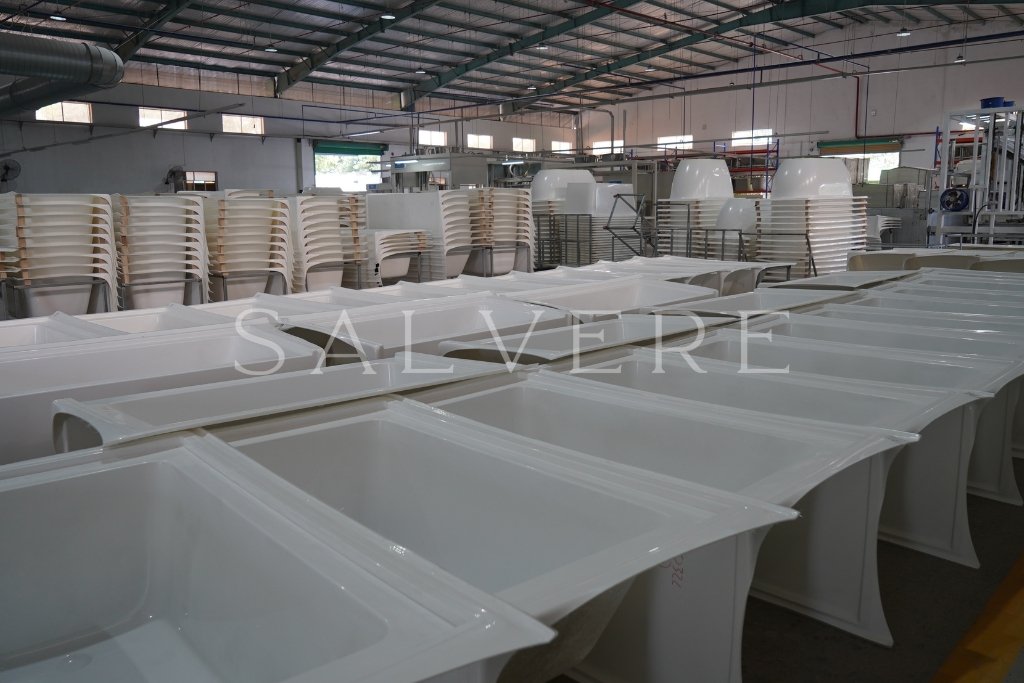
For example, Salvere, as one of the first acrylic bathtub factories relocated from China to Vietnam, combines:
- established production expertise
- standardized manufacturing systems
- consistent quality control
with:
- Vietnam-based production
- tariff advantages
- diversified supply chain capability
This allows brands to achieve both:
- stable product quality (China-level manufacturing experience)
- better cost and risk management (Vietnam-based production)
For many bathroom brands, this combination is becoming an increasingly important factor in supplier selection.
Conclusion
The rise of acrylic bathtubs reflects more than just a design trend.
It represents a shift toward products that balance:
- aesthetics
- practicality
- scalability
- supply chain resilience
For bathroom brands, the key decision is no longer just which material to use, but also where and how that material is manufactured.
Those who align material choice with the right manufacturing strategy will be better positioned to compete in today’s changing global market.
FAQ
Why are acrylic bathtubs becoming more popular in modern bathroom projects?
Acrylic bathtubs are becoming more popular because they offer a strong balance between design, cost, and practicality. They can now achieve a premium look similar to solid surface tubs while remaining lightweight, cost-efficient, and easier to scale for mass production.
Are acrylic bathtubs considered high-end or budget products?
Acrylic bathtubs are no longer just budget products. With advancements such as thin-edge designs, matte finishes, and reinforced structures, they can now deliver a high-end visual effect while maintaining better cost control compared to heavier materials like solid surface.
Why do brands prefer acrylic over solid surface for large-scale projects?
Brands prefer acrylic for large-scale projects because it is lighter, easier to transport and install, and more cost-efficient at volume. It also offers consistent production quality and faster manufacturing, making it more suitable for residential developments, hotels, and multi-unit projects.
How has acrylic bathtub durability improved in recent years?
Modern acrylic bathtubs are now built with multi-layer fiberglass reinforcement, high-density backing systems, and stable base structures. These improvements increase strength, reduce flexing, and extend product lifespan, making acrylic a reliable long-term solution.
Why is material choice now considered a business decision for bathroom brands?
Material selection affects not only design but also cost structure, supply chain stability, and product positioning. Acrylic allows brands to balance aesthetics with scalability and logistics efficiency, making it a strategic choice in today’s global market environment.
Why are more brands sourcing acrylic bathtubs from Vietnam?
Many brands are sourcing from Vietnam to reduce tariff exposure, improve supply chain resilience, and maintain competitive costs. Vietnam offers a growing manufacturing ecosystem and has become a strategic location for OEM production, especially for acrylic bathtubs.

