
While Black Friday might feel like a consumer-facing frenzy, it often reveals patterns that ripple through the entire supply chain — including those of us in the OEM/ODM acrylic bathtub business in Vietnam.
Understanding what sells, when it sells, and why it sells helps manufacturers like us better support our brand partners with timely production, smarter forecasting, and trend-aligned product development. These sales aren't just about discounted electronics; they are a powerful barometer of future demand, revealing shifts in consumer preferences and influencing bathtub trends for 2026 and beyond. It’s a vital pulse check for our industry.
Black Friday sales provide crucial insights into emergent bathtub trends for 2026 by highlighting shifting consumer preferences, beyond just discounted products. For B2B, it emphasizes that lead times and optimal inventory positioning, rather than just discounts, drive strategic planning. Smart OEM/ODM brands leverage this period to test product-market fit, informing future production. The data reveals which styles, features, and price points resonate, necessitating agile manufacturing, proactive supply chain diversification—especially utilizing hubs like Vietnam—and meticulous planning to avoid post-holiday backlogs and capitalize on evolving consumer demand for bathtubs.
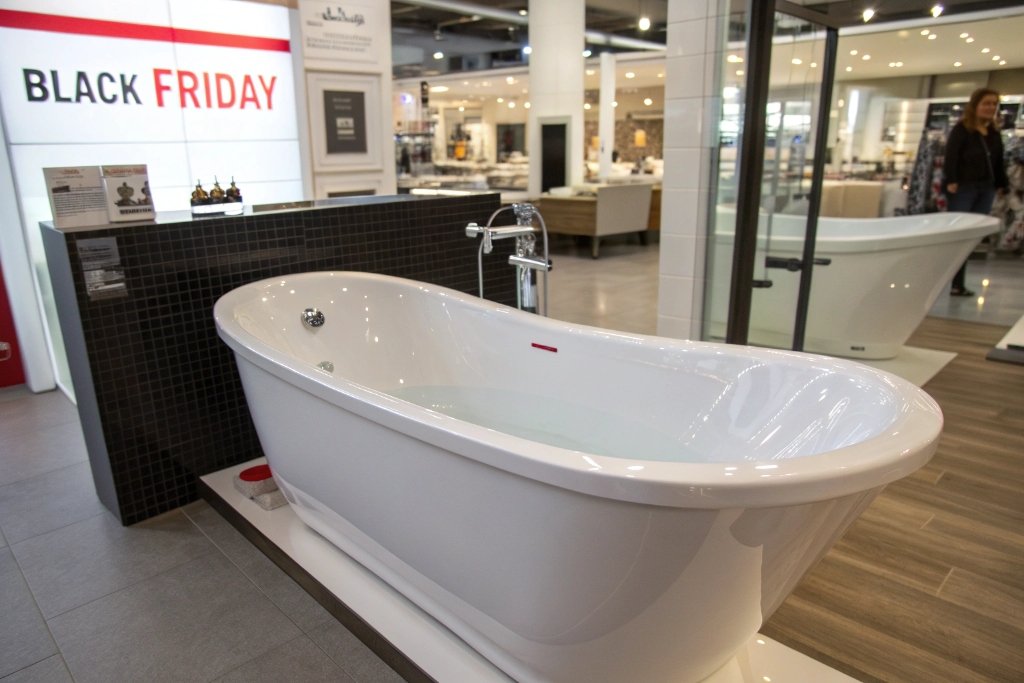
Let's dive into how Black Friday's immediate consumer reactions can shape our long-term strategy for bathtub manufacturing.
Why Black Friday Matters for B2B Too
The ripple effect is real.
Black Friday sales are critical for B2B operations because deep consumer trend insights manifest during this peak retail period, directly influencing future manufacturing demands and procurement strategies. Observing which bathtub styles, price points, and features drive sales provides a leading indicator for OEMs and ODMs regarding forthcoming market preferences. This empowers B2B partners to proactively adjust production plans, optimize inventory, and innovate new products, ensuring they remain aligned with evolving consumer tastes and retailer needs, thereby safeguarding future sales cycles and market relevance.
Many in B2B might think Black Friday is just for retailers, but that's a narrow view. The purchasing frenzy offers a goldmine of data:
- Direct Consumer Preference Indicators: When millions of consumers open their wallets, their choices reveal real-time demand. Which bathtub styles are being sought after? Are compact tubs flying off the shelves for urban dwellers, or are large freestanding soakers preferred for luxury renovations? The sales data tells us definitively what's hot and what's not.
- Price Elasticity and Value Perception: Black Friday heavily tests price sensitivity. Manufacturers can observe how specific bathtub price points perform. Are consumers willing to pay more for smart features, premium acrylic, or designer aesthetics, even with a discount? This helps us understand perceived value for different product segments.
- Inventory Efficacy: For retailers, Black Friday can clear existing stock. For manufacturers, it shows which current lines are performing well and which might need reassessment. A rapid sell-out of a particular tub style could signal strong, sustained demand for 2026.
- Forecasting Future Production: By analyzing Black Friday trends, B2B manufacturers can better forecast production volumes for the next 12-18 months. If certain bathtub SKUs are exceptionally popular, it signals a need to increase raw material orders and allocate production capacity for those specific designs far in
Ignoring Black Friday trends is like flying blind into the next production cycle. It's a critical gauge for what's coming.
Lead Times, Not Discounts, Drive B2B Strategy
The long game of supply.
In the B2B world, especially for a bathtub OEM/ODM manufacturer, strategic planning is overwhelmingly driven by lead times, not short-term sales discounts. While Black Friday highlights retail demand, our focus is on anticipating those needs months in advance to ensure raw material procurement, production scheduling, and logistics align to meet future orders. Timely delivery of quality products supersedes fleeting price promotions, making efficient lead time management, robust supply chains, and proactive capacity planning the core pillars of a successful B2B strategy, crucial for maintaining client trust and market share.
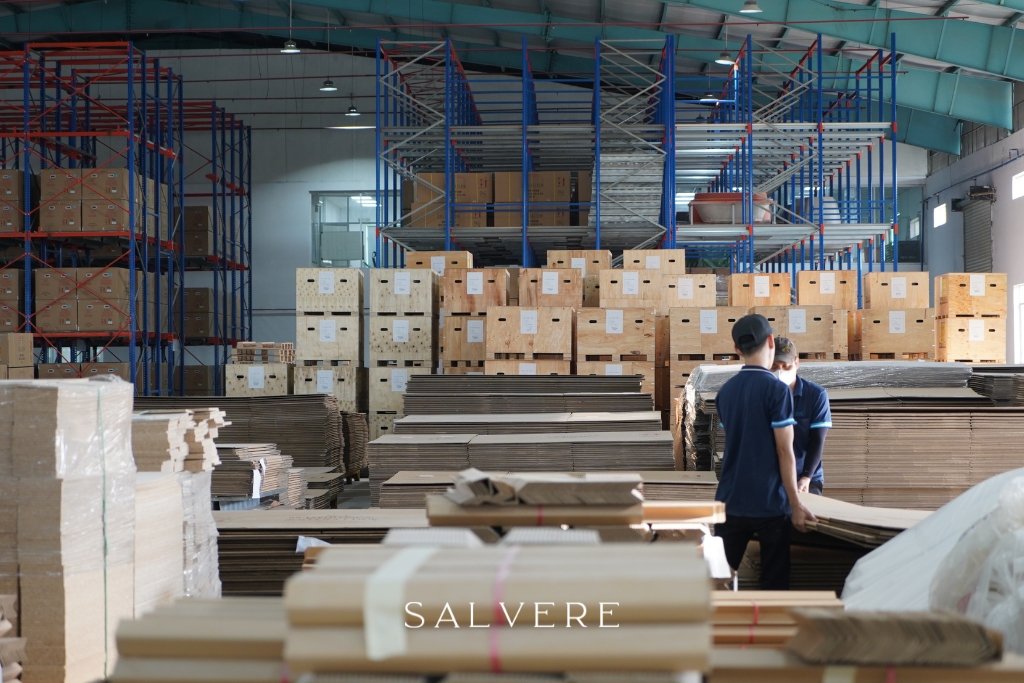
While retailers chase discounts, we, as manufacturers, are playing a different, longer game. For us, lead times are paramount.
- Production Cycle Reality: Manufacturing high-quality acrylic bathtubs isn’t an overnight process. From ordering specific grades of acrylic sheets, developing or preparing molds, thermoforming, reinforcing, curing, finishing, and packaging, each step requires precise timing. This entire cycle, plus shipping, can extend for months.
- Raw Material Procurement: Sourcing high-grade acrylic, resins, and other components often involves international suppliers. Lead times for these materials can be unpredictable, making stable supplier relationships and diversified sourcing critical.
- Capacity Planning: Our factory in Vietnam, while purpose-built and highly efficient, has a finite capacity. We need to schedule production runs well in advance to accommodate client orders without causing delays.
- Client Expectations: Our clients—developers, distributors, and brands—depend on us for consistent, on-time delivery. Delays can impact their project timelines, retail launches, and overall profitability. Discounts might clear stock, but timely supply builds long-term partnerships.
Our strategy is built around ensuring consistent product flow, which mandates meticulous planning around lead times, not tactical pricing maneuvers.
OEM/ODM Brands: Your Production Window Matters
Timing is everything in tailored manufacturing.
For OEM/ODM brands, optimizing the production window is pivotal, extending beyond mere delivery schedules to encompass strategic planning for unique product development and timely market entry. Observing Black Friday offers a critical glimpse into evolving consumer demand, allowing brands to refine new bathtub designs, secure necessary high-grade acrylic and components, and commence manufacturing well in advance. This proactive approach ensures that bespoke products, developed through our OEM/ODM capabilities, hit the market when demand is hottest, maximizing sales and brand relevance, showcasing how precise timing is everything in tailored manufacturing.
For brands leveraging OEM/ODM services, understanding and managing the production window is critical for market success.
- Design and Prototyping Phase: This is often the longest lead time, especially for completely new designs. Your product concepts, often informed by market research and trend data (like Black Friday insights), need to be translated into technical drawings, molds created, and samples approved. This can take several months.
- Raw Material Lead Times: As mentioned, acrylic sheets and specialized components (like jet systems, specific overflows) have their own procurement lead times. If your custom design requires a unique material or component, this window extends further.
- Production Allocation: Reputable OEM/ODM factories like Salvere manage multiple client orders simultaneously. Securing your slot in the production schedule, especially for high-volume orders or complex custom designs, requires early booking.
- Shipping & Logistics: International shipping adds significant time. Whether by sea or air, moving bathtubs from Vietnam to North America, Europe, or Australia can take weeks to months. Customs clearance also plays a role.
- Market Launch Timing: To capture a trend, your product needs to be available when consumer demand is highest. If Black Friday reveals compact luxury tubs are trending, you want your custom-designed compact tubs ready for spring 2026, not summer 2026.
A client once approached us with a fantastic concept for a smart, freestanding bathtub after seeing early trends. They understood that to launch for the peak holiday season the next year, we needed to finalize designs and begin mold development almost immediately. Their proactive approach meant their innovative product entered the market perfectly timed with the escalating trend.
For OEM/ODM brands, "just-in-time" production often means "just-in-time" for the market, which requires starting the process a long time in advance.
How Smart Brands Use Black Friday to Test Product-Market Fit
Real-world feedback, fast.
Smart brands strategically leverage Black Friday to rapidly test product-market fit for bathtubs, often by observing consumer response to early iterations or specific features, providing invaluable real-world feedback. This period of intense consumer activity allows brands to gauge demand for new styles or functionalities, assess price elasticity, and identify effective messaging, all without the full commitment of a major launch. Analyzing which bathtub options sell fastest or generate the most interest during this high-volume period directly informs future product development, inventory decisions, and marketing strategies, ensuring subsequent investments are aligned with proven consumer preference.
Black Friday offers a unique pressure-cooker environment to test new ideas and gauge consumer appetite.
- Soft Launch of New Concepts: Some savvy brands might introduce a very limited run of a novel bathtub design or a new feature (e.g., a specific finish, an integrated smart function) during Black Friday. By carefully monitoring sales velocity and customer feedback, they can quickly determine if there’s genuine interest.
- A/B Testing Pricing and Promotions: Black Friday is ideal for testing different price points, bundles (e.g., tub + faucet package), or promotional strategies for bathtubs. Which offers generate the most conversions for particular styles? This data helps refine future pricing strategies.
- Gauge Feature Popularity: If a brand introduces several bathtub models, some with extra features (e.g., air jets, chromotherapy) and some without, they can see which features consumers are willing to pay for, even with a discount. This informs which features to prioritize in future mass production.
- Identify Niche Demand: Sometimes, a surprising product or a specific size of bathtub unexpectedly sells out during Black Friday. This can reveal an underserved niche market that warrants further exploration and dedicated product development.
This direct, high-volume consumer validation helps brands make data-driven decisions for future product launches, rather than relying solely on traditional market research.
Avoiding Post-Holiday Backlog: Planning Ahead
Forethought prevents gridlock.
Avoiding post-holiday backlog is critical for bathtub manufacturers, necessitating meticulous planning long before the peak retail season, especially when considering demand influenced by Black Friday. This involves proactive raw material procurement, optimizing production schedules to build adequate stock, and pre-arranging robust shipping and logistics. For OEM/ODM partners like Salvere, anticipating client orders based on seasonal trends and historical data is key to allocating factory capacity effectively. Without this foresight, manufacturers risk delayed shipments, dissatisfied customers, and strained supply chains, ultimately impacting their reputation and profitability.
The spike in sales during Black Friday and the holiday season invariably leads to increased demand across the entire supply chain. Proactive planning is the only way to navigate this without falling into a post-holiday backlog.
- Demand Forecasting: Based on Black Friday sales and prior year data, we refine forecasts for 2026 bathtub demand. This isn't just a best guess; it involves analyzing sales velocity, trend reports, and client projections.
- Raw Material Pre-Orders: Weeks, if not months, before anticipated peak production, we place larger orders for critical raw materials like acrylic sheets, fiberglass, and resins. This hedges against supplier delays or price increases.
- Optimized Production Scheduling: Our factory floor is planned to maximize efficiency. We might run certain popular bathtub models in larger batches during off-peak times to build inventory for the post-holiday rush.
- Buffer Stock Strategy: Maintaining a strategic level of safety stock for high-demand bathtubs or critical components helps absorb unexpected demand spikes or minor supply chain hiccups.
- Logistics Coordination: We work closely with shipping partners and freight forwarders well in advance to reserve container space and plan efficient routes. Post-holiday congestion at ports is common, so early booking is essential.
Effective planning ensures a smooth flow of goods from our factory in Vietnam to our clients' warehouses, even through the busiest periods.
Inventory Positioning for Multi-Channel Retailers
Where and when it matters most.
For multi-channel retailers, strategic inventory positioning is crucial, especially in the wake of Black Friday data informing 2026 bathtub trends. This involves optimizing stock levels across various sales channels—online stores, physical showrooms, and distribution centers—to align with anticipated regional and channel-specific demand. By analyzing Black Friday's purchase patterns, retailers can pre-position popular bathtub models closer to high-demand markets, minimizing shipping costs and delivery times. Efficient inventory management enhances customer satisfaction, reduces carrying costs, and maximizes sales opportunities across all touchpoints, essential for a competitive retail landscape.
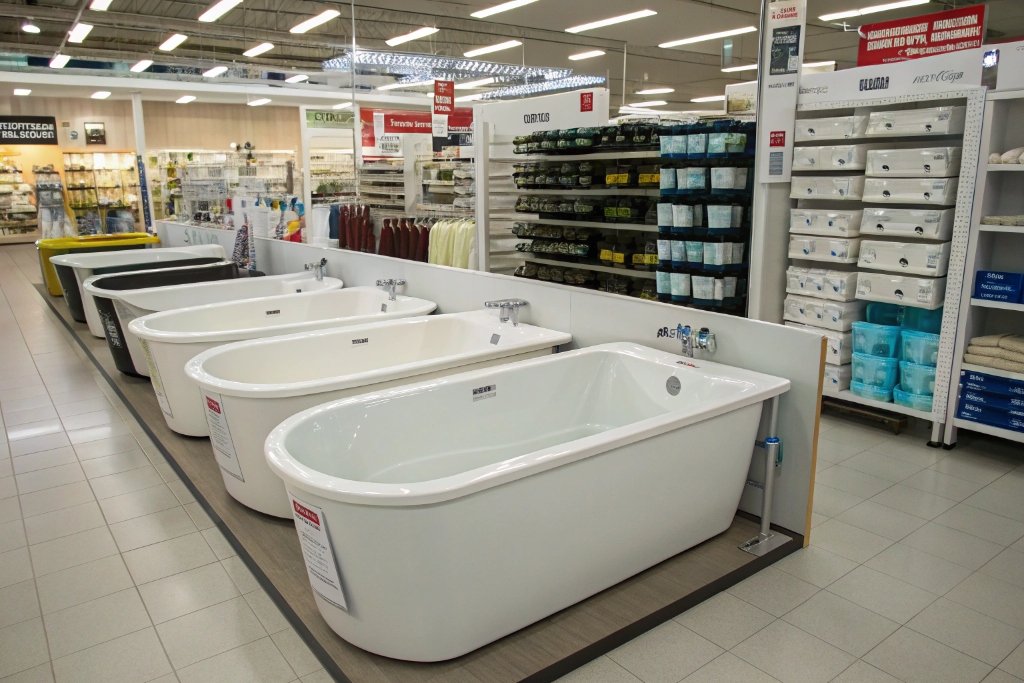
For our clients who operate across various sales channels, strategic inventory positioning is key to capitalizing on predicted trends and maximizing sales.
- Channel-Specific Demand: Black Friday data can highlight if certain bathtub styles sell better online versus in physical showrooms. For example, highly visual, freestanding tubs might perform strongly online due to aspirational images, while practical alcove tubs might be showroom bestsellers where customers can physically interact with them.
- Geographic Demand: Sales data can reveal regional preferences. If a specific type of bathtub is particularly popular in the Northeast during the holiday season, retailers should ensure adequate stock is positioned in warehouses closer to that region to reduce shipping times and costs.
- Balancing E-commerce and Brick-and-Mortar Stock: Retailers need to determine the optimal balance of inventory for their online fulfillment centers versus their physical stores. Overstocking one channel at the expense of another can lead to lost sales or excessive transfer costs.
- Drop-Shipping Capabilities: For certain larger or more specialized bathtub models, a direct-from-manufacturer (like Salvere) or distribution center drop-ship model might be more efficient, reducing the need for retailers to hold extensive inventory for every SKU.
A long-standing distributor partner analyzes their Black Friday bathtub sales meticulously. If their luxury soaking tubs disproportionately sell online to customers in California, they adjust their direct container orders from us to increase stock for their West Coast distribution centers for the following year, rather than evenly distributing it.
Strategic inventory positioning, informed by granular sales data, allows retailers to be agile and responsive to evolving market demands.
The Role of Vietnam Manufacturing in Global Supply Chain Diversification
Strategic shift, enhanced resilience.
The role of Vietnam manufacturing, particularly for acrylic bathtubs through Salvere, is increasingly critical in global supply chain diversification. As businesses seek to mitigate risks associated with centralized production, Vietnam offers strategic advantages including stable political and economic environments, competitive labor costs, and favorable trade agreements. By relocating manufacturing to Vietnam, international partners achieve tariff advantages, enhance supply chain resilience against geopolitical and logistical disruptions, and access high-quality production akin to established hubs. This diversification ensures stable product flow, reduced market volatility, and continued access to critical bathtub supplies for global markets, making it a pivotal move for future-proofing business operations.
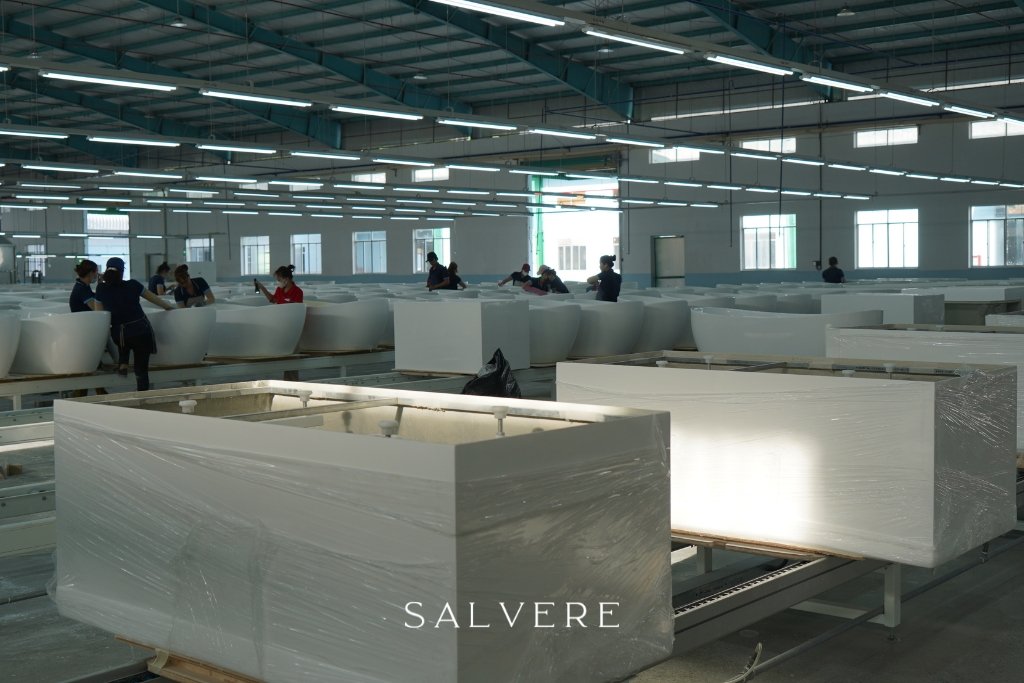
As an acrylic bathtub OEM/ODM manufacturer in Vietnam, I've seen firsthand how our location is becoming a strategic asset for global businesses.
- Risk Mitigation: Geopolitical tensions, trade disputes, and natural disasters can disrupt centralized supply chains. Diversifying manufacturing to countries like Vietnam reduces reliance on a single region, significantly de-risking operations.
- Tariff Advantages: Many countries, particularly the US and EU, have favorable trade agreements with Vietnam, which can result in lower tariffs on imported goods compared to other manufacturing hubs. This directly impacts the landed cost of bathtubs for our clients.
- Stable Business Environment: Vietnam offers a relatively stable political and economic environment, fostering predictable manufacturing operations.
- Competitive Labor Costs and Skilled Workforce: While maintaining high quality, Vietnam provides competitive labor costs that contribute to cost-effective production, especially for labor-intensive products like bathtubs. My team includes many skilled workers with experience in sanitary ware manufacturing.
- Quality Production: At Salvere, we’ve specifically replicated the proven manufacturing expertise and strict quality management systems (from FRANK Group in China) here in our purpose-built 21,000 square meter facility. This means our clients get the same high quality they expect, but from a diversified location. We focus solely on acrylic bathtubs, ensuring deep specialization.
Several of our largest clients moved their acrylic bathtub production to Salvere in Vietnam specifically to diversify their supply chain away from regions with higher tariffs or greater geopolitical risks. This has allowed them to offer their products more competitively in key markets and ensure continuity of supply, even when other regions face disruptions.
Vietnam is not just an alternative; it's a strategic move towards a more resilient and efficient global supply chain for bathtubs and other sanitary ware.
Conclusion
Black Friday sales, far from being just a retail event, offer a vital glimpse into 2026 bathtub trends, revealing shifts in consumer demand and value perception. For B2B manufacturers like Salvere, this data drives strategic lead time management, proactive inventory positioning for multi-channel retailers, and crucial supply chain diversification through locations like Vietnam. By leveraging these insights and maintaining agile manufacturing, we can avoid post-holiday backlogs and deliver high-quality, on-trend acrylic bathtubs that meet evolving global market demands.
👉 Learn more about Salvere Bath OEM/ODM capabilities
and how we manufacture acrylic bathtubs in Vietnam.
Email:kyle.k@salverebath.com / +86 13302808521

