
For many bathroom buyers, acrylic bathtubs can create two very different impressions.
Some acrylic tubs look light, thin, and low-end. Others look clean, refined, modern, and premium enough for high-end bathroom collections.
This difference is not only about the material itself.
For bathroom brands, importers, wholesalers, and project buyers, the real question is not simply whether acrylic tubs feel cheap. The better question is: what makes one acrylic bathtub feel low-end, while another feels premium and reliable?
Acrylic remains one of the most widely used bathtub materials because it offers design flexibility, lighter weight, scalable production, and strong OEM/ODM potential. But like any material, the final product quality depends heavily on design, structure, manufacturing control, surface finish, and reinforcement.
As a Vietnam-based OEM/ODM acrylic bathtub manufacturer, Salvere works with acrylic from both a design and manufacturing perspective, helping bathroom brands develop acrylic bathtub products that feel stable, refined, and suitable for global markets.
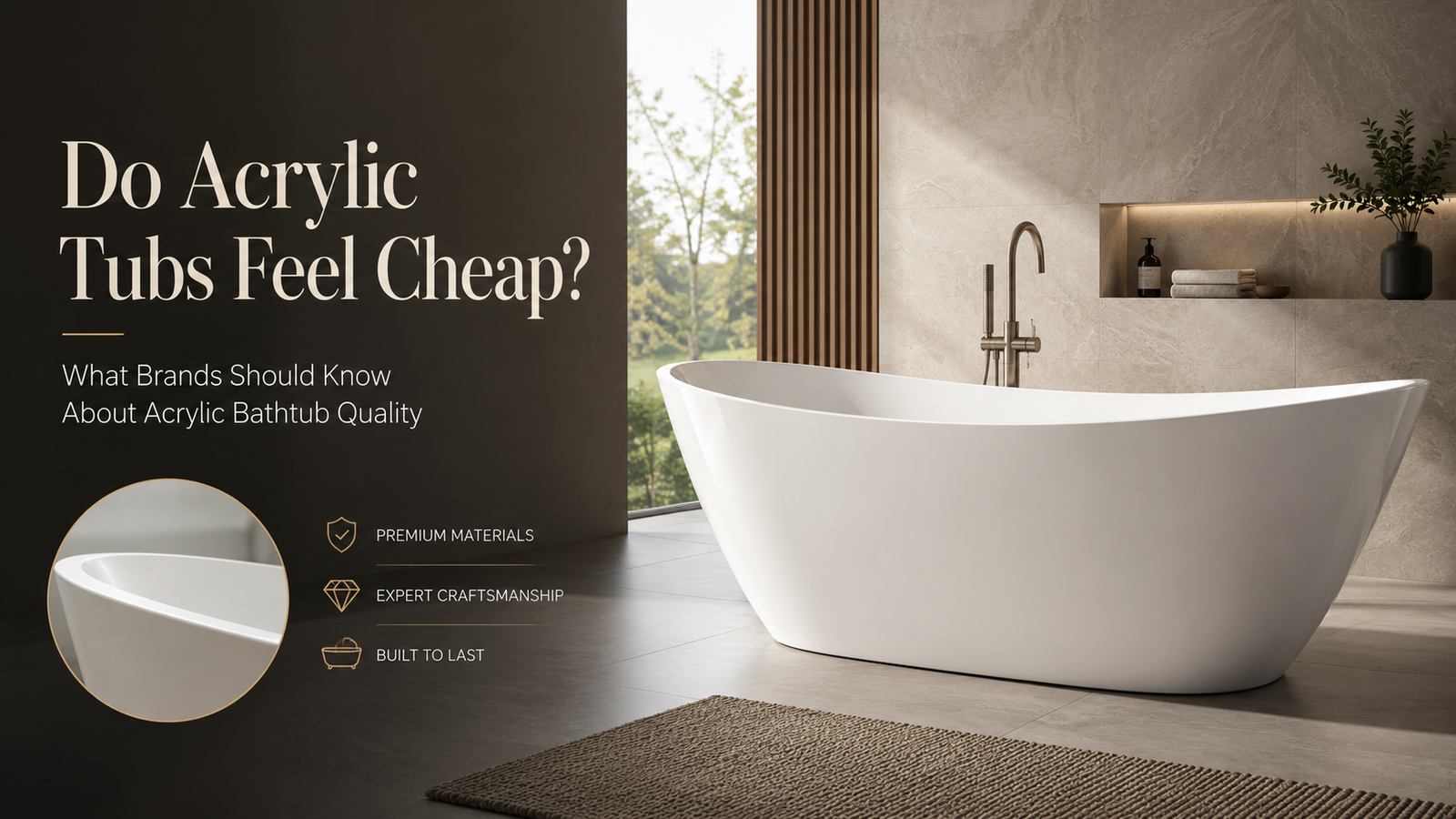
Quick Answer
Acrylic tubs do not have to feel cheap. They can feel low-end when the material is thin, the structure is weak, the surface finish is poor, or the bathtub is not properly reinforced.
A well-made acrylic bathtub can feel premium when it has strong backing, stable support, clean edge details, refined surface finishing, balanced proportions, and consistent manufacturing quality. For bathroom brands and importers, acrylic bathtub quality depends more on manufacturing standards than on the material name alone.
Do acrylic tubs feel cheap?
Acrylic tubs can feel cheap when they are poorly made.
This usually happens when the bathtub shell feels too thin, the surface looks dull, the structure flexes under pressure, or the product lacks weight balance and reinforcement. In these cases, buyers may associate acrylic with low-end retail products.
But this is not the full picture of acrylic as a material.
From a manufacturing perspective, I often find that many acrylic bathtubs feel cheap not because of one obvious problem, but because of several hidden details that are not immediately easy to identify. The buyer may not be able to point out exactly what is wrong, but the overall impression feels weak, light, or less refined.
This is where details make the difference.
For example, if the acrylic sheet is not thick enough or the bathtub is not properly reinforced, the structure may slightly deform or flex when pressure is applied. Even if the bathtub still looks acceptable in photos, this small instability can make the product feel less reliable in real use.
Another example is acrylic sheet quality. If the sheet material is not clean or consistent enough, there may be subtle impurities, uneven color tone, or a less refined surface appearance. These issues may not always look like obvious defects, but they can quietly reduce the perceived quality of the whole bathtub.
High-quality acrylic bathtubs can feel solid, smooth, warm to the touch, and visually refined. Many modern freestanding bathtubs, soaking tubs, and hotel-style bathtub collections use acrylic because it allows flexible shapes, lighter handling, and scalable production.
For B2B buyers, the important point is this:
Acrylic does not automatically feel cheap. Poor material selection, weak reinforcement, and uncontrolled manufacturing details make acrylic tubs feel cheap.
This is why bathroom brands should evaluate the construction behind the bathtub, not only the material name in the product description.
Do acrylic tubs look cheap?
Acrylic tubs can look cheap if the design and finishing are not well controlled.
For example, a bathtub may look low-end when the shape is too basic, the rim looks thick and heavy, the surface has uneven gloss, the trimming is rough, or the proportion does not match modern bathroom design expectations.
However, acrylic bathtubs can also look premium when the visual details are handled properly.
Acrylic has strong design flexibility because it can be thermoformed into different shapes and silhouettes. This allows brands to develop freestanding bathtubs with soft curves, thin-edge structures, compact soaking forms, deeper profiles, and more sculptural designs.
A premium acrylic bathtub often depends on details such as:
- clean rim design;
- smooth surface finish;
- balanced shape proportion;
- stable freestanding structure;
- well-positioned overflow and drain;
- refined matte or glossy finishing;
- consistent quality across production batches.
For bathroom brands, visual quality matters because customers often judge a bathtub before touching it. A well-designed acrylic bathtub can create a clean, modern, and premium impression in showrooms, product photography, hotel bathrooms, and retail displays.
Are acrylic bathtubs good?
Yes, acrylic bathtubs are good when they are properly designed and manufactured.
Acrylic is widely used in the bathtub industry because it offers a practical balance between appearance, production flexibility, shipping efficiency, and user comfort. It is lighter than many traditional materials, easier to form into different shapes, and suitable for both standard and customized bathtub collections.
For brands and importers, acrylic is especially useful because it can support:
- freestanding bathtub collections;
- alcove bathtub lines;
- soaking tubs;
- compact bathtub models;
- matte and glossy finishes;
- custom shapes and sizes;
- OEM/ODM bathtub development.
The key is to choose the right manufacturing partner.
A low-quality acrylic bathtub may create problems such as weak structure, surface defects, poor reinforcement, or inconsistent appearance. A high-quality acrylic bathtub can support stable product positioning, long-term market use, and repeatable bulk production.
For B2B buyers, acrylic is not just a material choice. It is a product development strategy.
An acrylic bathtub feels premium when the product has both visual refinement and structural stability.
The first layer is appearance. A premium acrylic bathtub should have a smooth and even surface, clean trimming, balanced proportions, and a shape that fits the brand’s target market. Whether the finish is glossy or matte, the surface should look intentional and consistent.
The second layer is structure. A bathtub may look beautiful in photos, but if it feels hollow, unstable, or too light in use, the perceived value drops quickly. This is why reinforcement, base support, and shell stability are essential.
The third layer is detail control. Rim thickness, edge design, drain position, overflow placement, bottom support, and packaging protection all affect the final product experience.
| Low-End Acrylic Tub Impression | Premium Acrylic Tub Impression |
|---|---|
| Thin or unstable shell | Reinforced and stable structure |
| Rough trimming | Clean and refined edges |
| Uneven surface gloss | Smooth and consistent finish |
| Basic shape with weak proportion | Balanced modern silhouette |
| Weak bottom support | Strong base and structural backing |
| Poor batch consistency | Reliable repeat production quality |
| Looks good only in photos | Feels reliable after installation |
For bathroom brands, the goal is not only to make an acrylic tub look good once. The goal is to make sure the same quality can be repeated across bulk orders.
A premium acrylic bathtub is not only defined by its overall shape. It is also defined by the details that many customers may not consciously notice at first glance.
Sheet thickness, reinforcement strength, edge trimming, surface purity, gloss consistency, drain alignment, overflow position, and base support all influence how the bathtub is perceived. When these details are well controlled, the bathtub feels stable and refined. When they are not, the product may look slightly cheap even if the design itself is acceptable.
For bathroom brands, this is why acrylic bathtub quality should be judged through both visible design and hidden structure.
What are the disadvantages of acrylic tubs?
Acrylic bathtubs do have limitations, especially when production quality is not well controlled.
The most common concerns include flexing, surface scratching, cracking, discoloration, and a lightweight feeling. However, many of these issues are not caused by acrylic itself. They are usually related to poor material selection, weak reinforcement, unstable support, or low-quality manufacturing.
For B2B buyers, this is an important distinction.
Acrylic is a flexible material, which is one of its strengths in design and production. But that flexibility also means the bathtub needs proper structure behind it. Without strong backing and stable support, the product may feel less reliable.
Acrylic surfaces also require proper finishing and cleaning guidance. Harsh abrasive cleaning methods may damage the surface over time, especially on lower-quality products.
So the real disadvantage is not simply “acrylic is weak.”
The real risk is choosing an acrylic bathtub supplier without strong manufacturing control.
Do acrylic tubs crack easily?
A well-made acrylic tub should not crack easily under normal use.
Cracking usually happens when the bathtub is poorly reinforced, the shell is too thin, the base support is weak, or the installation is not properly handled. In some cases, transport damage or poor packaging can also create stress points before the product even reaches the final customer.
For brands and importers, cracking is not just a product defect. It can affect customer trust, warranty cost, project timelines, and brand reputation.
This is why acrylic bathtub durability should be evaluated through manufacturing details, such as:
- acrylic sheet quality;
- thermoforming consistency;
- fiberglass reinforcement;
- base support structure;
- rim and edge stability;
- drain and overflow processing;
- final inspection;
- packaging protection for export.
At Salvere, acrylic bathtub production is supported by standardized manufacturing processes and quality control. For OEM/ODM buyers, this helps reduce the risk of inconsistent product performance across repeat orders.
How does manufacturing quality affect acrylic bathtub perception?
Manufacturing quality directly affects how an acrylic bathtub looks, feels, and performs.
Two acrylic bathtubs may use similar material descriptions, but the final quality can be completely different. One may feel thin and unstable, while another may feel solid, smooth, and suitable for premium bathroom collections.
This difference usually comes from production control.
Acrylic bathtub manufacturing involves several important steps, including thermoforming, trimming, reinforcement, drilling, polishing, assembly, inspection, and packaging. If any of these steps are poorly managed, the final product may look or feel lower quality.
For example, weak reinforcement can make the bathtub flex. Poor trimming can make the edge look rough. Inconsistent polishing can affect surface appearance. Poor packaging can damage the product during export shipping.
For B2B buyers, this means acrylic bathtub quality should be evaluated at the factory level.
A good manufacturer should be able to explain:
- how the bathtub is formed;
- how the structure is reinforced;
- how surface finish is controlled;
- how dimensions are checked;
- how defects are inspected;
- how packaging protects the product during shipping.
Acrylic bathtub quality is not only about the material. It is about the entire production system behind the material.
What should brands check before choosing acrylic tubs?
Before choosing acrylic tubs for a product line or project, brands should check both product appearance and manufacturing capability.
A beautiful product photo is not enough. B2B buyers need to understand whether the product can be produced consistently and delivered safely at scale.
Important points to check include:
- Does the bathtub feel stable?
- Is the shell properly reinforced?
- Is the surface finish smooth and consistent?
- Are the edges clean and well trimmed?
- Is the base support strong enough?
- Are overflow and drain details well processed?
- Is the bathtub suitable for export packaging?
- Can the factory maintain the same quality in bulk production?
- Can the design be customized for different markets?
For OEM/ODM projects, brands should also consider whether the manufacturer can support shape development, size adjustment, surface finish options, overflow and drain customization, packaging planning, and long-term repeat orders.
As a Vietnam-based OEM/ODM acrylic bathtub manufacturer, Salvere supports brands with acrylic bathtub development from product design to manufacturing and export planning. This helps buyers create acrylic bathtub collections that are not only visually appealing, but also practical for real market use.
Yes, acrylic tubs can support premium bathroom collections when the design and manufacturing quality match the brand positioning.
In modern bathroom design, premium does not always mean heavy material. It often means refined proportion, clean shape, soft surface feeling, thoughtful detail, and stable product experience.
Acrylic can support these qualities because it gives designers and manufacturers more freedom in shape development. It can be used to create soft oval forms, sculptural freestanding tubs, thin-edge designs, compact soaking tubs, and elegant matte finishes.
For brands, acrylic also offers practical advantages behind the visual appeal. It supports repeatable production, easier handling, export packaging, and broader product range development.
This is why many bathroom brands use acrylic not only for entry-level products, but also for modern, design-led bathtub collections.
The final result depends on how the product is developed.
Acrylic can feel cheap when treated as a low-cost material only.
Acrylic can feel premium when treated as a serious design and manufacturing material.
Conclusion
Acrylic tubs do not have to feel cheap.
They feel cheap when the material is thin, the structure is weak, the surface finish is poor, or the manufacturing process is not properly controlled. But when acrylic is designed and produced well, it can create bathtubs that look refined, feel stable, and support modern bathroom collections.
For bathroom brands, importers, wholesalers, and project buyers, the key is not simply asking whether acrylic is good or bad. The better question is whether the acrylic bathtub manufacturer can control material quality, reinforcement, surface finishing, product structure, and repeat production.
Acrylic remains one of the most practical bathtub materials for B2B buyers because it offers design flexibility, scalable production, lighter handling, and strong OEM/ODM potential.
As a Vietnam-based OEM/ODM acrylic bathtub manufacturer, Salvere helps global bathroom brands develop acrylic bathtubs with stable production, custom design support, and export-ready manufacturing solutions.
For brands building a new bathtub collection, acrylic can be far more than a basic material. With the right design and manufacturing control, it can become a strong foundation for premium, market-ready bathroom products.
FAQ
Do acrylic tubs feel cheap?
Acrylic tubs can feel cheap when they are made with thin material, weak reinforcement, poor surface finishing, or unstable structure. A well-made acrylic bathtub can feel refined, solid, and suitable for premium bathroom collections.
Do acrylic tubs look cheap?
Not necessarily. Acrylic tubs can look premium when they have balanced proportions, clean edges, smooth surface finishing, stable structure, and thoughtful bathroom styling.
Are acrylic bathtubs good?
Yes. Acrylic bathtubs are good for many brands and project buyers because they are lightweight, design-flexible, easier to handle, and suitable for scalable OEM/ODM production.
What are the disadvantages of acrylic tubs?
The main disadvantages of acrylic tubs appear when production quality is poor. Weak reinforcement, thin shells, surface defects, and unstable support can make acrylic tubs feel low-end or less durable.
Do acrylic tubs crack easily?
A well-made acrylic tub should not crack easily under normal use. Cracking is usually related to poor reinforcement, weak structure, transport damage, or improper installation.
Can acrylic tubs be used in premium bathroom collections?
Yes. Acrylic tubs can be used in premium bathroom collections when the design, surface finish, edge detail, structure, and manufacturing quality are properly controlled.


