
Quick Answer
Most acrylic bathtub quality issues are not caused by acrylic itself. They usually come from poor raw material selection, unstable thermoforming, insufficient fiberglass reinforcement, weak base support, inconsistent finishing, or incomplete inspection before shipment.
For bathroom brands, importers, wholesalers, and project buyers, the key is not simply asking whether a bathtub is made of acrylic. The more important question is how the acrylic bathtub is manufactured, reinforced, assembled, inspected, and packaged.
A reliable acrylic bathtub manufacturer should control quality from PMMA sheet selection to thermoforming, fiberglass reinforcement, base frame structure, polishing, drain and overflow assembly, water testing, and final packaging.
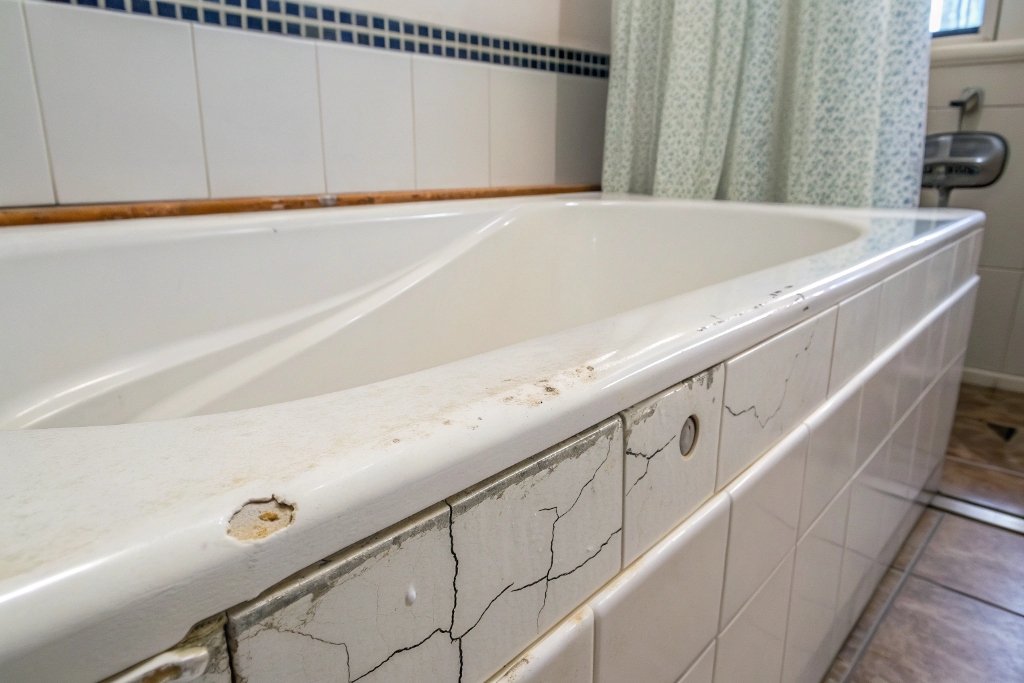
Why Acrylic Bathtub Quality Matters for B2B Buyers
For B2B buyers, acrylic bathtub quality is not only about the final user experience.
It directly affects return rates, customer complaints, retail reviews, project delivery, and brand reputation. A bathtub may look attractive in product photos or showroom samples, but if the structure is weak, the surface scratches easily, or the drain assembly leaks after installation, the problem becomes much bigger than one defective product.
This is why importers and bathroom brands should evaluate the manufacturing process behind the product, not only the appearance or unit price.
At Salvere, we look at acrylic bathtub quality from a manufacturing perspective: raw material control, forming stability, reinforcement strength, structural support, surface finishing, assembly accuracy, and final inspection.
Common Acrylic Bathtub Quality Issues and What Buyers Should Check
| Quality Issue | Common Cause | What B2B Buyers Should Check |
|---|---|---|
| Thin or uneven tub walls | Overstretched acrylic during forming | PMMA sheet quality, forming control, wall thickness consistency |
| Structural flexing | Weak reinforcement or base support | Fiberglass layers, resin bonding, bottom frame, leveling feet |
| Cracking | Stress points or insufficient support | Reinforcement coverage, base design, installation stability |
| Scratches or gloss loss | Low surface quality or poor polishing | Acrylic grade, finishing process, surface inspection |
| Yellowing | Low-grade acrylic or weak UV resistance | Virgin PMMA, UV stabilizers, color consistency |
| Leakage | Poor drain or overflow assembly | Sealing method, component fit, water testing |
| Shipping damage | Weak packaging | Foam protection, carton strength, pallet or crate options |
Thin or Uneven Acrylic Sheets
One of the most common acrylic bathtub quality issues is uneven wall thickness.
This usually happens when the acrylic sheet is overstretched during thermoforming. If temperature, vacuum pressure, or forming time are not well controlled, some areas of the tub shell may become thinner than expected. These weak areas can affect durability, stability, and long-term product performance.
For B2B buyers, this issue is especially important because it may not be obvious from product photos.
What causes this problem?
- Low-grade acrylic sheets
- Inconsistent sheet thickness
- Unstable thermoforming temperature
- Overstretching during vacuum forming
- Lack of inspection after forming
How manufacturers prevent it
A reliable acrylic bathtub factory should start with high-grade PMMA acrylic sheets and control the thermoforming process carefully. The goal is to maintain stable wall thickness across the tub body, especially around curves, corners, rims, and deeper soaking areas.
Buyers should ask the supplier:
- What acrylic sheet material do you use?
- Is it virgin PMMA or recycled material?
- How do you control forming temperature?
- Do you inspect wall thickness after forming?
- Can you provide production photos or process details?
For OEM and ODM acrylic bathtub projects, this step is important because different shapes, sizes, and depths may require different forming controls.
Weak Reinforcement and Structural Flexing
Another major quality concern is structural flexing.
If the bathtub moves, bends, or feels unstable when weight is applied, the problem is usually not the acrylic surface alone. It often comes from insufficient fiberglass reinforcement, poor resin bonding, or weak base support.
For importers and bathroom brands, this can lead to after-sales complaints, especially for freestanding bathtubs, large soaking tubs, skirted tubs, and project-use bathtubs.
What causes flexing or cracking?
- Too few fiberglass reinforcement layers
- Uneven resin application
- Poor bonding between acrylic and reinforcement
- Weak bottom support
- Lack of frame reinforcement
- Stress points around the base or rim
How manufacturers improve stability
A quality acrylic bathtub manufacturer should apply fiberglass and resin reinforcement evenly across the underside of the tub shell. For larger or more complex models, base frames, support boards, steel structures, or adjustable leveling feet may also be used to improve stability.
The key is not only adding more material. The reinforcement must be placed correctly, bonded properly, and designed according to the bathtub shape.
For B2B buyers, this is one of the most important areas to check before placing bulk orders.
Surface Scratches, Gloss Loss, and Finish Inconsistency
Surface quality has a direct impact on how customers perceive the product.
Acrylic bathtubs are often chosen because they can offer a clean, smooth, and high-gloss appearance. However, if the acrylic surface is low quality or the polishing process is inconsistent, the bathtub may look dull, show fine scratches, or lose its premium feel over time.
What causes surface problems?
- Low-quality acrylic surface layer
- Poor polishing process
- Inconsistent finishing standards
- Lack of surface inspection
- Improper handling during production or packing
What buyers should check
For glossy acrylic bathtubs, buyers should check whether the surface is smooth, even, and reflective under good lighting. For matte acrylic bathtubs, buyers should pay attention to texture consistency and color uniformity.
A good factory should have clear surface inspection standards before packaging. This is especially important for brands selling through retail channels, showrooms, or online platforms where product appearance strongly affects customer reviews.
Yellowing and Color Inconsistency
Yellowing is one of the quality concerns many buyers associate with acrylic bathtubs.
However, yellowing is usually related to material quality, UV resistance, chemical resistance, and production consistency. It should not be seen as an unavoidable problem of acrylic itself.
What causes yellowing?
- Low-grade acrylic sheets
- Recycled or mixed materials
- Poor UV resistance
- Inconsistent raw material batches
- Chemical staining or weak surface resistance
How manufacturers reduce this risk
A reliable acrylic bathtub supplier should use stable PMMA sheets from qualified material suppliers and maintain incoming material inspection. Color consistency should also be checked before production, especially for brands ordering bathtubs in large quantities or across multiple production batches.
For OEM/ODM projects, this is especially important when the buyer needs consistent white, matte white, or custom color finishes across a product series.
Drain, Overflow, and Leakage Problems
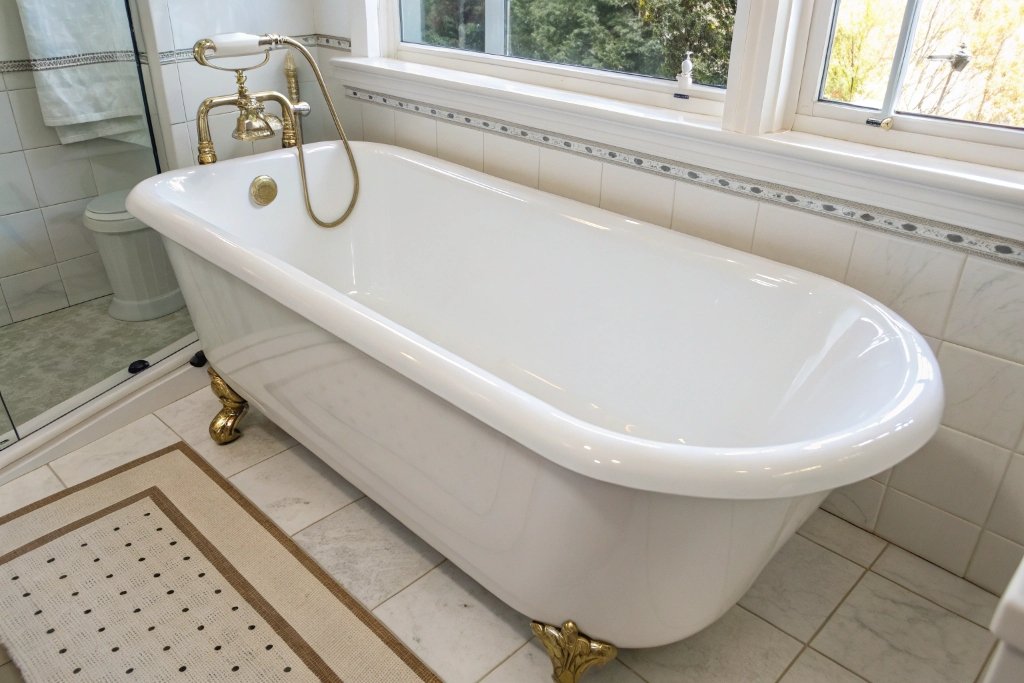
Leakage is one of the most serious acrylic bathtub quality issues because it can cause installation delays, customer complaints, and replacement costs.
In many cases, leakage is not caused by the acrylic shell itself. It comes from poor drain and overflow assembly, weak sealing, incompatible components, or insufficient water testing before shipment.
What causes leakage?
- Poorly fitted drain or overflow components
- Inaccurate hole positioning
- Weak sealing
- Rushed assembly
- No water test before packaging
- Inconsistent assembly standards
How manufacturers prevent leakage
A quality bathtub factory should control the drilling, assembly, sealing, and testing process carefully. Drain and overflow positions must match the product design, and each bathtub should be checked before packaging.
For B2B buyers, this is especially important when ordering customized drain positions, overflow styles, or private-label bathtub models.
Before placing bulk orders, buyers can ask:
- Do you test the drain and overflow before shipment?
- Can the drain position be customized?
- How do you control hole accuracy?
- What inspection is done before packaging?
Packaging and Shipping Protection
Many bathtub quality problems are discovered after delivery, but some of them are actually packaging and transportation problems.
Acrylic bathtubs are lighter than cast iron or stone resin tubs, which is an advantage for international sourcing. But they still need proper protection during container loading, shipping, unloading, and warehouse handling.
What can go wrong during shipping?
- Scratched surface
- Damaged rim
- Cracked corner
- Deformed packaging
- Missing accessories
- Movement inside the carton
What buyers should check
B2B buyers should not only ask about the bathtub itself. They should also check the packaging method.
Important points include:
- Foam protection
- Carton strength
- Corner protection
- Pallet or wooden crate options
- Labeling
- Loading method
- Accessory packing
- Drop-test or packaging inspection standards
For importers and wholesalers, strong packaging can reduce damage claims and protect the product during long-distance shipment.
Quality Control Checklist for Acrylic Bathtub Buyers
Before choosing an acrylic bathtub manufacturer, B2B buyers should check the factory’s quality control system.
Here is a practical checklist:
| Inspection Area | What to Check |
|---|---|
| Raw material | PMMA sheet quality, supplier stability, color consistency |
| Thermoforming | Temperature control, forming stability, wall thickness |
| Reinforcement | Fiberglass layers, resin bonding, coverage area |
| Structure | Base frame, bottom support, leveling feet |
| Surface | Gloss, scratches, texture, polishing consistency |
| Assembly | Drain, overflow, hole accuracy, sealing |
| Testing | Water test, visual inspection, structural check |
| Packaging | Foam, carton, pallet, loading protection |
| Compliance | cUPC, CE, ICC, Watermark, or market-specific standards |
A supplier that can explain these details clearly is usually more reliable than one that only provides product photos and a price list.
Why Working With an Experienced Acrylic Bathtub Manufacturer Matters
Acrylic bathtub quality depends on many small manufacturing decisions.
The same bathtub shape can perform very differently depending on the acrylic sheet, forming process, reinforcement method, base structure, polishing standard, assembly accuracy, and final inspection.
For bathroom brands, importers, wholesalers, and project buyers, choosing the right acrylic bathtub manufacturer means reducing product risk before shipment, not solving complaints after delivery.
Salvere is a Vietnam-based OEM/ODM acrylic bathtub manufacturer focused on freestanding bathtubs, alcove bathtubs, skirted bathtubs, corner bathtubs, and custom acrylic bathtub solutions. We support B2B buyers with product development, manufacturing control, quality inspection, and export-ready packaging.
Learn more about Salvere's OEM/ODM ability.
Conclusion
Acrylic bathtub quality should not be judged only by product appearance or price.
For B2B sourcing, the real quality difference comes from manufacturing control: PMMA sheet selection, thermoforming stability, reinforcement strength, base support, surface finishing, assembly accuracy, inspection, and packaging.
When these steps are properly managed, acrylic bathtubs can offer a strong balance of design flexibility, durability, cost efficiency, and international shipping practicality.
For brands, importers, wholesalers, and project buyers looking for OEM/ODM acrylic bathtub manufacturing support, Salvere provides acrylic bathtub production, customization, quality control, and export-ready supply from Vietnam.
👉 Learn more about Salvere Acrylic Bathtub Products and our OEM/ODM acrylic bathtub manufacturing capabilities.
FAQ
What are the most common acrylic bathtub quality issues?
Common acrylic bathtub quality issues include thin or uneven wall thickness, structural flexing, cracking, surface scratches, gloss loss, yellowing, leakage, poor assembly, and shipping damage.
Are acrylic bathtub quality problems caused by the material itself?
Not always. Many problems come from poor manufacturing, weak reinforcement, unstable thermoforming, low-grade acrylic sheets, or incomplete inspection. High-quality acrylic bathtubs can be durable when properly manufactured.
How can importers check acrylic bathtub quality before ordering?
Importers should check acrylic sheet quality, wall thickness, fiberglass reinforcement, base support, drain and overflow assembly, surface finish, water testing, packaging, and certification compliance.
Why do some acrylic bathtubs feel flimsy?
Acrylic bathtubs may feel flimsy when the acrylic shell is too thin, the reinforcement is weak, or the base support is insufficient. Proper fiberglass reinforcement and base frame design help improve stability.
Do acrylic bathtubs turn yellow over time?
Low-grade acrylic may yellow more easily, especially if it lacks UV resistance or stable material quality. Using virgin PMMA sheets with UV stabilizers and consistent production control can reduce this risk.
What should B2B buyers ask an acrylic bathtub manufacturer?
Buyers should ask about raw materials, thermoforming process, reinforcement method, production capacity, quality inspection, certifications, customization options, packaging, and shipment support.


