
As an acrylic bathtub manufacturer at Salvere, I know that a bathtub is more than just a basin; it's a vessel designed to deliver comfort and relaxation. The shape of that vessel plays a far greater role in the bathing experience than most people realize. When we design and produce tubs, we're constantly balancing aesthetics with the physics of water capacity and human ergonomics.
The shape of a bathtub significantly influences both its water capacity and the user's comfort, dictating how much water is needed for immersion, the perceived spaciousness, and the ergonomic support provided during soaking. Different shapes optimize for various needs: deeper, upright designs for space efficiency and full-body submersion, while longer, reclined forms prioritize stretching out. Understanding how these shapes impact water volume, seating posture, and overall bathroom aesthetics is crucial for selecting the ideal tub.
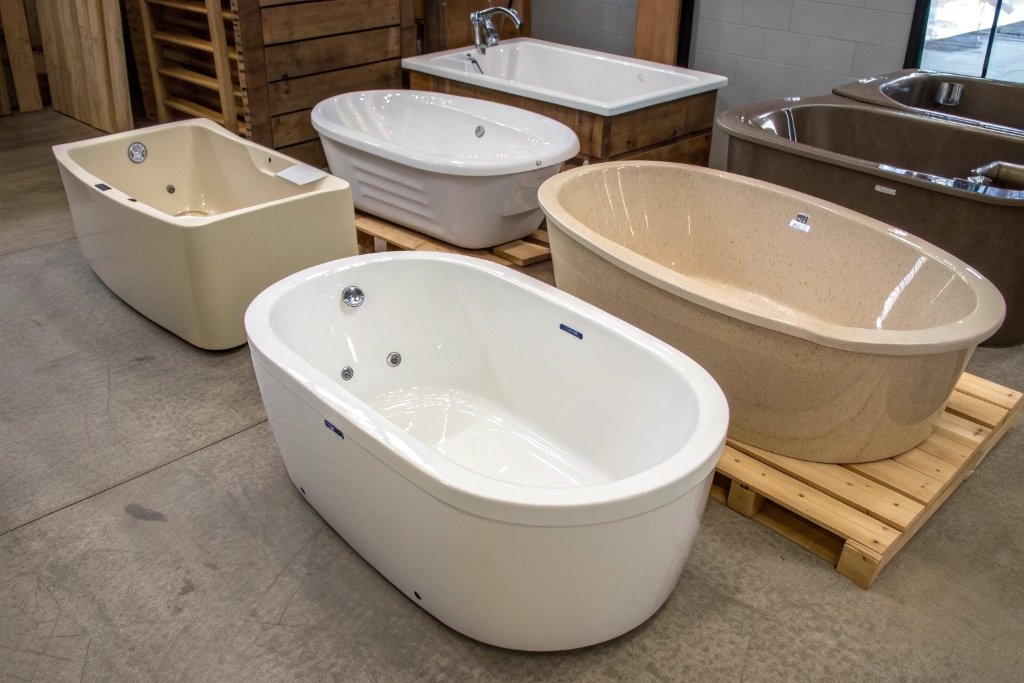
Let's dive into how tub shape impacts your bath, from how much water it holds to how comfortable you'll feel.
Why Tub Shape Matters More Than You Think
It defines your bathing experience.
Tub shape matters significantly more than often perceived because it directly dictates the bathing posture, comfort level, water consumption for effective immersion, and the overall aesthetic harmony within a bathroom. An optimally shaped tub enhances ergonomics for relaxation, maximizes water efficiency for a fulfilling soak, and contributes to the room's design, profoundly influencing the user's satisfaction with their bathing space.
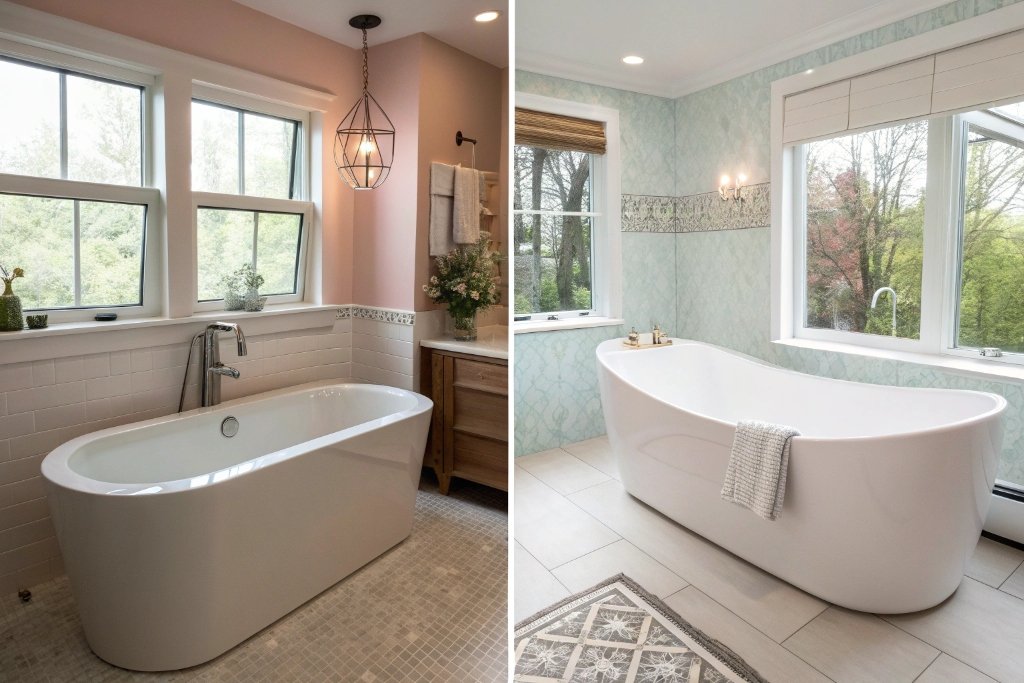
When a customer comes to us looking for a new tub, one of the first things we discuss is the desired shape. This isn't just about looks. Here's why it's so critical:
- Ergonomics and Comfort: The inner contours of a tub's shape determine how you sit or recline, how your back is supported, and whether you can stretch out fully. A poorly shaped tub, no matter its size, can be uncomfortable.
- Water Usage and Capacity: The volume of water a tub holds, and crucially, how much water is needed to achieve a satisfying soak, is directly linked to its shape. Some shapes provide deep immersion with less water due to their design.
- Space Perception and Flow: The outer form of the tub dramatically influences how the bathroom feels. A sleek oval tub creates a different visual impression than a rectangular one, affecting perceived spaciousness and movement.
- Aesthetic Impact: The tub is often the biggest piece of "furniture" in a bathroom. Its shape is a major design element that contributes to the room's overall style, whether modern, traditional, or transitional.
- Installation Requirements: Different shapes have different installation needs. A corner tub differs vastly from a centered freestanding oval.
Ultimately, the shape of your tub determines the nature of your bath.
How Different Tub Shapes Affect Water Depth and Volume
Geometry in action.
Different tub shapes profoundly affect water depth and volume by manipulating the internal contours and footprint. Deeper, more upright designs like Japanese soaking tubs maximize effective water depth for full immersion in a smaller footprint, thus potentially reducing overall water volume needed for a satisfying soak compared to longer, shallower shapes designed for reclining. The curvature and internal slope of a tub further dictate how much water is required to reach a comfortable soaking level for the bather.
It's basic physics, but applied to comfort. Here's how different shapes change the game:
- Rectangular Tubs (Standard Alcove/Drop-in):
- Capacity: Often have a relatively uniform bottom, leading to a consistent water depth. The volume is directly related to length x width x desired depth.
- Soaking Efficiency: You need to fill the entire length to get full immersion, which can require a significant volume if you want a deep soak.
- Oval Tubs (Freestanding/Drop-in):
- Capacity: The curved ends mean less volume is held at the very tips. The widest part holds the most water.
- Soaking Efficiency: They often have sloped ends for back support, which can reduce the effective soaking depth compared to a flat-bottomed tub, or require more water to reach a certain level. However, their internal form typically cradles the body well.
- Round Tubs (Freestanding/Recessed):
- Capacity: A relatively large volume for their footprint, as they are often designed to be deep.
- Soaking Efficiency: Excellent for deep, central immersion, but not designed for stretching out. Often accommodate one or two bathers in a seated position.
- Japanese Soaking Tubs (Deep & Upright):
- Capacity: Can have a smaller overall volume than a long rectangular tub, despite being very deep. This is because their length and width are significantly reduced.
- Soaking Efficiency: Extremely efficient for deep, full-body immersion. You sit upright, so the water level quickly rises around your entire body, consuming less water to achieve maximum soak compared to filling a much longer tub.
- Slipper Tubs (Freestanding):
- Capacity: The raised ends mean a significant portion of the tub's volume is above the practical soaking level, especially the high back.
- Soaking Efficiency: Designed for comfort with specific back support, but might require more water to achieve deep immersion in the non-sloping sections.
The design of the interior basin, even more than the outer shell, is where water capacity for effective soaking is truly determined.
Oval vs Rectangular Bathtubs: Which Holds More Water?
It's more nuanced than it seems.
While a rectangular bathtub of the same external length and width can potentially hold more water due to its consistent volume, an oval tub's internal curves often lead to sloped ends designed for comfort, which can affect the usable water capacity for a deep soak. Ultimately, the total volume depends on the internal dimensions, depth, and the slope of the sides, with the practical soaking volume being a more relevant metric than the absolute maximum volume of either shape.
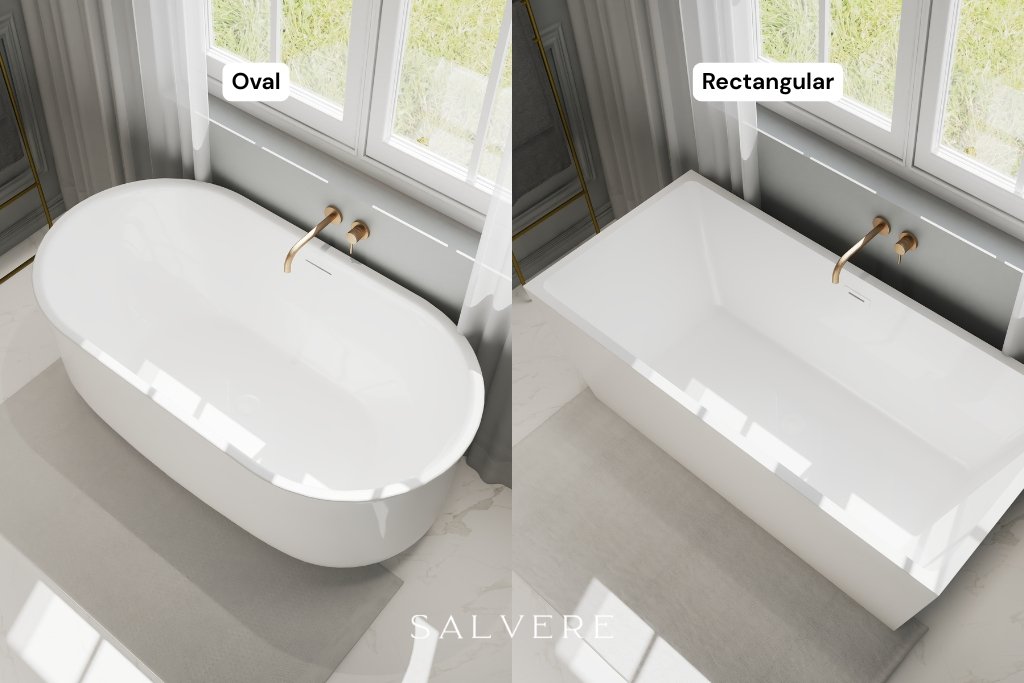
This is a common question, and the answer isn't always straightforward.
- Rectangular Bathtubs:
- Pros: Generally have a more uniform internal shape, meaning the volume calculation is closer to a simple length x width x depth formula. If two tubs have identical external length, width, and depth to the overflow, the rectangular one tends to have a slightly larger total capacity. This is because it doesn't "lose" volume to curves at the ends.
- Cons: The straight lines might not be as ergonomic, sometimes offering less back support unless specifically designed with lumbar curves.
- Oval Bathtubs:
- Pros: Their curved ends are usually designed to cradle the body, offering a more comfortable recline. While they might hold slightly less total water for comparable external dimensions, this water is often more effectively utilized for body immersion due to the ergonomic design.
- Cons: The sloped ends mean that to achieve a certain water height at the bather's feet, the water will be much higher at the walls, potentially increasing total water consumption for a deep soak if one isn't positioned correctly.
Consider this: a rectangular tub has a larger "box" volume. However, an oval tub’s curves can make the bathing area more efficient around the body. At Salvere, we focus on the usable soaking volume in our acrylic tubs, ensuring the internal shape provides maximum comfort and immersion for the water used, whether it's oval or rectangular.
Ultimately, internal dimensions (length at the bottom, and depth to the overflow) and the degree of internal slope are more important than just the external shape in determining practical water capacity for a comfortable soak.
Comfort Considerations: How Shape Impacts Ergonomics and Soaking Posture
Your body's best friend.
Tub shape profoundly impacts comfort by dictating ergonomic support and soaking posture. Rectangular tubs often provide a flat, consistent base for stretching, while oval shapes naturally cradle the body with curved backrests. Japanese soaking tubs, with their deep, upright design, offer full-body immersion in a seated position. The internal contours, slopes, and positioning of drain/overflow determine how leisurely or constrained the bathing experience feels, making shape a critical factor for personalized relaxation.
This is where the rubber meets the road—or rather, where your back meets the tub.
- Rectangular Tubs:
- Ergonomics: Often provide a good length for stretching out. Comfort depends heavily on the slope of the backrest. A too-steep or too-straight back can be uncomfortable. Many feature lumbar support curves.
- Posture: Typically designed for reclining with legs extended.
- Oval Tubs:
- Ergonomics: Their inherent curves often translate to more natural back and arm support. The gentle slopes can feel more inviting than sharp angles.
- Posture: Designed for a comfortable recline, often slightly more cradled than a rectangular tub. Many oval freestanding tubs are "double-ended" with slopes at both ends, allowing two people to face each other or one person to choose their preferred recline.
- Slipper Tubs:
- Ergonomics: One or both ends are significantly raised and sloped, specifically designed to support the head, neck, and back at a very comfortable angle.
- Posture: Highly reclined, very relaxed posture, akin to lounging in a chaise.
- Japanese Soaking Tubs:
- Ergonomics: Feature an upright, seated position, often with a built-in seat or ergonomic base. The depth allows for full immersion without needing to recline.
- Posture: Designed for a meditative, upright soak.
- Corner Tubs:
- Ergonomics: Often have broad flat edges and sometimes integrated seats, promoting a more casual, social bathing experience.
- Posture: Can be seated or partially reclined, depending on the specific design.
The drain and overflow placement also play a role in comfort. A center drain in an oval tub allows comfortable bathing at either end, for example. We pay close attention to these contours in our acrylic designs to ensure maximum soaking pleasure.
Best Tub Shapes for Small vs Large Bathrooms
Fitting form to function and space.
For small bathrooms, the best tub shapes are compact, utilizing depth over length, such as deep Japanese soaking tubs (often round or square) or shorter, space-saving rectangular alcove tubs. In contrast, large bathrooms benefit from more expansive and curvilinear shapes like grand oval or hourglass freestanding tubs, or generous rectangular drop-ins. These shapes enhance the overall aesthetic, provide luxurious comfort, and contribute to the spacious feel of the room without overcrowding.
The size of your bathroom is a major determinant in selecting the right tub shape.
| Bathroom Size | Recommended Tub Shapes | Why They Work |
|---|---|---|
| Small | Japanese Soaking Tubs (often square/round deep) | Maximize vertical space, offer deep immersion in a minimal footprint. |
| Shorter Rectangular Alcove | Most efficient use of linear wall space, good for shower-bath combo. | |
| Small Oval Freestanding | Visually light, can make a small room feel less cramped than a bulky built-in, creates a focal point. | |
| Large | Large Oval Freestanding | Sculptural, luxurious, offers a grand statement, comfortable for two. |
| Large Rectangular Drop-in/Undermount | Integrates seamlessly into design, can be part of a larger tiled deck, ample stretch-out space. | |
| Hourglass/Double Slipper Freestanding | Visually interesting, extremely comfortable for long soaks, often designed for two. | |
| Large Corner Tubs | Efficiently uses corner space, often jetted, can be quite spacious internally. |
- For Small Bathrooms: The goal is to maximize functionality and comfort without cluttering the space. Shapes that are deep rather than long, or those that blend efficiently into corners, are ideal. Clean, simple lines often create a sense of openness.
- For Large Bathrooms: You have the luxury of making a design statement. Larger, more intricate, or grander shapes can be accommodated. The tub can become a true center-piece, allowing for more expansive and comfortable soaking forms.
The right shape complements the bathroom's dimensions and enhances its overall flow.
Design Meets Function: Aesthetic Preferences vs Practical Use
The art of compromise.
The selection of a tub shape often involves a delicate balance between aesthetic preferences and practical use. While visual appeal draws attention, practical considerations such as comfort, water capacity, ease of entry, and cleaning must align with daily needs. A successful choice for any project harmonizes the desired design statement with functional efficiency, ensuring the tub not only looks good but also performs optimally for its intended purpose and user demands.
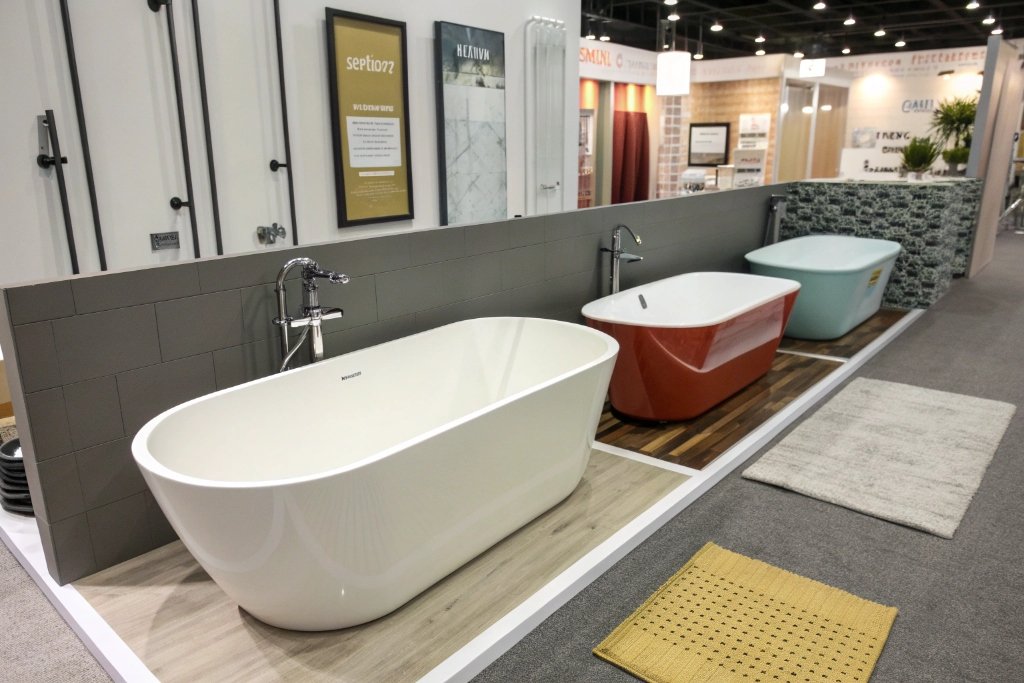
This is a conversation I have with clients constantly. Everyone has an idea of what looks good, but it has to work too.
- Aesthetic Preference: You might love the look of a double-slipper freestanding tub. It's beautiful, sculptural.
- Practical Concern: Is it easy to get in and out of? Does it fit your bathroom size? Does the high back make showering uncomfortable if it's a shower/tub combo? How much water does it actually hold for a decent soak?
- Modern Minimalist Design: A sleek, rectangular tub with thin edges appeals to a clean aesthetic.
- Practical Concern: Are the edges comfortable to rest an arm on? Is the back too straight for prolonged soaking comfort?
- Traditional Clawfoot: Classic appeal.
- Practical Concern: Is it stable? Does it fit the plumbing of a modern bathroom? Are the interior contours comfortable without being too slippery?
The ideal choice is a shape that you find visually appealing, but also meets your practical needs for comfort, ease of use, and efficient water usage. Don't sacrifice function entirely for form, or vice-versa. At Salvere, we provide acrylic bathtubs that combine both, offering beautiful shapes that are also supremely functional and comfortable.
Choosing the Right Acrylic Tub Shape for Optimal Comfort
The best of both worlds.
Choosing the right acrylic tub shape for optimal comfort balances aesthetic appeal with ergonomic design, leveraging acrylic's moldability to create forms that support the body effectively. Consider shapes like ergonomic ovals for natural cradling, slipper tubs for deep recline, or Japanese soaking tubs for upright immersion in smaller spaces. Prioritize interior contours, backrest angles, and effective soaking depth over absolute external dimensions, ensuring the selected shape truly enhances your personal bathing experience.
Acrylic is a fantastic material for creating a wide variety of tub shapes, allowing us to hit that sweet spot between design and function very effectively.
- Versatility in Design: Acrylic's primary advantage is its ability to be thermoformed into almost any shape imaginable. This means we can create:
- Smooth, seamless curves: Perfect for ergonomic backrests that naturally conform to the body.
- Sharp, modern angles: For minimalist, architectural looks.
- Deep basins: To allow for maximum soaking without excessive length or width.
- Thin edges: These enhance both aesthetics and ease of entry/exit.
- Warmth and Comfort: Acrylic itself is naturally warm to the touch, complementing the warmth of the water. This adds to the comfort, regardless of the shape.
- Lightweight: This means a wider range of shapes, including very large ones, can be installed without major structural reinforcement, unlike heavy cast iron or stone.
- Key Shapes for Acrylic Comfort:
- Ergonomic Oval/D-Shape: Many of our acrylic tubs feature gently sloped, integrated backrests that make for supremely comfortable lounging. The double-ended oval allows for bathing at either end.
- Deep Japanese Soaking: Perfectly executed in acrylic, these provide that upright, full-body immersion. The smoothness of acrylic ensures comfort even in a seated position.
- Sleek Rectangular with Lumbar Support: For those who prefer a more traditional look, acrylic allows us to build in subtle lumbar curves that make reclining in a rectangular tub much more comfortable than a simple straight back.
When choosing an acrylic tub shape, focus on the interior design. Is that backrest at a comfortable angle? Is the length at the bottom sufficient for your body? How deep is the water to the overflow? These internal considerations, perfectly executed in acrylic, are what will lead to optimal comfort.
Conclusion
The shape of your bathtub fundamentally defines your bathing experience. From water capacity to ergonomic comfort and aesthetic impact, every curve and angle plays a role. By aligning your aesthetic preferences with practical considerations and understanding how different shapes perform, you can choose a tub that truly elevates your daily ritual.
👉 Learn more about Salvere Bath OEM/ODM capabilities
and how we manufacture acrylic bathtubs in Vietnam.


