
As an acrylic bathtub manufacturer at Salvere, I spend my days thinking about dimensions, fit, and how a tub integrates into a bathroom. The best tub size isn't a one-size-fits-all answer; it depends entirely on your specific bathroom, your needs, and your design vision. Making the right choice here is crucial for aesthetics, comfort, and functionality.
The best tub size for different bathrooms is determined by the bathroom's available space, desired functionality, and the user's body type, ranging from compact Japanese soaking tubs for small spaces to expansive freestanding or built-in models for large master bathrooms. Careful measurement and consideration of standard dimensions, alongside design flexibility, are essential to ensure optimal fit, comfort, and aesthetic integration within any given bathroom layout.
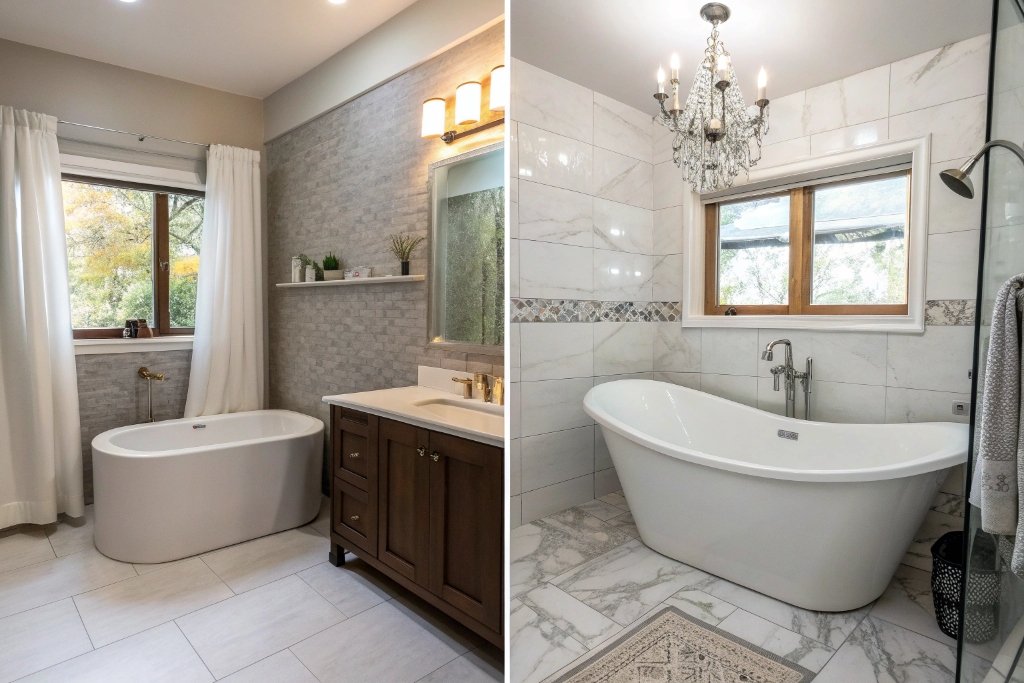
Let's break down how to pick the perfect tub size for various bathroom scenarios.
Why Tub Size Matters in Bathroom Planning
It's more than just fitting it in.
Tub size matters significantly in bathroom planning because it directly impacts overall room flow, available floor space, aesthetic balance, and user comfort. An incorrectly sized tub can make a bathroom feel cramped or disproportionate, impede movement, or fail to provide the desired bathing experience, underscoring its critical role in both functionality and design harmony.
I've seen many projects where a fantastic tub lost its appeal simply because it was the wrong size for the room. Here's why it's so important:
- Room Proportion and Flow: A tub that's too big can overwhelm a small bathroom, making it feel cramped and difficult to navigate. Conversely, a tiny tub in a vast bathroom can look lost and insignificant.
- Comfort and Usability: The internal dimensions of the tub (depth, length, width) dictate how comfortable your soak will be. A tub that's too short for a tall person, or too shallow for a deep soak, won't meet expectations.
- Aesthetic Impact: The tub is often the focal point of the bathroom. Its size contributes heavily to the overall visual balance and style—whether it's a sleek minimalist statement or a grand, traditional piece.
- Installation and Plumbing: Wrong dimensions can lead to costly rework. You need correct measurements not just for the tub itself, but for clearances, plumbing lines, and access panels.
- Resale Value: A bathroom that feels well-planned and proportionate, with a comfortable tub, adds more value than one where elements seem shoehorned in.
Getting the tub size right ensures both beauty and practicality.
Standard Bathtub Dimensions: The Industry Reference Point
Know the common numbers.
Standard bathtub dimensions serve as the industry reference point, typically featuring lengths of 60 inches, widths of 30-32 inches, and depths of 14-18 inches for alcove models. These dimensions provide a baseline for planning, though variations exist for drop-in, freestanding, and specialized tubs, making it essential to understand these common measurements as a starting point for assessing fit and functionality in diverse bathroom layouts.
Before we talk about fitting tubs into specific rooms, it helps to understand what's considered "standard." Most often, these refer to alcove (recessed) bathtubs.
| Type of Tub | Typical Length (inches) | Typical Width (inches) | Typical Depth (inches) | Comments |
|---|---|---|---|---|
| Standard Alcove | 60 | 30-32 | 14-16 | Most common type for shower/tub combos. Provides basic soaking. |
| Alcove (Long) | 66, 72 | 30-32 | 14-16 | For taller individuals or larger bathrooms. |
| Alcove (Wide) | 60 | 34-36 | 14-16 | Offers more shoulder room. |
| Freestanding | 55-72 (can be shorter/longer) | 28-36 (can be wider) | 18-24 (often deeper) | Highly variable, designed for aesthetic impact. Requires clearance around all sides. |
| Drop-in | 60-72 | 30-42 (includes deck) | 14-23 | Installed into a framed deck or platform. Deck width is an important consideration. |
| Corner | 48x48, 54x54 | 48x48, 54x54 | 18-23 | Utilizes corner space, often deeper or jetted. |
| Japanese Soaking | 40-50 | 30-40 | 24-30+ | Focuses on deep, upright immersion. Extremely space-efficient in length. |
Understanding these basics is your first step. Remember, the "depth" here is usually from the rim to the floor of the tub, not the overflow. The actual soaking depth will always be less.
Best Tub Sizes for Small Bathrooms
Maximize every inch.
For small bathrooms, the best tub sizes prioritize depth and efficient footprint, typically favoring compact options like Japanese soaking tubs (40-50 inches long, 24-30+ inches deep) or shorter alcove models (48-54 inches long). These choices allow for a functional or even luxurious bathing experience without overwhelming the limited space, making the most of every available inch vertically rather than horizontally.
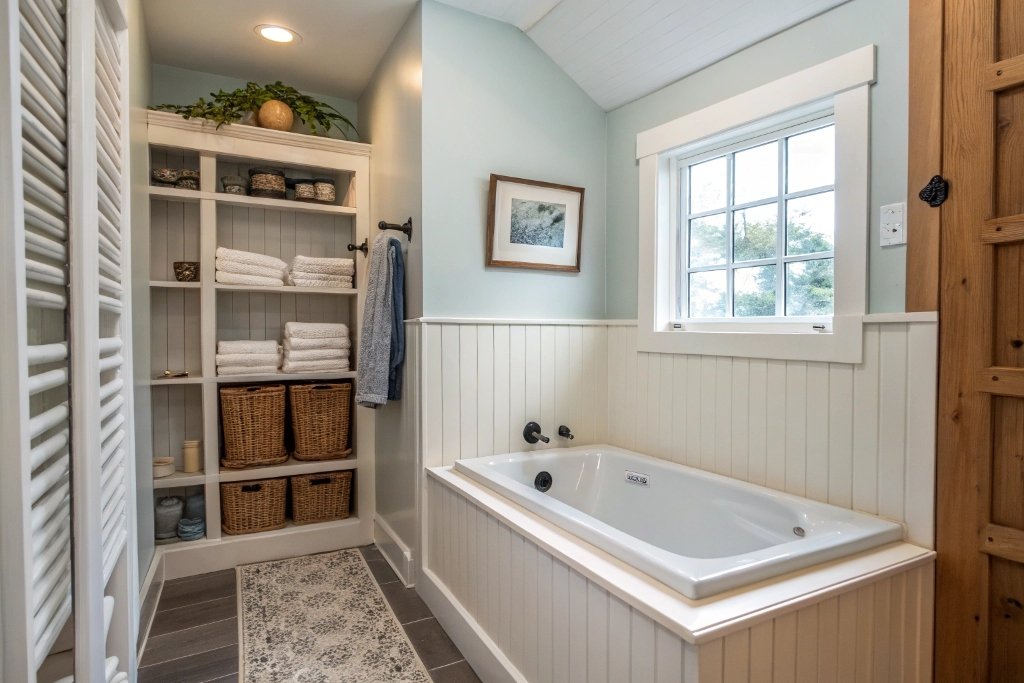
Small bathrooms present the biggest challenge, but also the most opportunity for clever design.
- Japanese Soaking Tubs: My go-to recommendation for true indulgence in a compact space.
- Dimensions: Typically 40-50 inches long, 30-40 inches wide, and crucially, 24-30+ inches deep.
- Why it works: You get full-body immersion in a seated position without needing a long footprint. It turns a tiny bathroom into a personal spa.
- Shorter Alcove Tubs: If you need a shower/tub combo in a small space.
- Dimensions: 48 or 54 inches long (compared to standard 60 inches), 30 inches wide, 14-16 inches deep.
- Why it works: Fits into those tight niches. The sacrifice is typically length for stretching out, but it still functions as a bath and shower base.
- Small Freestanding Tubs: For a more luxurious look, even in small spaces.
- Dimensions: Can be as short as 55 inches long, 28-30 inches wide, usually deeper (18-22 inches).
- Why it works: While still needing clearance, a smaller freestanding tub has visual lightness that can make a room feel less cramped than a bulky built-in.
Measure precisely, and remember that depth can often compensate for lack of length.
Perfect Tub Options for Medium-Sized Bathrooms
Balance and versatility.
For medium-sized bathrooms, perfect tub options often include standard 60-inch alcove bathtubs for practicality, or medium-sized (58-66 inch) freestanding/drop-in tubs for a blend of comfort and aesthetic appeal. These dimensions allow for comfortable soaking or showering without overcrowding the space, offering versatility to integrate features like wider rims or slightly deeper basins while maintaining good room flow and balance.
Medium bathrooms (think 5x8 feet to 8x10 feet) offer more flexibility. You can usually fit a standard tub comfortably and even explore some more luxurious options.
- Standard Alcove Tubs: Still a strong contender for efficiency and shower/tub combos.
- Dimensions: 60 inches long, 30-32 inches wide, 14-16 inches deep.
- Why it works: It's a reliable choice that fits most standard layouts and provides ample space for most users.
- Alcove Tubs with Wider or Deeper Options: Upgrade your standard.
- Dimensions: 60 inches long, but 32-34 inches wide or 18+ inches deep.
- Why it works: These small increases in dimensions can significantly improve comfort without demanding a much larger footprint. A deeper alcove tub allows for a more satisfying soak.
- Medium Freestanding Tubs: To make a statement.
- Dimensions: 58-66 inches long, 30-34 inches wide, 20-22 inches deep.
- Why it works: Large enough to be a comfortable centerpiece, but not so large that it overwhelms an average-sized room. The visual separation from walls makes the room feel more open.
- Drop-in Tubs with a Narrow Deck: For a seamless, built-in look.
- Dimensions: 60-66 inches long, 32-36 inches total width (including deck), 18-20 inches deep.
- Why it works: Allows for a customized surround with tiling or stone, offering a clean aesthetic without needing vast amounts of floor space for a large deck.
The key here is finding a tub that feels balanced in the room, neither too big nor too small.
Luxury Tub Sizes for Large Master Bathrooms
Indulgence without compromise.
Luxury tub sizes for large master bathrooms encompass expansive freestanding (66-72+ inches long) or generous drop-in (66-72 inches long, 36-48 inches wide) models, often featuring increased depth (20-24+ inches) and specialized features like air jets or chromotherapy. These dimensions are designed to create a focal point of ultimate comfort and relaxation, fitting seamlessly into spacious layouts that accommodate grand aesthetics and an uncompromised spa-like experience.
For master bathrooms, particularly those that are generously sized (over 10x10 feet), the world of tubs truly opens up. Here, the tub becomes a centerpiece designed for ultimate relaxation and luxury.
- Large Freestanding Tubs: The epitome of luxury and design.
- Dimensions: 66-72+ inches long, 32-36+ inches wide, 20-24+ inches deep.
- Why it works: These tubs demand space around them for dramatic effect. Their grand presence creates a spa-like retreat, offering ample room for a long, comfortable soak. Some are specifically designed for two bathers.
- Large Drop-in or Undermount Tubs: For an integrated, customized look.
- Dimensions: 66-72+ inches long, 36-48+ inches wide (including deck), 20-24+ inches deep.
- Why it works: They allow for a large, tiled deck that can incorporate seating, candle nooks, or even fireplace features. The tub is sunken, giving a very clean, built-in appearance.
- Corner Jetted Tubs: Maximizing corner real estate for comfort.
- Dimensions: Often 58x58 inches up to 72x72 inches, 20-24 inches deep.
- Why it works: These offer generous interior dimensions and often come with hydrotherapy jets, providing a luxurious experience that can accommodate multiple users if designed for it.
In large bathrooms, the tub size should complement the room's scale, creating an inviting and luxurious focal point.
Freestanding vs. Built-In: How Size Impacts Design Flexibility
Choice changes everything.
The choice between freestanding and built-in tubs profoundly impacts design flexibility. Freestanding tubs, needing clear surrounding space, offer immense aesthetic versatility and can be a room's focal point, especially in larger bathrooms. Built-in tubs, integrated into walls or decks, save floor space and offer practical benefits like storage, making them suitable for smaller layouts or for a seamless, utilitarian design in any sized bathroom.
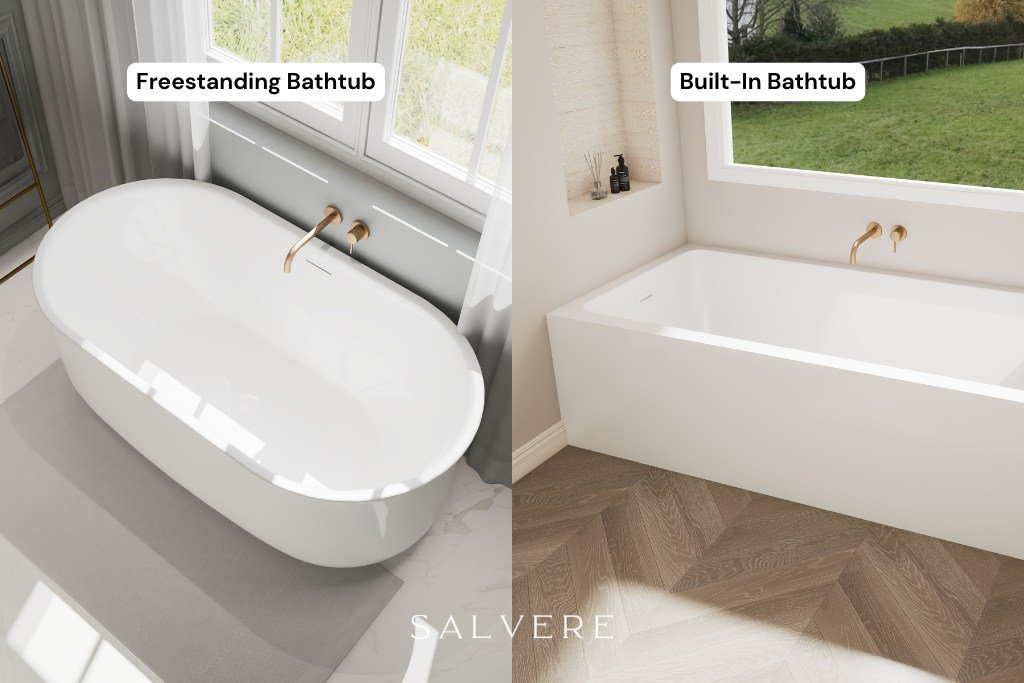
The type of tub you choose has a huge bearing on how its size interacts with your bathroom design.
| Feature | Freestanding Bathtub | Built-in Bathtub (Alcove, Drop-in, Undermount) |
|---|---|---|
| Design Impact | Focal point, sculptural element, makes a statement. | Integrates seamlessly, less visually dominant, more functional. |
| Space Required | Needs clearance on all sides, visually consumes more space. | Fits snugly against walls or within a structure, saves floor space. |
| Sizes Available | Highly variable, including very small to very large. | More standardized for alcove; drop-ins can be large. |
| Plumbing | Requires floor-mounted or wall-mounted filler, can be complex. | Standard plumbing, often hidden. |
| Storage | None inherent, requires external solutions. | Deck for toiletries, often combined with shower niche. |
| Aesthetics | Modern, traditional, luxurious feel. | Clean, utilitarian, traditional, or highly customized (drop-in). |
- Freestanding: While they save no actual floor space (because they need clearance), their visual lightness can make a room feel more open. They come in many sizes from compact to very large.
- Built-in: These are space-savers by definition, fitting against walls or within a custom structure. An alcove tub is the most space-efficient for a shower-bath combo. Drop-in, while needing a deck, can still be a good choice for larger baths where you want a seamless look.
The choice dictates not just the tub's footprint, but the entire room's arrangement.
Measuring Your Space: How to Choose the Right Fit
Precision is paramount.
Choosing the right tub size involves meticulous measurement of your bathroom's available length, width, and height, factoring in necessary clearances for doors, fixtures, and walking paths. Beyond physical dimensions, consider plumbing locations, access for installation, and how the tub's scale will impact the room's overall flow, ensuring a functional, comfortable, and aesthetically pleasing fit.
This step cannot be rushed or approximated. Trust me, I've seen the consequences of poor measurements.
- Measure the Available Space:
- Length: Wall to wall, or wall to nearest obstruction (vanity, toilet, doorway).
- Width: Distance from side wall to side wall.
- Height: From floor to ceiling, and also important for window sills or existing shower heads.
- Door and Drawer Clearance: Ensure the tub won't block doors from opening fully or prevent vanity drawers from being pulled out.
- Walking Paths: Leave at least 24-30 inches for clear movement around the tub.
- Consider Plumbing:
- Where are your existing drain and water supply lines? This can dictate where certain tubs (especially freestanding) can be placed without costly re-piping.
- Ventilation: Ensure proper ventilation over your tub area to prevent moisture issues, especially with deeper soakers.
- Access for Installation: Can the tub (especially a large or heavy one) physically fit through your doorways, hallways, and stairs to get into the bathroom? This is a common oversight.
- Draw it Out: Sketch your bathroom with precise measurements. You can use graph paper or online design tools. Draw the tub to scale. This visual aid is incredibly helpful.
- User Comfort: Consider who will use the tub. Tall people need more length. Deep soakers are great for shorter people too, but ensure there's a comfortable seat or a slight incline.
Accurate measurement prevents headaches and ensures a perfect outcome.
Custom Tub Sizing: Tailored Solutions for Unique Projects
When standard won't do.
Custom tub sizing offers tailored solutions for unique projects, providing the flexibility to perfectly fit irregular spaces, accommodate specific user needs, or achieve distinct aesthetic visions beyond standard dimensions. This approach allows manufacturers like Salvere to create bespoke acrylic bathtubs with precise lengths, widths, depths, or integrated features, ensuring optimal functionality and design integration for challenging layouts or highly personalized luxury installations.
Sometimes, even with all the standard options, your project has unique requirements. This is where custom sizing comes into play.
- Addressing Awkward Spaces: A bathroom might have an unusual alcove, a specific diagonal wall, or a non-standard length that a regular tub just won't fill perfectly without wasted space or awkward gaps. Custom Sizing allows for a perfect fit.
- Specific User Needs: For clients with very specific comfort requirements (e.g., a tub precisely sized for a very tall person, or features for accessibility), a custom tub ensures the perfect ergonomic fit.
- Unique Design Visions: Architects and designers often have a very particular aesthetic in mind that standard tubs cannot achieve. They might need an unusual shape, a specific rim thickness, or integrates seats at a certain height.
- Material Advantages: Acrylic, in particular, is highly moldable. This makes it an excellent material for custom bathtubs as it can be thermoformed into nearly any shape and size without the extreme cost of custom cast iron or stone.
- Historical Renovations: Matching a specific footprint in an older home without having to demolish and rebuild structural elements.
While more expensive than off-the-shelf options, custom tubs provide a solution that truly fits, optimizing both space and aesthetics simultaneously.
Conclusion
Choosing the right tub size is a foundational decision in any bathroom renovation. By carefully measuring your space, understanding standard dimensions, and considering the unique benefits of different tub types and materials, you can select a bathtub that perfectly balances aesthetics, comfort, and functionality, ensuring years of enjoyment.
👉 Learn more about Salvere Bath OEM/ODM capabilities
and how we manufacture acrylic bathtubs in Vietnam.


