
Are you unsure which bathtub style fits your project better? Whether you're furnishing homes, apartments, or hospitality units, the choice between freestanding and built-in tubs can make or break your project's appeal—and your bottom line.
Over the years, I’ve toured countless showrooms, visited job sites across markets, and worked with builders at every level—from large-scale developers to boutique renovators. And again and again, I’ve seen the same question come up: which type of tub works best for which type of buyer?
Freestanding tubs offer design flexibility and sculptural elegance. Built-ins bring efficiency, familiarity, and space savings. Each has its place—but choosing the right one depends on your target market.
Let’s break down what I’ve learned from real projects and conversations in the field.
Understanding the Core Differences
It’s not just about looks. How tubs are installed and used matters.
Freestanding tubs are self-supporting and typically require floor-mounted plumbing. Built-ins are fitted into walls or alcoves, with plumbing hidden and integrated.
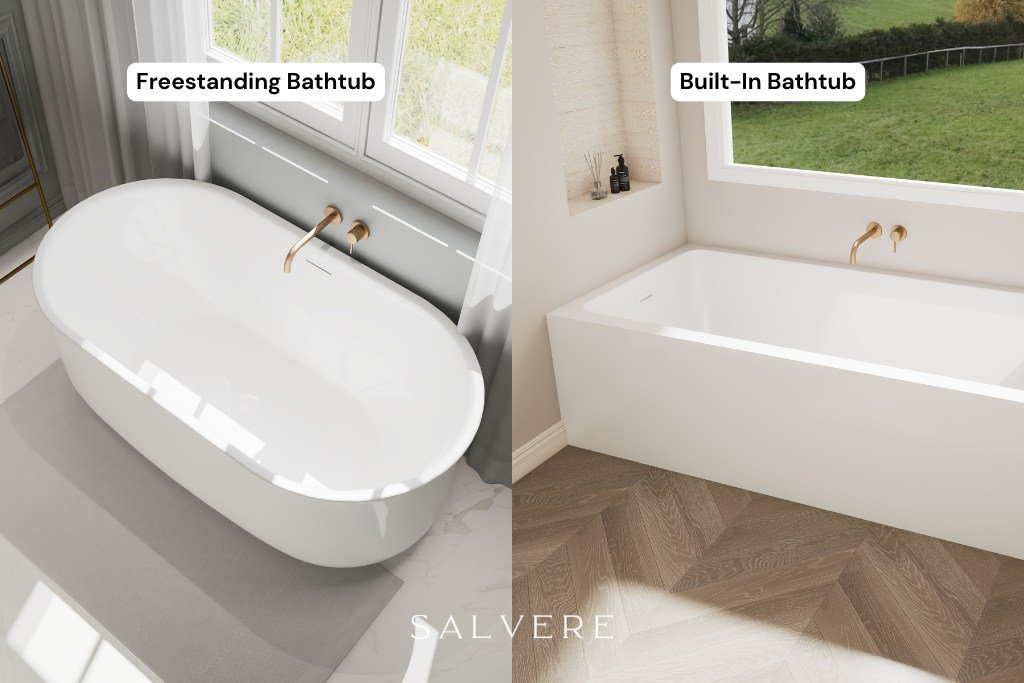
| Feature | Freestanding Bathtub | Built-In Bathtub |
|---|---|---|
| Placement | Anywhere in the bathroom | Against one or more walls |
| Plumbing | Floor-mounted or wall-mounted | Wall-mounted |
| Installation | Straightforward, but plumbing must look tidy | Framing, tiling, and sealing needed |
| Aesthetics | Bold, luxurious, focal point | Seamless, integrated, classic |
| Cleaning | Can be harder to reach underneath | Easier for floor cleaning |
Freestanding tubs make a visual statement. Built-ins use every inch wisely.
Installation: Space, Labor & Cost Considerations
When you're running multiple units, small differences in labor add up.
Built-in tubs tend to be cheaper per unit and use less space, but they take longer to install. Freestanding tubs are easier to place but need more room around them—and may cost more upfront.
From jobs I’ve been on:
-
Space:
- Freestanding: Needs clear space all around.
- Built-in: Ideal for tight layouts and small bathrooms.
-
Labor:
- Freestanding: Two people can usually set it in place if plumbing is prepped.
- Built-in: Carpenters and tilers required for framing and finishing.
-
Cost trade-off:
- Built-in: Lower tub cost + higher labor.
- Freestanding: Higher tub cost + lower labor.
On big projects, labor savings per unit can mean thousands saved.
Design Appeal: What Today’s Buyers Want
Buyers are savvy. They know what they like—and what feels high-end.
Freestanding tubs cater to buyers who want luxury and visual impact. Built-ins appeal to practical buyers or families looking for low-maintenance solutions.
I’ve seen the trends shift depending on the demographic:
| Style Preference | Freestanding | Built-In |
|---|---|---|
| Luxury / Spa | ✔✔✔ Sculptural and impressive | ✔ Functional, but less dramatic |
| Modern Minimalist | ✔✔✔ Clean lines, open feel | ✔✔ Seamless integration |
| Traditional / Family | ✔ Moderate (sometimes too modern) | ✔✔✔ Familiar, practical |
| Space-Conscious | ✘ Needs room | ✔✔✔ Best for compact layouts |
In showroom visits, I see couples drawn to freestanding tubs for master baths, but opting for built-ins elsewhere.
Logistics Matter When Ordering in Volume
If you're ordering containers of tubs, efficiency becomes critical.
Built-ins are easier to stack and ship. Freestanding tubs are bulkier and need custom packaging.
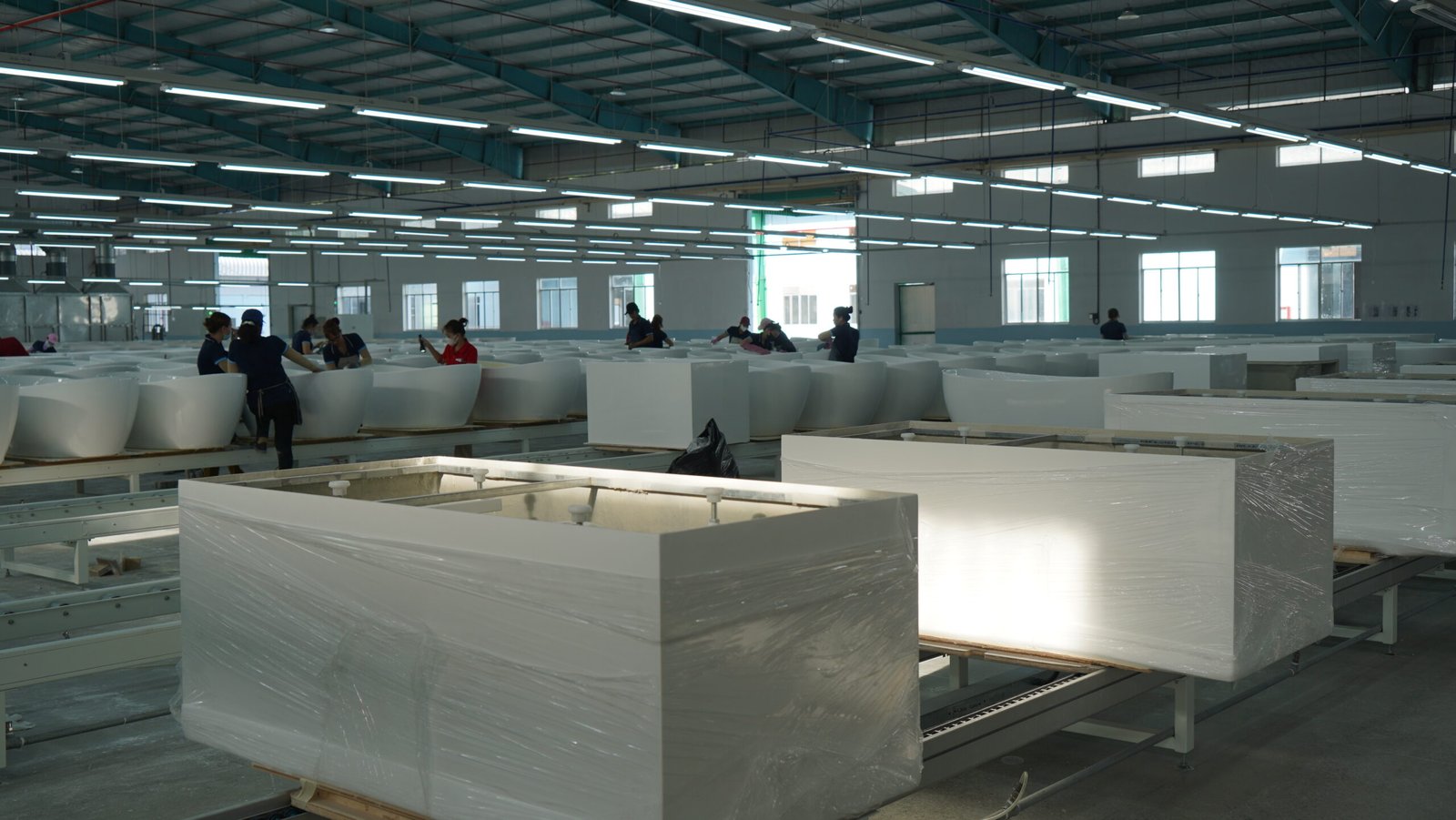
What I’ve noticed in logistics:
-
Packaging:
- Built-in: Uniform boxes, stackable.
- Freestanding: More protective crating, less efficient stacking.
-
Container loading:
- Built-in: Maxes out capacity.
- Freestanding: More air gaps = fewer units per container.
-
Storage:
- Built-in: Easy to warehouse.
- Freestanding: Needs more space.
I always remind partners to factor this into overall cost—not just per tub.
Customization and Branding Potential
Whether you're building homes or branding for retail, flexibility matters.
Both types can be customized, especially with acrylic. But freestanding tubs allow for more dramatic exterior shapes, while built-ins offer more versatility in how the space around them is finished.
Some of the things I've helped develop:
| Custom Feature | Freestanding Tub | Built-In Tub |
|---|---|---|
| Shape / Size | Fully flexible – curves, angles, lengths | Mostly fixed to alcove dimensions |
| Finish / Color | Matte, gloss, specialty tones | Tub body customizable; surrounding tile varies |
| Wellness Features | Jets, lights, smart controls | Same features possible with concealed plumbing |
| Branding | Molded logo or exterior marking | Subtle logo or branded tile option |
Choosing for Your Buyer Segment
No two markets are the same. Think about who you’re selling to.
Built-ins make sense where volume, cost, and easy installs matter. Freestanding tubs shine where design and luxury command attention.
Here’s how I usually break it down:
| Market Type | Best Fit Tub Type | Why? |
|---|---|---|
| Entry-Level Housing | Built-In | Affordable, easy to install, saves space |
| Mid-Range Projects | Combo: Built-ins + Freestanding for master baths | Balance function with design flexibility |
| High-End Custom Homes | Freestanding | Visual impact, luxury feel, personalization |
| Hotels / Hospitality | Mix: Built-in for rooms, freestanding for suites | Cleanability vs. wow-factor |
What I’m Seeing in the Field
I’ve worked on projects where freestanding tubs turned a basic unit into a “premium” sale. I’ve also seen developers switch to built-ins mid-project to cut labor costs.
More often than not, the smartest partners are doing both: using built-ins where function rules, and reserving freestanding tubs for high-visibility upgrades.
Here’s what that looks like:
- Guest bathrooms = built-in.
- Master suites = freestanding.
- Compact apartments = built-in.
- Showcase units = freestanding with custom finish.
It's not about choosing one. It's about choosing strategically.
Final Thoughts
I’ve seen hundreds of projects and thousands of tubs installed. Both freestanding and built-in bathtubs have their place—it all depends on who you're building for.
Ask yourself: What does my customer value more—space efficiency or spa appeal?
If you get that answer right, the rest gets easier.
👉 Learn more about our OEM/ODM capabilities
and how we manufacture acrylic bathtubs in Vietnam.


