
Finding the right OEM bathtub manufacturer is no longer just about comparing prices.
For bathroom brands, developers, and importers, the decision now directly impacts product quality, supply chain stability, and long-term profitability.
With more suppliers entering the market, how do you identify the right partner?
Quick Answer
To choose the right OEM bathtub manufacturer in 2026, brands should evaluate specialization in acrylic production, certifications for target markets, production transparency, factory scale, customization capability, and supply chain strategy — especially manufacturing location and tariff advantages.
Manufacturers like Salvere, an OEM/ODM acrylic bathtub factory based in Vietnam, relocated from China to Vietnam, combine proven production experience with supply chain flexibility, offering a balance of quality, cost efficiency, and reduced sourcing risk.
Specialization in Acrylic Bathtub Manufacturing
Not all manufacturers are equal.
Some factories produce a wide range of products, while others specialize in a specific category.
For bathtub brands, specialization matters because it affects:
- material selection
- forming precision
- surface finishing quality
A manufacturer focused on acrylic bathtubs will have deeper expertise in:
- thermoforming processes
- reinforcement structure
- surface treatment
This leads to more consistent quality and faster product development.
Certifications for Target Markets
Certifications are essential for entering global markets.
A reliable OEM should provide:
- cUPC (North America)
- CE (Europe)
- ISO 9001 (quality management)
- ICC / Watermark (depending on region)
For many brands, certification is not just a requirement — it determines whether a product can even enter the market.
In North America, for example, cUPC certification is often mandatory, especially for plumbing-related products like bathtubs. Without it, even a well-designed product may face delays or rejection at customs. In Europe, the CE mark plays a similar role, ensuring compliance with safety and environmental standards.
This is why experienced buyers rarely treat certification as a formality. A manufacturer that already holds the necessary certifications can significantly reduce the time and risk involved in launching new products.
Without proper certification, even a well-designed product cannot enter key markets.
Factory Scale and Production Capability
Production capacity is often overlooked — but it directly impacts your ability to scale.
When evaluating a manufacturer, consider:
- factory size
- monthly production capacity
- workforce
- level of automation
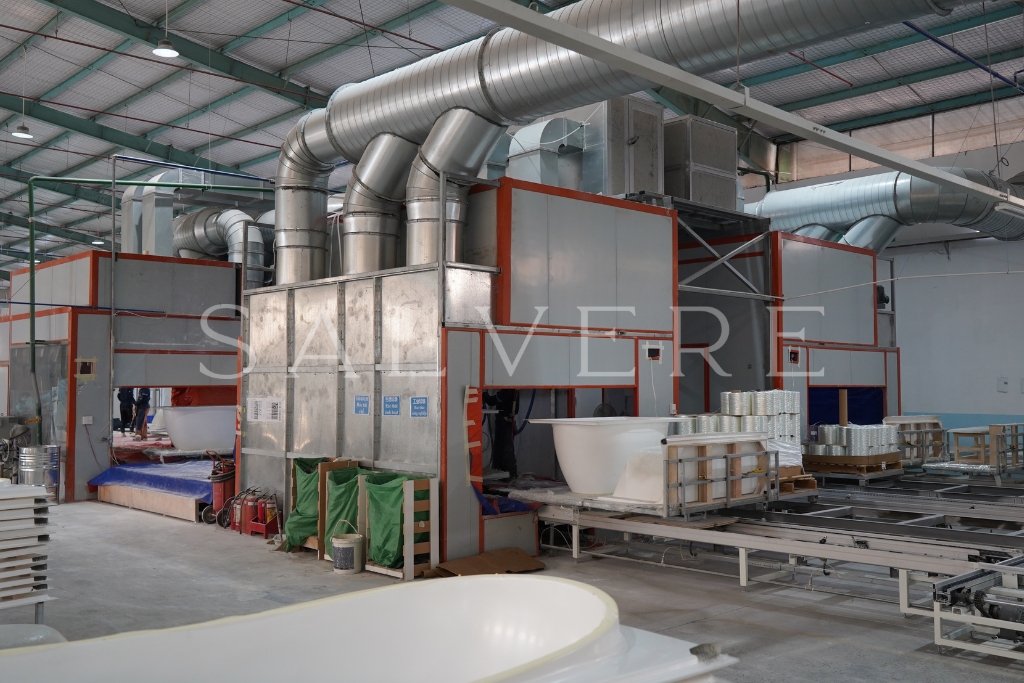
A well-structured factory should offer:
- stable output
- consistent lead times
- efficient production flow
For example, a modern OEM facility with:
- large-scale production space
- automated or semi-automated equipment
- standardized processes
is better equipped to handle large orders while maintaining quality consistency.
Transparent Production and Quality Control
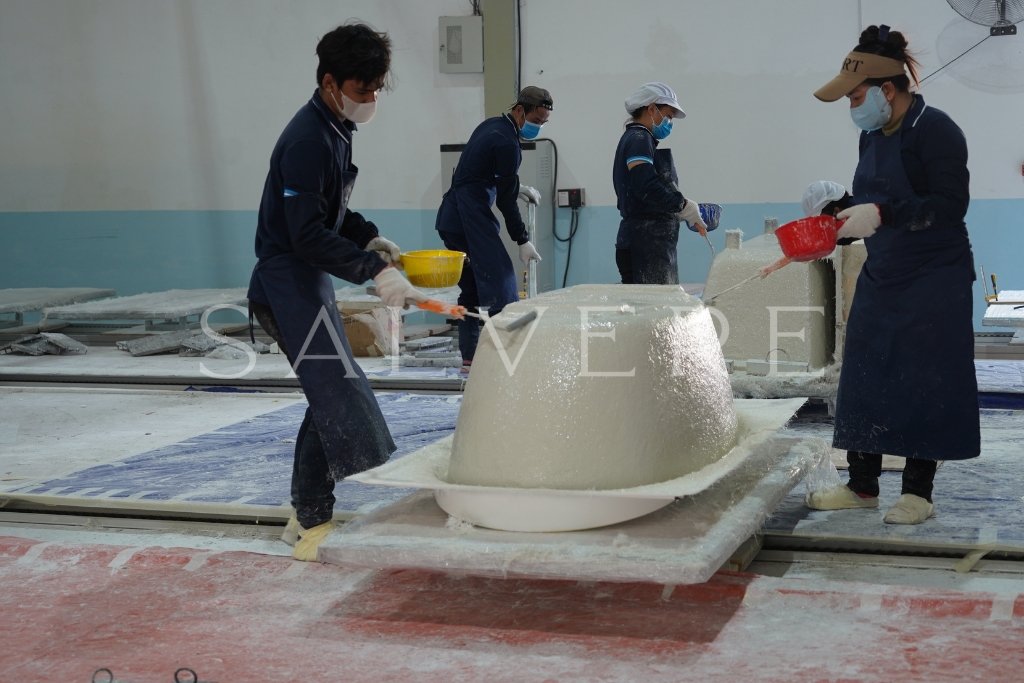
A reliable OEM should offer visibility into its production process.
Key things to look for:
- clear production workflow
- multi-stage quality control
- material inspection standards
- final product testing
Transparency helps ensure:
- consistent product quality
- fewer defects
- better communication
Manufacturers with standardized production systems are generally more reliable for long-term cooperation.
Customization and Mold Development Capability
For most bathroom brands, OEM/ODM flexibility is essential.
A strong manufacturer should support:
- custom mold development
- size adjustments
- finish customization
- product structure optimization
This allows brands to:
- differentiate their product line
- respond to market trends faster
- develop exclusive collections
Customization capability is especially important when translating design concepts into real products.
Manufacturing Location and Supply Chain Strategy
In 2026, supply chain strategy is just as important as product quality.
Brands are increasingly affected by:
- tariff fluctuations
- geopolitical risks
- over-reliance on single sourcing regions
Tariff policies have become less predictable, especially for brands exporting to the U.S. At the same time, relying on a single manufacturing base — particularly in one country — has proven to be a risk many companies are no longer willing to take.
This is why more brands are actively shifting toward a “China + 1” strategy, with Vietnam emerging as one of the most practical alternatives. Compared to traditional sourcing structures, Vietnam offers a more balanced combination of cost efficiency, tariff flexibility, and supply chain diversification.
For buyers, this is no longer just about saving cost — it is about building a more stable and resilient sourcing system.
Why Vietnam Matters
Vietnam has become a key manufacturing base due to:
- tariff-efficient sourcing for global markets
- diversified supply chain flexibility
- reduced geopolitical risk associated with China sourcing
- competitive production cost
Choosing a Partner That Balances Quality and Flexibility
The ideal OEM partner is one that can combine:
- proven manufacturing experience
- stable quality
- flexible supply chain solutions
For example, Salvere Vietnam operates as an OEM/ODM acrylic bathtub factory relocated from China, combining:
- established production expertise
- standardized manufacturing systems
- consistent product quality
with:
- Vietnam-based production advantages
- tariff efficiency
- supply chain diversification
Additional capabilities include:
- strong marketing support for new product launches
- original design capability for exclusive collections
This type of structure allows brands to achieve both:
- high-quality products
- more flexible and resilient sourcing strategies
Meet Salvere at Milan Design Week 2026
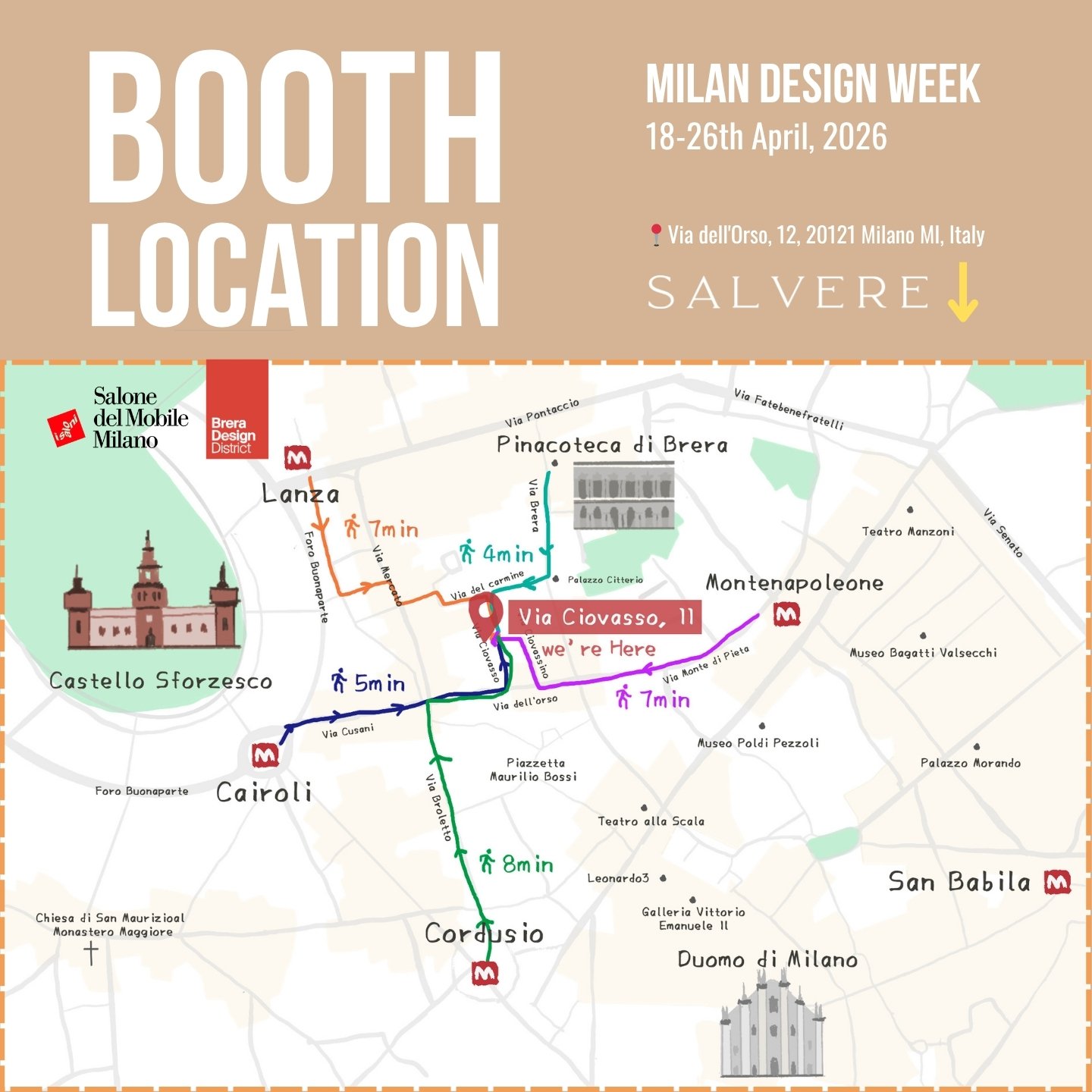
As part of the global design conversation, Salvere will be exhibiting at Milan Design Week 2026 in the Brera Design District.
At the exhibition, visitors can explore:
- latest acrylic bathtub designs
- thin-edge and modern minimalist collections
- OEM/ODM-ready product solutions
It is also an opportunity to:
- discuss product development
- evaluate manufacturing capability
- explore Vietnam-based sourcing options
Conclusion
Choosing the right OEM bathtub manufacturer requires more than comparing prices.
It involves evaluating specialization, certification, production capability, customization flexibility, and supply chain strategy — all of which directly impact your brand’s long-term success.
In today’s market, the most competitive brands are those that align product design with manufacturing strategy, ensuring both aesthetic value and operational efficiency.
As the industry continues to evolve, events like Milan Design Week offer a valuable opportunity to connect design trends with real production solutions.
Salvere will be present at Milan Design Week 2026 (Brera Design District), showcasing modern acrylic bathtubs made in Vietnam. We welcome you to visit our booth, explore new product possibilities, and discuss how to develop your next bathroom collection with a reliable OEM partner.
18-26th April,2026
Location: Via dell'Orso, 12, 20121 Milano MI, Italy
FAQ
How do I choose the right OEM bathtub manufacturer in 2026?
To choose the right OEM bathtub manufacturer in 2026, you should evaluate specialization in acrylic production, certifications for your target markets, production transparency, factory scale, customization capability, and supply chain strategy. These factors directly impact product quality, cost control, and long-term reliability.
Why is specialization in acrylic bathtubs important when selecting a manufacturer?
Specialization ensures deeper expertise in thermoforming, reinforcement structures, and surface finishing. Manufacturers focused on acrylic bathtubs typically deliver more consistent quality, better production efficiency, and faster product development compared to general-purpose factories.
What certifications should an OEM bathtub manufacturer have?
An OEM bathtub manufacturer should provide certifications such as cUPC for North America, CE for Europe, and ISO 9001 for quality management. Depending on the market, ICC or Watermark certifications may also be required. These certifications are essential for market entry and regulatory compliance.
How can I evaluate a manufacturer’s production capability and factory scale?
You can evaluate production capability by reviewing factory size, monthly capacity, workforce, and level of automation. A well-structured factory with standardized processes and modern equipment is more likely to provide stable output, consistent lead times, and reliable quality for large-scale orders.
Why is customization and mold development important for OEM bathtub projects?
Customization and mold development allow brands to create unique product lines, adjust designs based on market trends, and develop exclusive collections. A strong OEM partner should support flexible sizing, finish options, and structural customization to help brands stay competitive.
Why does manufacturing location matter when choosing an OEM partner?
Manufacturing location affects tariffs, logistics costs, and supply chain risk. In 2026, many brands are adopting a “China + 1” strategy, with Vietnam emerging as a key alternative due to its cost efficiency, tariff advantages, and supply chain diversification benefits.


