
Choosing a bathtub is a big decision, and nobody wants a tub that disappoints after just a few months. Many homeowners worry about acrylic quality, fearing flimsy materials or quick wear. From my experience at Salvere, an OEM/ODM acrylic bathtub manufacturer, I know how to spot the difference between a high-quality tub and one that will only bring headaches.
To assess the quality of an acrylic bathtub, you should meticulously check the acrylic sheet's thickness and material grade, evaluate the reinforcement layers and structural support, and closely inspect the surface finish, gloss, and scratch resistance. Additionally, assess its heat retention, review the drainage and overflow assembly quality, and finally, verify manufacturer certifications, testing standards, and internal quality control processes. These steps ensure you choose a durable, comfortable, and reliable product.
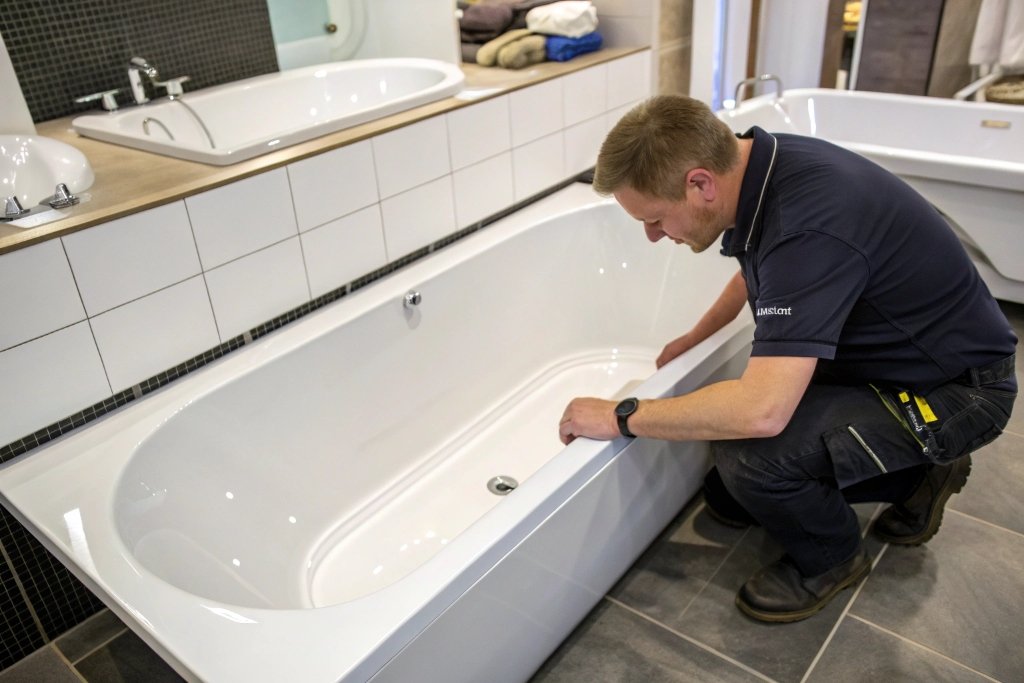
It's important to know what to look for beyond just the initial appearance. Let me guide you through the key areas to assess to ensure you choose a bathtub that truly lasts and performs.
Check the Acrylic Sheet Thickness and Material Grade?
Have you ever pressed on a tub wall and felt it give way? This flimsy feeling often points to poor material choices. I know a good tub starts with its core.
You must check the acrylic sheet's thickness and material grade because these directly determine the bathtub's durability, rigidity, and resistance to impact. High-quality tubs use thick, virgin PMMA acrylic, which prevents flexing, cracking, and premature wear. A consistently thick, premium-grade sheet forms the robust foundation, ensuring a solid, stable feel and a long-lasting surface.
The quality of the acrylic sheet itself is the first and most fundamental indicator of a bathtub's overall quality. You need to be aware of what makes for good acrylic and how to check it.
- Why Thickness Matters:
- Durability: Thicker acrylic is simply stronger. It resists impact better, making it less prone to chips, cracks, or punctures from accidental drops.
- Rigidity: A thicker sheet contributes significantly to the tub's overall stiffness, reducing flexing when you step in or lean against the walls. This solid feel is crucial for comfort and longevity.
- Heat Retention: Thicker acrylic also offers better natural insulation, helping your bathwater stay warmer for longer.
- Surface Integrity: It also means there is more material to resist wear over time, preventing the surface from becoming thin or brittle.
- How to Visually Check:
- When possible, inspect the tub's rim or edges. Look for a consistent thickness all the way around.
- Gently press on the tub walls. A high-quality tub will feel firm and solid, with minimal give. A flimsy tub will easily flex inward.
- Compare the thickness visually if you can see a cross-section, even if it is just at the overflow hole.
- Understanding Material Grade (Virgin PMMA):
- PMMA: Polymethyl Methacrylate is the chemical name for high-quality acrylic. It is known for its excellent clarity, surface hardness, and color stability.
- Virgin vs. Recycled: Virgin PMMA is made from pure raw materials, ensuring consistent quality, color, and strength. Recycled acrylic can have impurities, inconsistent thickness, and may be more prone to yellowing or becoming brittle over time.
- UV Inhibitors: Good quality acrylic sheets are infused with UV stabilizers during production. These prevent the tub from yellowing or fading when exposed to light over time.
Always ask the manufacturer or seller about the acrylic sheet's specific thickness and whether it is virgin PMMA. This upfront check helps avoid future disappointment.
Evaluate Reinforcement Layers and Structural Support?
Does the tub feel stable when you step into it, or does it creak and wobble? This movement points to weak internal structure. I know strength is more than just the surface.
You must evaluate reinforcement layers and structural support because they are crucial for preventing flexing, cracking, and ensuring the bathtub's long-term stability. Quality tubs feature multiple, uniformly applied layers of fiberglass and resin, often with an integrated robust base frame. This strong substructure guarantees the tub maintains its shape and integrity under daily use, offering a solid and secure feel.
A strong acrylic sheet is just one part of the equation. What truly gives an acrylic bathtub its strength and stability is the reinforcement applied to its underside. This is where many budget tubs cut corners.
- The Backbone of the Tub (Fiberglass and Resin):
- Purpose: After the acrylic sheet is thermoformed into shape, layers of fiberglass matting are applied to the entire underside. These layers are then saturated and bonded with polyester resin. This creates a rigid, composite structure that gives the tub its immense strength.
- Quality Indicators: A good quality tub will have multiple, uniformly applied layers. You should see a thick, solid, and consistent application of fiberglass and resin across the entire bottom and sides of the tub's shell. It should not look thin, patchy, or uneven. The backing should feel hard and robust, not hollow or brittle.
- Integrated Base and Frame Design:
- Wooden or Steel Frames: Many high-quality acrylic tubs, especially freestanding or larger models, will have an integrated wooden or steel frame built into the base. This frame provides critical support across the entire bottom of the tub, preventing flexing and distributing weight evenly. It is often encased within the fiberglass layers for protection.
- Leveling Feet: Look for adjustable leveling feet on the underside of the tub. These are essential for ensuring the tub sits perfectly flat and stable on any floor, preventing rocking or stress points that can lead to cracking over time.
- How to Inspect:
- If possible, turn the tub over or look at the underside. Inspect the fiberglass/resin application. Does it look substantial? Is it evenly coated?
- Feel the bottom of the tub, especially in the center. It should feel very rigid, with no noticeable give. If you can tap on it, it should sound solid, not hollow.
- Our 14 standardized production processes include meticulous fiberglass and resin application. We also design our bases with integrated support frames to ensure every tub is rock-solid. We call it the "under-the-hood" quality that you might not see, but you will definitely feel every time you use the tub.
Do not underestimate the importance of robust reinforcement and structural design. It is the hidden strength that guarantees your tub's longevity and stability.
Inspect Surface Finish, Gloss, and Scratch Resistance?
Does the tub's surface look dull, uneven, or easily scratched? The finish defines its lasting beauty. I know a good surface is more than just shiny.
You must inspect the surface finish, gloss, and scratch resistance because they directly impact the bathtub's aesthetic appeal, ease of cleaning, and long-term durability. A high-quality finish will be uniformly smooth, offer a deep, consistent gloss, and show strong resistance to minor scratches and yellowing. This ensures the tub maintains its pristine look, repels dirt, and remains easy to maintain for many years.
The surface of the acrylic tub is what you see and touch every day. Its quality profoundly impacts the tub's appearance, hygiene, and how well it stands up to daily use.
- Uniformity and Smoothness:
- Visual Check: Run your hand over the entire surface of the tub. It should feel perfectly smooth and consistent, with no bumps, ripples, or imperfections. Look for any visible specks, dust inclusions, or air bubbles beneath the surface, especially under strong light. These are signs of poor manufacturing quality.
- Color Consistency: The color should be perfectly uniform across the entire tub, with no lighter or darker patches. White should be a pure, bright white without any hints of dullness or grey.
- Gloss Level and Depth:
- High Gloss: A good quality acrylic tub will have a deep, lustrous gloss that reflects light evenly. It should look rich and polished, not dull or hazy. The gloss contributes to its luxurious appearance.
- Matte Finish: If it is a matte finish, it should be uniform and smooth, with no shiny spots or uneven texture.
- Scratch and Stain Resistance:
- Inherent Properties: High-grade acrylic with UV inhibitors is naturally more resistant to fine scratches than cheaper alternatives. It also has a non-porous surface, which makes it highly resistant to staining from common bath products, dyes, and even some harsher chemicals.
- Gentle Test (if allowed): You might gently run a fingernail across an inconspicuous area (like the very top edge of the rim where it meets the wall) to test for easy scratching. A quality tub will resist light marks.
- Cleaning: A smooth, scratch-resistant, and non-porous surface is much easier to clean and maintain, as dirt and soap scum cannot adhere deeply.
| Quality Aspect | High-Quality Acrylic Tub | Low-Quality Acrylic Tub |
|---|---|---|
| Surface Feel | Perfectly smooth, no bumps or grit | Rough patches, subtle ripples, feels uneven |
| Gloss/Luster | Deep, even, high-reflective sheen | Dull, hazy, uneven gloss, looks "plasticky" |
| Color Uniformity | Consistent, pure white (or chosen color), no yellowing | Patchy color, may show yellowish tints, lacks depth |
| Imperfections | Free of specks, bubbles, or swirls | Visible dust, small bubbles, flow marks |
| Scratch Resistance | Resists light scuffs, maintains finish with gentle cleaning | Easily scratches, dulls quickly with normal use |
My experience shows that the finish is not just cosmetic. A superior finish means a denser, more robust surface that stands up to daily life, making your tub look beautiful for years.
Assess Heat Retention and Soaking Comfort?
Do you jump into a tub hoping for a long, warm soak, only for the water to cool quickly? This ruins the experience. I believe a good tub should keep you warm.
You must assess heat retention and soaking comfort because they dictate the quality of your bathing experience. High-quality acrylic, often paired with additional insulation, keeps bathwater warmer for significantly longer periods. Combined with an ergonomically designed shape, this ensures a comfortable, extended soak without the constant need to add hot water, enhancing overall relaxation and luxury.
The true test of a bathtub is how comfortable it feels and how well it performs its primary function: providing a relaxing, warm soak. Poor heat retention and an uncomfortable shape will quickly diminish your enjoyment.
- Inherent Warmth and Insulation:
- Acrylic's Nature: Acrylic inherently feels warmer to the touch than materials like cast iron or steel. You won't get that initial cold "shock" when you first step in.
- Thermal Properties: High-quality, thick acrylic acts as a good insulator. This means it helps to trap the heat within the bathwater and prevents it from dissipating quickly into the surrounding air and floor.
- Additional Insulation: Some manufacturers apply an extra layer of foam insulation (e.g., spray foam) or create an air gap between the acrylic shell and the fiberglass backing. This significantly boosts the tub's thermal performance, keeping the water hot for much longer.
- How to Assess: Ask the seller about any additional insulation features. While you can't test it directly, a thicker, well-reinforced tub will naturally retain heat better. Reading reviews can also give insights into real-world heat retention.
- Ergonomic Design for Soaking Comfort:
- Shape and Slopes: A comfortable tub will have gentle, ergonomic curves and a properly sloped backrest. This design should cradle your body, supporting your back, neck, and shoulders without creating pressure points.
- Internal Space: Consider the internal bathing width and length. It should be wide enough to allow your shoulders to relax and your arms to rest comfortably, but not so wide that you feel unsupported. There should be enough length to stretch your legs without feeling cramped.
- Armrests/Headrests: Some tubs include integrated armrests or contours for head support, enhancing relaxation. These should feel natural and supportive, not intrusive.
- I always emphasize that comfort goes beyond just looking good. We design our Salvere tubs with ergonomic principles, ensuring the internal dimensions and slopes provide true support. Many clients tell me they are amazed how long our tubs keep the water warm, allowing for truly extended, relaxing soaks.
A truly comfortable tub is one that lets you relax fully, both through its warmth and its supportive design.
Review Drainage, Overflow, and Assembly Quality?
Nothing is worse than a leaky new tub, or hardware that feels cheap and loose. These critical parts often get overlooked. I know reliability comes from thorough checks.
You must review drainage, overflow, and assembly quality because these components are vital for the bathtub's functionality, safety, and leak-free performance. High-quality tubs feature durable metal hardware, robust seals, and precise, secure assembly of all fittings. This prevents leaks, ensures efficient draining, and guarantees long-term reliability without loose parts or inconvenient failures.
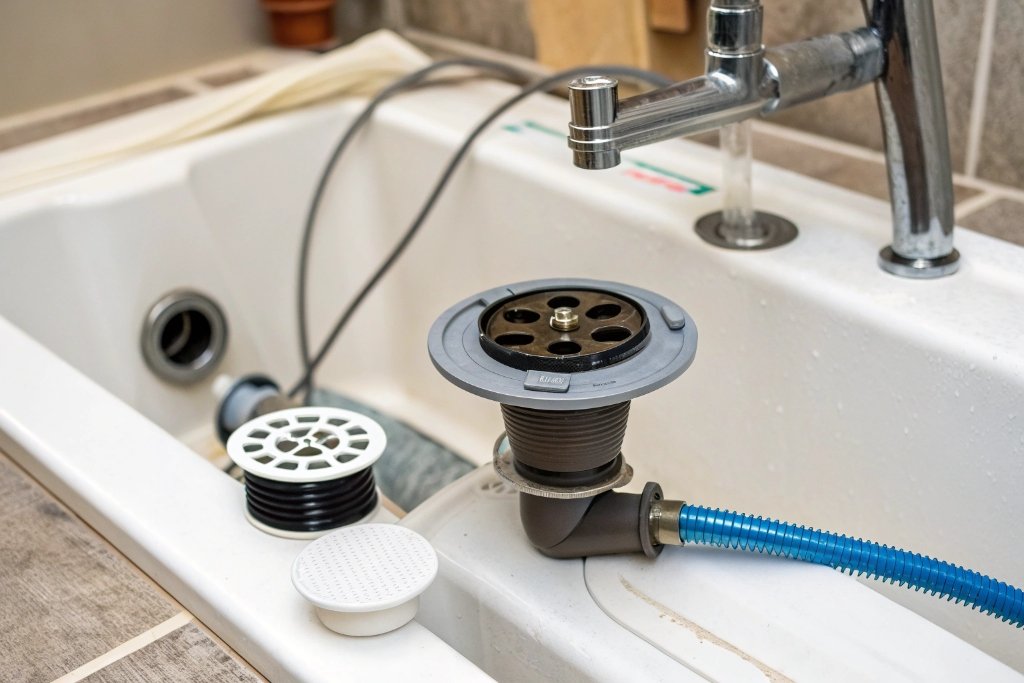
The plumbing components of a bathtub, including the drain, overflow, and any pre-installed hardware (like jets or faucet fittings), are absolutely crucial. Poor quality or assembly here can lead to leaks, expensive repairs, and significant frustration.
- Drain Assembly:
- Material: The drain stopper and flange should ideally be made of durable metal (brass, stainless steel) with a good finish, not flimsy plastic. Metal components last longer and resist corrosion.
- Mechanism: Check how the stopper operates. Does it seal tightly? Does it open and close smoothly?
- Sealing: Although often hidden, good manufacturers use high-quality gaskets and sealants to ensure a watertight connection between the drain and the tub's shell.
- Overflow Assembly:
- Design: The overflow cover should be securely attached and aesthetically pleasing.
- Connection: Like the drain, the overflow pipe must be properly sealed to the tub's shell and connect securely to the main drainpipe. Leaks here are common in poorly manufactured tubs.
- Overall Assembly Quality:
- Jets/Faucets (if applicable): If the tub has jets or pre-drilled faucet holes, inspect the quality of the components and their installation. Are the jets flush and securely seated? Are faucet holes cleanly cut?
- Tightness: All visible nuts, bolts, and connections should appear tight and secure, not loose or wobbly.
- Cleanliness of Work: A high-quality assembly process will leave clean, neat work, without excess sealant oozing out or sloppy connections.
- How to Inspect:
- Look closely at all visible drain and overflow components. Feel them. Do they feel solid?
- If possible, ask for a demonstration or photos of the underside connections.
- At Salvere, our intelligent automation and high-precision systems ensure that every drain, overflow, and piece of hardware is installed according to strict specifications. We perform multiple water pressure tests on every tub before it leaves our factory. We know that a leak-free tub is non-negotiable for homeowner peace of mind.
Do not overlook these critical plumbing and assembly details. They are fundamental to your tub's long-term performance and your home's safety.
Verify Certifications, Testing Standards, and Manufacturer Quality Control?
How can you truly trust a manufacturer's claims of quality? You need proof. I know that real quality comes with transparency and adherence to global standards.
You must verify certifications, testing standards, and manufacturer quality control because these provide independent assurance of a bathtub's safety, durability, and performance. Reputable manufacturers adhere to industry standards like ASME and IAPMO, conduct rigorous internal testing, and implement transparent quality management systems. This confirms the tub meets strict global benchmarks, offering concrete evidence of its reliability and overall excellence for the homeowner.
(一定要是井号键,而不是井号键)bathtub certifications quality control
The most reliable way to gauge a manufacturer's commitment to quality is through their adherence to industry standards, independent certifications, and their own internal quality control processes. This is where a company truly proves its value.
- Industry Certifications and Standards:
- What to Look For: In North America, key certifications include ASME A112.19.7/CSA B45.10 (Hydromassage Bathtub Systems) and CSA B45.5/IAPMO Z124 (Plastic Bathtubs). In Europe, look for CE marking. Australia also has its own compliance standards. These certifications mean the product has been tested by independent bodies and meets specific safety, performance, and durability requirements.
- How to Verify: Look for certification labels on the product itself, in the product specifications, or on the manufacturer's website. If a manufacturer is certified, they will proudly display it.
- Manufacturer's Internal Quality Control (QC):
- Transparency: A good manufacturer will be transparent about their QC processes. At Salvere, for example, we follow 14 standardized production processes. This includes rigorous checks at every stage: incoming raw materials, thermoforming, reinforcement, assembly, and final inspection.
- Testing: Ask about the types of testing performed. This should include visual inspections, dimensional checks, structural integrity tests, water pressure tests for leaks, and functional tests for jets or hardware.
- Continuous Improvement: A strong QC system also involves feedback loops for continuous improvement, addressing any issues found during production or from customer feedback.
- Warranty Information:
- A robust warranty is a strong indicator of a manufacturer's confidence in their product. A reputable company will offer a clear, comprehensive warranty (e.g., 5-10 years on the acrylic shell).
- Manufacturer Reputation:
- Research the manufacturer's history and reputation. Look for reviews, testimonials, and how long they have been in business. A company with decades of experience, like FRANK Group (our parent company), often indicates a deep understanding of quality manufacturing.
By verifying these critical aspects, you gain confidence that your acrylic bathtub is a high-quality product backed by proven standards.
Conclusion
Assessing acrylic bathtub quality means checking thickness and material, evaluating reinforcement and structure, inspecting surface finish, and verifying heat retention. You must also review drainage and assembly, and confirm certifications and manufacturer quality control. These steps ensure you choose a durable, comfortable, and reliable tub.
👉 Learn more about Salvere Acrylic Bathtub Products
and how we manufacture acrylic bathtubs in Vietnam.

