
Selecting the right bathtub size isn’t just about aesthetics — it’s a key factor in project efficiency, end-user satisfaction, and cost management. Whether you're furnishing high-rise apartments, hospitality projects, or residential developments, getting the size right from the start helps avoid expensive modifications later.
Below is a practical guide tailored for B2B buyers, including builders, contractors, interior designers, and procurement teams.
Understand the Most Common Bathtub Sizes
The first step is understanding the size ranges the market commonly accepts.
| Type | Common Length (in) | Common Width (in) | Common Height (in) |
|---|---|---|---|
| Alcove | 60" | 30-32" | 14-18" |
| Freestanding | 55-72" | 28-36" | 20-28" |
| Drop-in | 60-72" | 32-42" | 18-24" |
| Corner | 48-60" (sides) | 48-60" (sides) | 18-22" |
| Walk-in | 48-60" | 28-32" | 36-40" |
Knowing these dimensions allows procurement teams to make quick, informed comparisons when sourcing from multiple suppliers.
Match Tub Size to the Project Type
Different project types have different space constraints and user expectations:
- Entry-level apartments: compact alcove tubs (e.g., 60x30x16")
- Luxury residences: deep soaking freestanding tubs (e.g., 66x32x24")
- Hotels: ergonomic drop-in tubs with quiet drains and faster fill rate
- Accessible housing: walk-in tubs with compliant entry height and grab bars
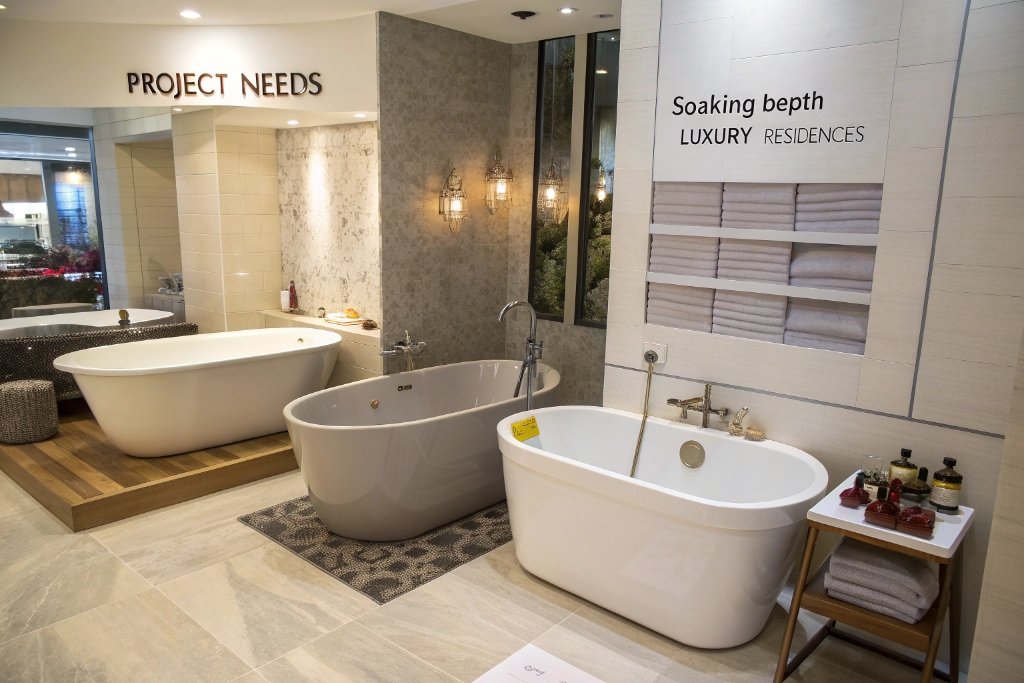
Make sure the bathtub type and size align with the lifestyle needs and safety expectations of the end users.
Prioritize Comfort: Interior Space Matters
External dimensions don’t tell the full story. Many B2B clients make the mistake of only comparing outer size. What really matters:
- Soaking depth (at least 18” water depth for premium models)
- Backrest angle and arm support
- Interior bottom width (28”+ preferred for adult comfort)
Ask manufacturers for both exterior and interior dimensions.
Plan for Layout Constraints and Plumbing
Before you confirm any tub, assess the site:
- Wall-to-wall dimensions (especially for alcove or built-in tubs)
- Floor space availability (important for freestanding models)
- Window and door clearance
- Drain and overflow location (left, right, or center)
This avoids problems like misaligned drainage, blocked access, or non-compliant setups.
Don’t Overlook Logistics: Delivery, Entry Points & Installation Access
Even the best design won’t work if the tub can’t get into the room.
Check for:
- Elevator and hallway width
- Door clearance and tight turns
- Packaging size vs. product size
- Weight and need for extra labor or machinery
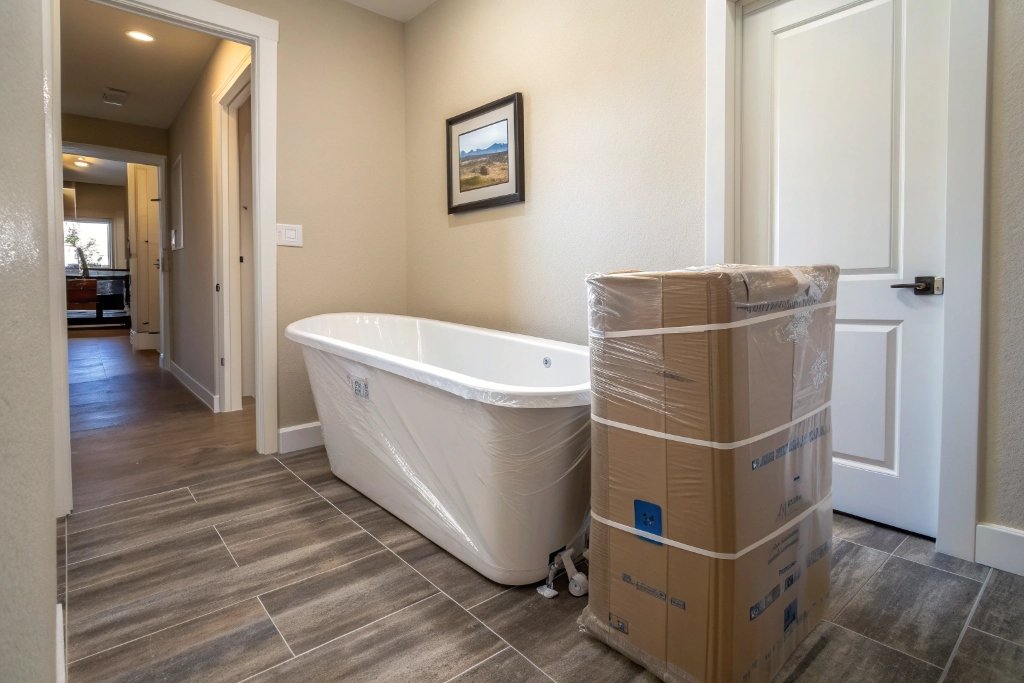
Tip: Always get the full packaged dimensions and weight from your supplier, not just the product specs.
Align Specs Across All Stakeholders
We’ve seen projects stall because the size on the drawing didn’t match the actual unit delivered.
To avoid this:
- Share a unified spec sheet with architects, contractors, and installers
- Confirm all model numbers and dimensions before purchase
- Request cut-out templates or CAD drawings for pre-install coordination
This keeps everyone aligned from planning to handover.
Consider Custom Sizes for Unique Projects
Some high-end or uniquely shaped bathrooms need custom tub sizes.
Custom orders are ideal when:
- Your space can’t accommodate standard options
- You need a precise soaking depth
- You want to fit a tub into a deck or odd-shaped corner
- The target users require specific ergonomic needs
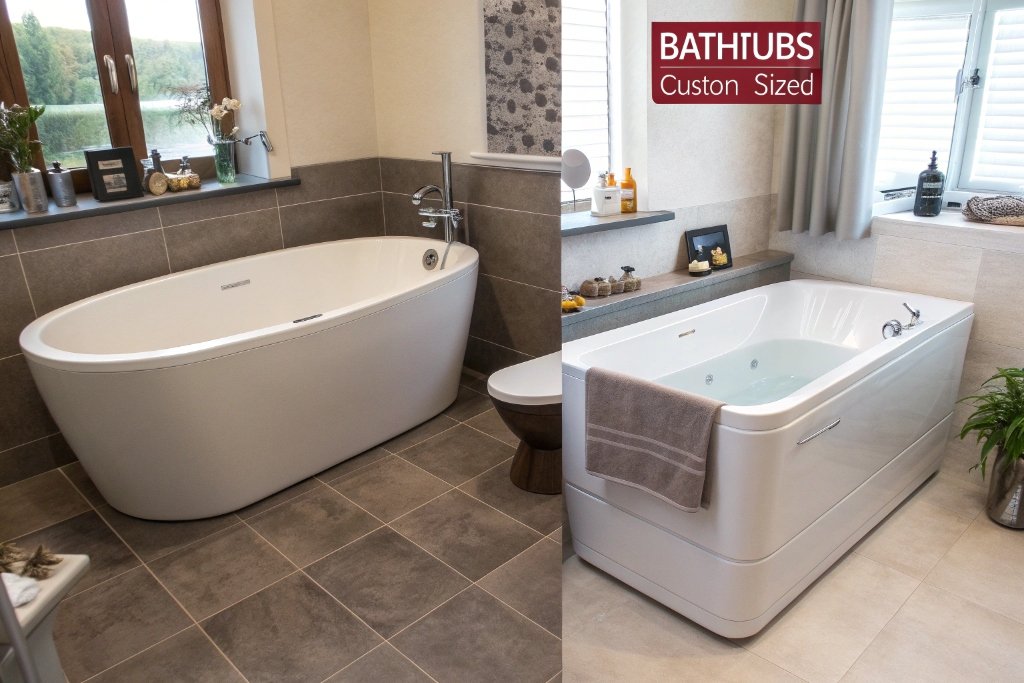
Check if your supplier supports OEM customization with low MOQs.
Budget for Size-Related Costs
Larger tubs cost more in multiple ways:
- More material = higher manufacturing cost
- More water volume = more demand on hot water heaters
- More weight = possible floor reinforcement
- Freestanding models = more complex installation
Help clients make informed decisions by clearly stating these implications during specification.
Final Thoughts
In B2B projects, bathtub sizing isn’t just a design question — it’s a logistical, ergonomic, and cost consideration. The right size ensures the product not only fits but functions optimally for both developers and end-users.
As someone who’s worked with countless builders and purchasing teams, my advice is simple: measure carefully, align early, and never assume one-size-fits-all.
If you need help specifying the right acrylic tub sizes for your upcoming project, feel free to get in touch. Happy to share what I’ve seen work best in the field.
👉 Learn more about our OEM/ODM capabilities
and how we manufacture acrylic bathtubs in Vietnam.

