
As a dedicated acrylic bathtub manufacturer at Salvere, I spend my days considering the nuances of different tub types and their impact on bathroom design and user experience. Both drop-in and alcove tubs are foundational choices in many bathroom projects, each offering distinct advantages and considerations. There isn't a universally "better" option; the ideal choice depends entirely on your specific project needs, aesthetic goals, and practical constraints.
Deciding whether drop-in or alcove tubs are better hinges on factors like bathroom layout, budget, desired aesthetic, and installation requirements. Alcove tubs, integrated into a three-wall recess, offer space efficiency and cost-effectiveness, ideal for shower-bath combos. Drop-in tubs, inserted into a custom deck, provide greater design flexibility and a luxurious, built-in appearance, though often at a higher cost and requiring more space. The "better" choice is the one that best aligns with the specific functional and design demands of your project.
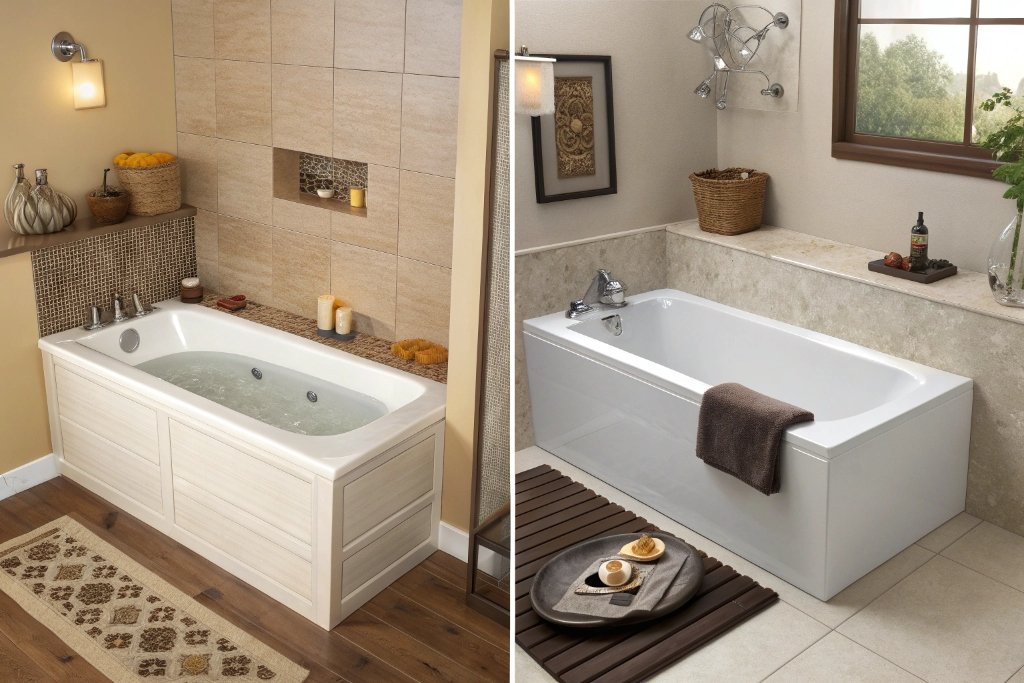
Let’s dissect the differences to help you make an informed decision for your next bathroom project.
Understanding the Core Differences
It all starts with how they fit into your bathroom.
The core differences between drop-in and alcove tubs lie in their installation method and finished appearance; alcove tubs are encased by three walls and fully supported by framing, making them ideal for shower-bath combinations, while drop-in tubs are designed to be set into a custom-built, finished deck or platform, offering a more luxurious, integrated look and broader design flexibility for the surround.
Though both are often built into the bathroom structure, their fundamental design and installation set them apart.
- Alcove Tubs:
- Definition: An alcove tub is designed to be installed in a three-wall recess. It has three unfinished sides and one finished side (the apron or skirt).
- Installation: The tub is physically surrounded by wall framing on three sides, and often serves as the base for a shower. The finished apron faces into the room.
- Purpose: Primarily function as a shower/tub combination, making them the most common choice for secondary bathrooms or where space is limited.
- Drop-in Tubs:
- Definition: A drop-in tub is a bare shell with a finished rim. It has no finished sides or integrated aprons.
- Installation: This tub is "dropped into" a custom-built frame or deck. The deck can be made of various materials like wood, tile, stone, or even a solid surface. This deck then forms the finished outer appearance of the tub.
- Purpose: Designed for a more integrated, custom look, typically in larger bathrooms where the tub is a focal point. They are less commonly used for shower combinations due to the width of the deck, though it is possible.
Understanding these distinctions is crucial, as they influence everything from installation to final appearance.
Space Planning and Bathroom Layout Compatibility
The right fit for your room.
Space planning for drop-in and alcove tubs involves distinctly different bathroom layout compatibilities: alcove tubs are ideal for efficient use in smaller, rectangular bathrooms due to their three-wall integration, making them suitable for standard shower-bath configurations. Drop-in tubs, however, require more floor space for their surrounding deck and offer greater flexibility in placement within larger bathrooms, allowing for custom aesthetic statements and more luxurious layouts typically without an overhead shower.
Your bathroom's dimensions and existing layout often dictate which tub style is most compatible.
- Alcove Tubs and Small/Standard Bathrooms:
- Layout Fit: Most homes have bathrooms designed for an alcove tub. They fit perfectly into a standard 5x8 foot or 6x8 foot bathroom. The three-wall enclosure maximizes space efficiency, allowing for a toilet and vanity nearby.
- Shower Integration: They are inherently designed for a shower-over-tub setup, making them a space-saving solution for multi-functional primary or secondary bathrooms.
- Aesthetic Limitation: The built-in nature makes them less of a design statement and more of a functional necessity.
- Drop-in Tubs and Larger Bathrooms:
- Layout Fit: Drop-in tubs typically require more floor space. You need room not only for the tub basin but also for the surrounding deck. This makes them less suitable for compact bathrooms.
- Placement Flexibility: They don't need to be against walls on three sides. They can be placed against one wall, in a corner with a custom corner deck, or even island-style in a very large bathroom. This allows for creative layouts.
- Shower Integration: While possible, integrating a shower can be trickier. The wide deck necessitates either stepping over it to get into the shower or installing a fixed shower screen that extends across the deck, which can look bulky. They are often chosen for bath-only experiences.
Match the tub to the available space and its intended use.
Installation Complexity and Cost Implications
Beyond the tub's price tag.
Installation complexity and cost implications differ significantly between drop-in and alcove tubs: alcove tubs generally involve simpler, more cost-effective installation due to their standardized three-wall recess and integrated apron. Drop-in tubs, however, demand more labor for building a custom deck or platform, often requiring specialized carpentry and finishing work (tiling, stone fabrication), leading to higher overall installation costs, in addition to the tub's price.
The cost of the tub itself is only one part of the equation; installation can dramatically affect the total project budget.
Alcove Tub Installation:
- Complexity: Relatively straightforward. The tub is simply set into the framed recess, leveled, and then connected to plumbing. The finished walls and tiling (for a shower surround) are directly installed above the tub's flange.
- Labor: General plumber and tiler/contractor. No specialized carpentry is typically needed for the tub enclosure itself, as the walls form the structure.
- Materials: Less additional material cost beyond the tub and standard wall finishes.
- Overall Cost: Generally the most cost-effective option for both the tub unit and installation.
Drop-in Tub Installation:
- Complexity: More complex. It requires building a robust, custom frame or sub-structure (the 'deck') to support the tub's weight and shape. The plumber installs the tub into this shell, and then a finish carpenter, tiler, or stone fabricator completes the deck.
- Labor: Requires skilled carpentry, potentially a stone fabricator, in addition to plumbing and tiling. This adds labor hours and specialized expertise.
- Materials: Significant additional material cost for the deck (lumber, cement board, tile, stone, solid surface, grout, Thinset). The deck itself can be a substantial cost.
- Overall Cost: Typically significantly more expensive than an alcove tub due to the extensive custom work and additional materials.
Always factor in both the tub's price and the installation costs when budgeting for your project.
Aesthetic Impact and Design Flexibility
Looks matter, but so does practicality.
Alcove tubs offer a clean, integrated aesthetic, blending seamlessly into the bathroom’s existing structure with limited design flexibility, primarily serving a functional role. In contrast, drop-in tubs provide vast aesthetic impact and design flexibility, allowing for custom surrounds of various materials to create a luxurious focal point. This enables personalization that transforms the tub into a statement piece, defining the room's style and enhancing its overall ambiance far beyond a standard installation.
The choice between these two tub styles deeply influences the visual character of your bathroom.
Alcove Tubs:
- Aesthetic: Functional, clean, and understated. The tub typically disappears into the wall, giving prominence to the tiling or shower surround. It's not usually the primary focal point of the bathroom.
- Design Flexibility: Limited to the choice of tub material (e.g., acrylic color), faucet style, and the tile used for the shower walls. The apron is usually integrated and simple.
- Visual Impact: Tends to be more utilitarian. It performs its job well without drawing excessive attention.
Drop-in Tubs:
- Aesthetic: Integrated, luxurious, and highly customized. The deck itself becomes a major design element. It can be made to look grand, modern, minimalist, or traditional based on the chosen finishing materials (tile, marble, wood, etc.).
- Design Flexibility: Extremely high. You can customize the size and shape of the deck, add built-in ledges, steps, integrated lighting, or even a fireplace nearby. The tub becomes a centerpiece.
- Visual Impact: A significant focal point. A beautifully tiled or stone-clad deck with a sleek acrylic drop-in tub can elevate the entire room's design.
If a sleek, custom, and luxurious aesthetic is paramount, a drop-in tub offers unparalleled opportunities. If functional efficiency and a clean look are the priority, an alcove tub works perfectly.
Durability, Maintenance, and End-User Experience
Beyond initial appeal, how do they perform over time?
Durability differences between drop-in and alcove tubs are primarily influenced by the surrounding materials and installation quality rather than the tub itself, with acrylic being inherently durable for both. Maintenance for drop-in tubs can be more extensive due to grout lines and larger deck surfaces requiring cleaning, while alcove tubs are simpler to maintain. The end-user experience often favors the luxurious feel and integrated comfort of a drop-in tub vs. the functional versatility of an alcove, depending on user priorities.
The long-term performance and daily enjoyment of your tub depend on more than just its initial appearance.
Durability:
- The Tub Itself: Whether acrylic, cast iron, or solid surface, the durability of the tub material is largely independent of whether it's drop-in or alcove. Our acrylic tubs at Salvere are engineered for longevity in both configurations.
- Surround Durability: This is where the difference lies.
- Alcove: The strength comes from the wall framing and moisture-resistant backer board behind the tiles. A well-installed alcove tub and shower surround is very durable.
- Drop-in: The durability comes from the custom-built deck. If constructed properly with robust framing and appropriate waterproofing, it's very durable. Issues arise from poor construction or improper waterproofing.
Maintenance:
- Alcove Tubs: Relatively straightforward. Cleaning the tub and the tiled shower walls. Fewer grout lines to contend with compared to a large tiled deck.
- Drop-in Tubs: The wide deck often has more surface area and more grout lines (if tiled) which require more frequent cleaning and sealing. However, if the deck is made of a large slab of stone or solid surface, maintenance can be minimal.
End-User Experience:
- Alcove Tubs: Practical, efficient, and comfortable for everyday use. Great for showering and bathing, particularly for families. The integrated apron can sometimes feel less luxurious.
- Drop-in Tubs: Offers a more luxurious, integrated, and expansive feel. The wide deck can provide space for candles, books, or a glass of wine, enhancing the soaking experience. Often chosen for longer, more relaxing baths.
Your lifestyle and priority (quick showers vs. long soaks) should weigh heavily on this decision.
Which Tub Style Is Right for Your Project?
It depends on your priorities.
Choosing the right tub style—drop-in or alcove—is a strategic decision tailored to your specific project needs. If space efficiency, cost-effectiveness, and practical shower-bath combinations are priorities, then an alcove tub is the ideal solution. However, if you aim for a luxurious, custom aesthetic with expansive design flexibility in a larger bathroom, a drop-in tub will fulfill that vision.
Ultimately, the "better" tub style depends on your bathroom's size, your budget, your aesthetic preferences, and how you intend to use the tub and shower space. Alcove tubs are generally better for maximizing space and value in standard bathrooms, offering practical shower-tub combinations. Drop-in tubs, with their custom deck and integrated look, are better for creating a luxurious, custom focal point in larger bathrooms where budget and design flexibility are key priorities.
Here's a quick decision guide:
| Feature | Alcove Tubs | Drop-in Tubs |
|---|---|---|
| Bathroom Size | Small to Medium | Medium to Large (requires space for deck) |
| Primary Use | Shower/Tub Combination | Soaking Bathtub (less common for shower combos) |
| Aesthetic Goal | Functional, Clean, Integrated | Luxurious, Custom, Focal Point |
| Installation Cost | Lower (straightforward) | Higher (custom deck construction) |
| Design Flexibility | Limited (standard look) | Very High (custom deck materials and design) |
| Maintenance | Generally lower (fewer grout lines) | Can be higher (large tiled deck area) |
| Remodel vs. New Build | Excellent for most remodels and new builds | More common in new builds or significant remodels with larger spaces |
Consider these factors carefully, and you'll find the perfect match for your project.
👉 Learn more about Salvere Bath OEM/ODM capabilities
and how we manufacture acrylic bathtubs in Vietnam.

