
Are you comparing acrylic and solid surface tubs for your next bathroom product line? Each material has unique strengths—and choosing the wrong one can impact cost, customer satisfaction, and logistics.
Quick Answer
For brands seeking a balance of design flexibility, cost-efficiency, and easy mass production, acrylic bathtubs are the preferred choice. Solid surface tubs offer a more premium feel and heavier structure but come with higher costs and logistical challenges.
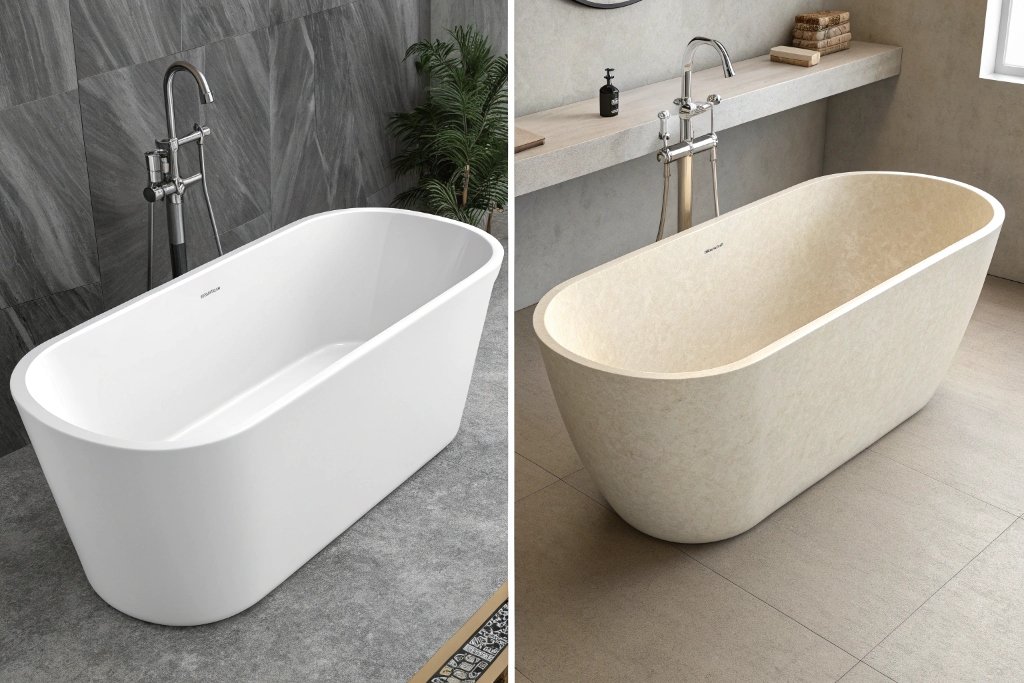
In recent years, acrylic bathtubs have been rapidly evolving. With thin-edge designs, matte finishes, reinforced structures, and high-density backings, they now visually resemble solid surface tubs—while remaining lighter, easier to handle, and more cost-efficient. Many brands are choosing acrylic to deliver the look of stone without the weight and complexity.
Beyond acrylic and solid surface, freestanding bathtubs are available in various materials, each with different implications for weight, maintenance, and project suitability. For a detailed comparison, see "Freestanding Tub Materials: How to Choose the Right One for Your Project"
What Are Acrylic and Solid Surface Bathtubs Made Of?
Acrylic Bathtubs: Made from sheets of PMMA (Polymethyl Methacrylate) that are thermoformed and reinforced with fiberglass and resin.
Solid Surface Bathtubs: Composed of a blend of minerals (like aluminum hydroxide) and resins, cast into molds as a single-piece material with a matte or stone-like finish.
| Feature | Acrylic | Solid Surface |
|---|---|---|
| Base Material | PMMA + Fiberglass | Mineral-based composite |
| Weight | Lightweight | Heavy |
| Finish | Glossy or matte | Typically matte / stone-like |
| Color Range | Wide (customizable) | Mostly white/light tones |
| Repairability | Limited | Sandable surface (minor repairable) |
Which Material Offers Better Design Flexibility?
Pain Point: Some brands need to develop diverse shapes and sizes, or make quick iterations based on feedback.
Solution: Acrylic wins in flexibility.
- Thermoforming allows creative forms, even thin edges.
- Faster to prototype and modify.
- Lower mold cost compared to solid surface casting.
Solid surface is more limited in design (mostly thicker walls, heavier silhouettes) and harder to iterate quickly.
For brands developing multiple SKUs or adapting to market trends quickly, acrylic provides the agility to respond with speed and efficiency.
How Do They Compare in Weight and Installation?
Pain Point: Heavy tubs create challenges in logistics, shipping cost, and final installation—especially for projects with floor load limits.
Solution: Acrylic is significantly lighter.
- Easier to transport.
- Quicker for installers to handle (especially for wall-in or alcove designs).
- Ideal for residential or mid-tier projects.
Solid surface tubs can be 2–3× heavier, often requiring reinforced flooring and two-person installation teams.
For developers and hotels managing high-volume installations, the lightweight nature of acrylic is increasingly attractive. It simplifies logistics without compromising the visual appeal.
Which One Is More Durable in the Long Term?
Pain Point: Customers worry about cracks, scratches, or yellowing over time.
Solution: Both are durable—with different considerations.
- Acrylic is flexible and resistant to chipping, but can scratch if improperly cleaned.
- Solid surface is very hard and stable, and scratches can be sanded out—but it may crack under sudden heavy impact.
For brands balancing durability with replaceability and lifecycle cost, acrylic often presents a more scalable solution—especially in mainstream collections.
What About Look and Feel?
Pain Point: Brands want the right visual identity—luxury feel vs accessible comfort.
Solution:
- Acrylic tubs offer a glossy, modern finish or optional matte textures, with various color options.
- Solid surface tubs provide a stone-like, matte finish that feels warmer and more luxurious.
Solid surface tubs remain the go-to for high-end designer projects or flagship collections—acting as powerful visual identity pieces in showrooms or luxury campaigns. But in many product lines, acrylic bathtubs are now adopting similar aesthetics through thin rims, soft matte finishes, and clean silhouettes—bridging the gap between form and function.
What’s the Cost and Production Impact?
Pain Point: High manufacturing and freight costs eat into margin.
Solution:
- Acrylic is significantly cheaper to produce and easier to scale for OEM production.
- Shorter lead times due to faster forming and finishing processes.
- Solid surface has higher raw material, mold, and labor costs, and longer curing times.
For large B2B orders, many brands now structure their product mix with acrylic as the core volume driver and solid surface as a design-focused supplement. Acrylic allows faster replenishment and market response—especially when trends shift or local consumer preferences evolve.
Conclusion
Choosing between acrylic and solid surface tubs depends on your brand goals:
- Need flexibility, speed, and lower cost? Acrylic is the winner.
- Targeting high-end spa or luxury hotel projects? Solid surface can elevate your offer.
In practice, most brands now use both:
- Acrylic for mainline collections.
- Solid surface for image pieces or boutique projects.
At Salvere, we specialize in OEM acrylic bathtub manufacturing from Vietnam—with flexible mold development, matte/gloss options, and deep export experience. Let us help you scale the material that fits your strategy.
FAQ
Which is better for OEM production: acrylic or solid surface bathtubs?
For most OEM bathtub programs, acrylic is the better choice. Acrylic bathtubs offer lower production costs, faster lead times, and easier scalability, making them ideal for mass production and multi-SKU product lines. Solid surface tubs are better suited for premium or flagship collections but are less efficient for large-volume OEM manufacturing.
Why do many brands choose acrylic instead of solid surface tubs?
Many brands choose acrylic because it balances design flexibility, cost efficiency, and logistics. Modern acrylic bathtubs now feature thin edges, matte finishes, and reinforced structures that visually resemble solid surface tubs, while remaining lighter, easier to ship, and simpler to install.
Is acrylic durable enough compared to solid surface bathtubs?
Yes, high-quality acrylic bathtubs are durable and suitable for long-term use. Acrylic is flexible and resistant to chipping, though it can scratch if cleaned improperly. Solid surface is harder and scratch-repairable, but it may crack under heavy impact. For mainstream collections, acrylic often offers a better balance of durability and lifecycle cost.
How does weight affect logistics between acrylic and solid surface tubs?
Weight is a major difference. Acrylic bathtubs are significantly lighter, reducing shipping costs and simplifying installation. Solid surface tubs can be two to three times heavier, increasing freight costs and sometimes requiring reinforced floors or specialized installation teams, especially in hotel or multi-unit projects.
Which material offers more design flexibility for new product development?
Acrylic offers greater design flexibility. Thermoforming allows more complex shapes, thinner edges, and faster mold modifications at a lower cost. Solid surface casting limits wall thickness options and requires more time and investment to iterate designs, making it less agile for fast-moving markets.
Should brands use both acrylic and solid surface bathtubs in their product lines?
Many brands successfully use both. Acrylic bathtubs are typically used for core, high-volume collections, while solid surface tubs are positioned as premium or image products for luxury projects or showrooms. This mixed strategy allows brands to control costs while maintaining a strong high-end design presence.

