
Are you heading to KBIS 2026 to find the right bathtub supplier for your brand or project? With hundreds of booths and manufacturers competing for your attention, it’s important to know exactly what to look for before stepping onto the show floor.
At KBIS 2026, the most valuable bathtub suppliers will demonstrate category expertise, transparency in production, compliance readiness, and strategic manufacturing advantages — especially for OEM/ODM buyers looking to build long-term partnerships.
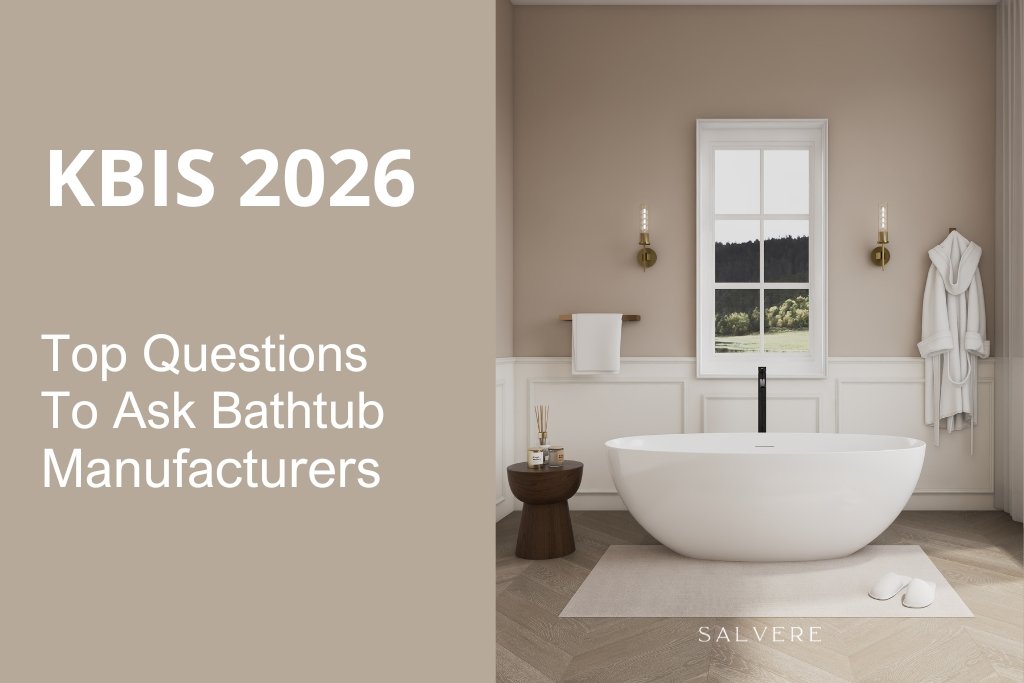
Let’s break down the five key traits to prioritize when evaluating bathtub suppliers at the show.
Specialized in Acrylic or Specific Product Types
The best suppliers focus deeply on one category — and do it well.
- Avoid one-size-fits-all manufacturers. Specialization signals deeper process knowledge, better quality control, and greater design support.
- For acrylic bathtubs, you should expect suppliers to show clear thermoforming capability, multi-layer reinforcement systems, and a clean separation from other materials like solid surface or cast iron.
Many of today’s premium acrylic tubs are designed to look like solid surface (e.g., matte finishes, thin edges), but are more cost-efficient and lighter — making them ideal for scale.
Compliance-Ready for Your Target Market
If you’re a U.S. or EU buyer, product certifications are non-negotiable.
- cUPC, CE, ISO 9001, and other certifications should be available upon request.
- Ask to see documentation, and check if their product samples on display already comply.
- A good supplier will know the import and labeling requirements for your region.
Exhibitors who can’t answer compliance questions fluently may not be ready to support serious international partnerships.
Full Visibility into Production and QC
Don’t just admire the product — ask what’s behind it.
- How many steps are involved in their production process?
- Do they offer video walkthroughs of their factory?
- Can they show documentation of raw material sourcing, QC checklists, and traceability protocols?
Many high-performing OEMs now offer standardized multi-step production flows (e.g., 14-step systems for acrylic bathtubs) with digital tracking to assure output consistency.
Customization and Mold Support Capabilities
Mass production is no longer enough. Buyers want flexibility.
- Can the supplier support custom designs, sizes, or feature layouts?
- Do they offer mold development services and assist with prototype creation?
- Are custom options available for material thickness, finish (e.g., matte), and base structure?
Modern acrylic factories are offering “solid surface visual effect + acrylic practicality” — a sweet spot for many brands needing both form and function.
Strategic Manufacturing Location
One often overlooked factor is where the factory is.
- For U.S. buyers, production in Vietnam offers clear tariff advantages over China — especially for acrylic tubs.
- Lead times are often shorter, and operational risk is lower thanks to diversified sourcing.
- Vietnam has emerged as a new OEM hotspot for sanitaryware and bathtub production, balancing cost efficiency with increasing automation and skilled labor.
In today’s global landscape, smart sourcing isn’t just about product — it’s about geopolitical resilience and cost control.
Conclusion
As you walk the aisles of KBIS 2026, remember: the right bathtub supplier is more than a nice product and pretty booth. Look for specialization, certifications, transparency, flexibility, and geographic strategy.
These five traits will help you identify a supplier who can truly support your brand — not just today, but for the long term.
✅ Meet Salvere at KBIS 2026
📍 Booth S29161
📅 Feb 17–19, 2026
📌 Orange County Convention Center, Orlando, FL
FAQ
What should I look for when choosing a bathtub supplier at KBIS 2026?
When choosing a bathtub supplier at KBIS 2026, focus on specialization, compliance readiness, transparent production processes, customization capability, and factory location. The most reliable suppliers demonstrate deep category expertise, clear QC systems, and long-term OEM/ODM support rather than just attractive booth displays.
Why is specialization important when evaluating bathtub suppliers at KBIS?
Specialization indicates stronger process control and product knowledge. Suppliers focused on acrylic bathtubs typically offer better thermoforming capability, reinforcement systems, and design support compared to general manufacturers that produce multiple unrelated product types.
Which certifications should bathtub suppliers have for U.S. and EU buyers?
Bathtub suppliers targeting U.S. and EU markets should have cUPC and CE certifications at minimum, along with ISO 9001 for quality management. Suppliers should be able to clearly explain compliance requirements and provide documentation for the products shown at KBIS.
How can I evaluate a supplier’s production and quality control at a trade show?
At KBIS, ask suppliers to explain their production steps, QC checkpoints, and traceability systems. Strong OEM suppliers are transparent about their factory processes, often offering video walkthroughs, documented production flows, and standardized multi-step QC systems.
Why does factory location matter when selecting a bathtub supplier in 2026?
Factory location affects tariffs, lead times, and supply-chain risk. In 2026, many buyers prefer suppliers with production in Vietnam due to tariff advantages over China, diversified sourcing, and improving automation and labor capabilities in the sanitaryware industry.
Can KBIS suppliers support customization and mold development?
High-quality OEM bathtub suppliers should support customization, including mold development, prototype sampling, finish options, and structural adjustments. This flexibility allows brands to respond to market trends while maintaining cost and production efficiency.


