
Many bathroom brands are facing big challenges. Are you worried about risks in your supply chain? I see many companies struggling with disruptions and rising costs, realizing that relying on a single source is no longer sustainable.
Bathroom brands are diversifying their supply chains in 2026 to mitigate significant risks like tariff changes, geopolitical instability, production delays, and logistics bottlenecks. By spreading manufacturing across multiple regions, especially exploring strategies like "China+1," they aim to ensure consistent supply, reduce costs, enhance resilience, and comply with evolving trade regulations. This strategic move strengthens their global market position and long-term stability.
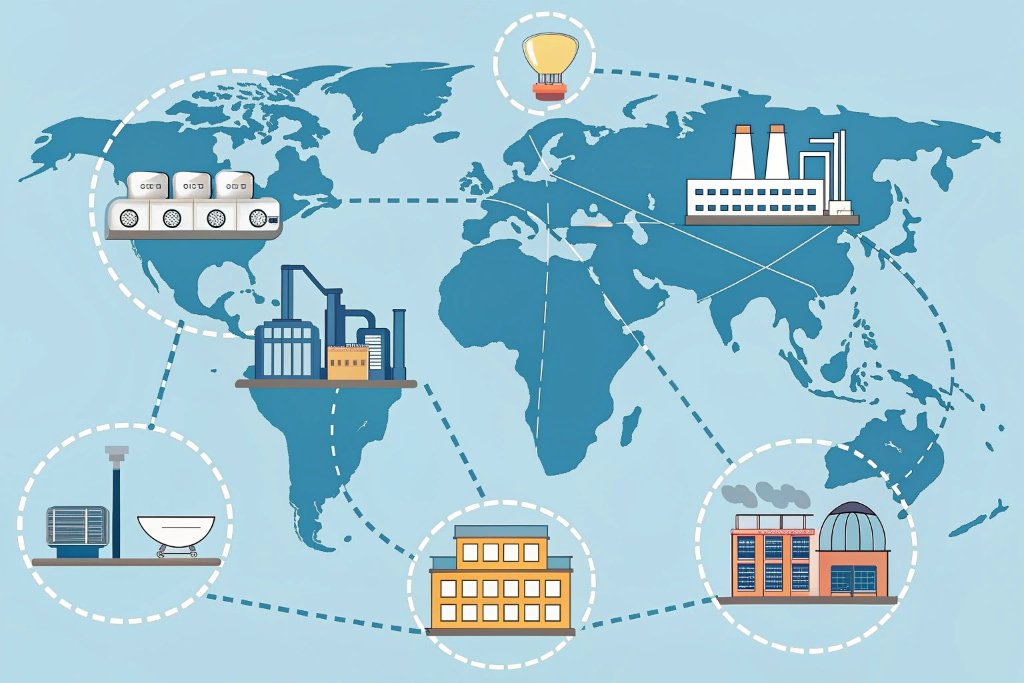
The global landscape for manufacturing is always shifting. Many brands know they need to adapt to stay strong and competitive. Let's look at the big reasons why this critical change is happening and how it benefits everyone involved.
What Does Supply Chain Diversification Mean in Bathroom Manufacturing?
Is your bathroom brand tied to just one source? This can lead to big problems. I see how one disruption can stop everything, from production to delivery, impacting sales and customer trust.
Supply chain diversification in bathroom manufacturing means spreading production, sourcing, and logistics across multiple countries or suppliers, rather than relying solely on one. This strategy builds resilience, reduces risk from single-point failures, and helps maintain a stable flow of products. It ensures that unforeseen events in one region do not halt the entire production process.
For me, working in the acrylic bathtub industry, supply chain diversification is about strategic risk management and maximizing opportunity. It is not just about finding a cheaper alternative; it is about building a robust and adaptable network that can withstand global shocks.
Types of Diversification
- Geographical Diversification: This involves manufacturing or sourcing components from different countries or regions. For instance, a brand might produce certain bathtubs in China and others in Vietnam.
- Supplier Diversification: Even within a single country, a brand might use multiple suppliers for similar components to avoid over-reliance on one entity.
- Product Diversification: This means spreading the production of different product lines across various locations, ensuring that if one facility is impacted, other product lines remain unaffected.
Benefits for Bathroom Brands
The primary benefit is resilience. If a natural disaster, trade dispute, or political instability affects one region, the brand has alternative sources ready to pick up the slack. This prevents stockouts, maintains consistent delivery schedules, and protects market share. Diversification can also lead to cost optimization by leveraging favorable trade agreements and labor costs in different regions. It ensures compliance with varying market regulations, giving brands broader access.
Salvere's Approach to Diversification
This is exactly why we established Salvere in Vietnam. Our move to relocate our acrylic bathtub factory from China to Vietnam was a direct response to these needs. I believe we are leading the way as the first dedicated acrylic bathtub factory to make this specific move. Our goal is to offer international partners the best of both worlds: the trusted quality assurance that comes from years of experience in Chinese manufacturing, combined with the strategic advantages of a diversified supply chain. This means lower tariff risks and reduced overall supply chain vulnerability for our partners.
By spreading risks and creating multiple points of strength, bathroom brands can better navigate the complex global market.
The Risks of Relying on a Single Country or Supplier?
Do you put all your eggs in one basket? Relying on one source brings huge risks. I see this path leading to big headaches for brands, from unexpected delays to soaring costs.
Relying on a single country or supplier exposes bathroom brands to significant risks, including geopolitical instability, natural disasters, trade policy changes, and sudden production halts. This singular dependence can lead to severe supply disruptions, increased costs, and reputational damage. Diversification reduces this vulnerability, ensuring a more stable and predictable supply flow.
My experience in manufacturing has shown me firsthand the dangers of a concentrated supply chain. It's a common mistake that can have devastating consequences for bathroom brands.
Geopolitical Instability
Trade wars, political tensions, or even diplomatic disagreements between countries can quickly escalate into tariffs or trade restrictions. If your sole manufacturing base is in a country caught in such a dispute, your products can suddenly face crippling import duties or even be blocked from entering key markets. This directly impacts pricing, profit margins, and market access.
Natural Disasters and Pandemics
A single major natural disaster—like a flood, earthquake, or severe storm—can shut down an entire manufacturing region for weeks or months. Similarly, global pandemics, as we all recently experienced, can bring production to a standstill, disrupt labor, and close borders. If all your eggs are in that one basket, your entire product line can be put on hold indefinitely.
Economic Volatility
Currency fluctuations, inflation, or sudden changes in labor costs in a single manufacturing hub can make your product unexpectedly expensive. Brands tied to one region have little leverage to negotiate or find alternative solutions when economic conditions shift unfavorably.
Quality Control and Production Issues
Even without external factors, relying on a single supplier means any internal production issues, quality lapses, or capacity limitations at that one factory can completely halt your supply. There is no backup, no alternative, leaving brands vulnerable to extended delays and customer dissatisfaction. My experience moving our factory to Vietnam confirmed these risks; we saw how important it was to build a resilient model for our partners, offering that crucial alternative.
The past few years have highlighted these vulnerabilities more than ever, forcing brands to rethink their strategies.
How Tariff Changes and Trade Uncertainty Affect Bathroom Brands?
Are rising tariffs eating your profits? Trade wars make planning hard. I see brands needing new ways to manage these costs and navigate unpredictable international commerce.
Tariff changes and trade uncertainty significantly affect bathroom brands by increasing import costs, complicating pricing strategies, and reducing profit margins. Unpredictable trade policies make long-term planning difficult, forcing brands to seek alternative manufacturing locations to avoid duties and secure more stable economic environments. Diversification offers a strategic solution to these financial challenges.
Tariffs are not just an abstract economic term; they are a direct financial burden that can erode a bathroom brand's profitability and competitive edge. From my perspective in manufacturing, I see how these changes force brands to make tough decisions.
Impact on Landed Cost
Tariffs are essentially taxes on imported goods. When applied to bathroom products, they directly increase the "landed cost"—the total cost of a product once it has arrived at the buyer's dock, including shipping, customs, and taxes. This higher cost eats into profit margins or forces brands to raise prices, making their products less competitive in the market.
Need for Predictability in Pricing
Bathroom brands rely on stable pricing to build their product lines, set retail prices, and plan marketing campaigns. Sudden tariff increases or the threat of new tariffs create immense uncertainty. This makes it incredibly difficult to forecast costs, negotiate with retailers, or commit to long-term pricing strategies. The constant risk of price fluctuations hinders market stability.
Geopolitical Influences on Trade
Trade policies are increasingly influenced by geopolitical relations. Countries use tariffs as tools in international disputes, and bathroom brands often become collateral damage. This means that a brand's supply chain can be disrupted not by market forces, but by political decisions beyond their control. This forces brands to constantly monitor global events and adapt their sourcing strategies.
For us at Salvere, a primary reason for relocating our acrylic bathtub manufacturing to Vietnam was to offer our partners a clear advantage in navigating these tariff landscapes. By manufacturing in Vietnam, we enable international brands to achieve tariff advantages, especially for markets like North America and Europe, which are subject to specific duties when importing from China. This strategic move directly helps our partners avoid costly tariffs and secure more predictable supply chain economics, proving that proactive diversification is a powerful shield against trade uncertainty.
Production Delays, Capacity Limits, and Logistic Bottlenecks?
Are your products stuck somewhere? Delays can sink a brand. I see how these issues stop growth, damage reputations, and frustrate customers who are waiting for their new bathroom products.
Production delays, limited factory capacity, and severe logistics bottlenecks severely disrupt bathroom brands by delaying product launches, causing stockouts, and inflating shipping costs. Relying on a single hub exacerbates these issues during peak demand or global crises. Diversifying manufacturing and shipping routes mitigates these operational challenges, ensuring consistent product availability and timely delivery.
The modern supply chain is a complex dance, and even minor missteps in one area can cascade into major disruptions for bathroom brands. My daily work involves managing these intricacies to ensure our partners' products move smoothly.
The Impact of COVID-19
The COVID-19 pandemic served as a stark, global lesson in the fragility of single-point supply chains. Lockdowns, factory closures, and labor shortages brought production to a halt in many key manufacturing regions. Brands found themselves unable to produce or ship products, leading to massive backlogs and lost sales. This was a direct, undeniable proof that diversification was not just a good idea, but a necessity.
Port Congestion and Labor Shortages
Even as the immediate pandemic crisis eased, its aftermath created new bottlenecks. Ports worldwide experienced unprecedented congestion, with ships waiting for weeks to unload. Labor shortages, particularly in trucking and logistics, further strained the system. These issues meant that even if a product was manufactured, getting it to the market became a significant, costly, and time-consuming challenge.
Lack of Factory Capacity
Many brands experienced periods where their single supplier simply could not meet demand, either due to internal capacity limits or surges in orders. This inability to scale up production quickly meant missed opportunities and frustrated customers. Having a second manufacturing base provides the critical flexibility to shift production as demand fluctuates or if one factory hits its capacity ceiling.
The Need for Redundancy
In today's unpredictable world, redundancy is key. It's like having a backup generator for your house; you hope you never need it, but you are thankful it's there when the power goes out. For bathroom brands, a diversified supply chain provides that critical redundancy, ensuring that even if one production line or shipping route faces challenges, operations can continue elsewhere, minimizing impact and ensuring continuity of supply.
Managing these operational challenges is crucial for a brand's long-term health and customer satisfaction.
What Is the China+1 Strategy and Why Are Brands Considering Vietnam?
Heard of "China+1"? It's a key strategy now. Many brands are looking to new places. I know Vietnam is a big part of this, offering unique advantages for manufacturers like Salvere.
The "China+1" strategy involves maintaining some manufacturing in China while actively establishing a second production base in another country, often in Southeast Asia. Brands are considering Vietnam for its growing manufacturing infrastructure, skilled labor, competitive costs, and favorable trade agreements. This approach aims to reduce over-reliance on China, diversify risk, and leverage new market advantages.
The "China+1" strategy has emerged as a dominant trend for global manufacturers seeking to build more resilient supply chains. It acknowledges China's significant role in global manufacturing while proactively addressing the risks of over-reliance.
Explanation of China+1
Essentially, "China+1" means that instead of having all manufacturing solely in China, companies diversify by adding a second manufacturing hub, typically in an emerging market. This doesn't mean abandoning China, but rather supplementing it to spread risk, optimize costs, and gain new market access. It's about hedging bets and building flexibility.
Why Vietnam Specifically?
Vietnam has rapidly become a top choice for the "plus one" in this strategy, and for very good reasons:
- Geographical Location: It is strategically located near existing Asian supply networks, making logistics relatively straightforward for component sourcing.
- Growing Manufacturing Infrastructure: The Vietnamese government has actively invested in infrastructure and created favorable policies to attract foreign investment in manufacturing, leading to a rapid development of industrial zones and capabilities.
- Skilled Labor Force: Vietnam boasts a young, educated, and increasingly skilled labor force at competitive wage rates compared to many other manufacturing hubs.
- Favorable Trade Agreements: Vietnam has numerous free trade agreements (FTAs) with key markets, including the EU (EVFTA), the UK (UKVFTA), and is part of CPTPP and RCEP. These agreements offer significant tariff advantages, making products manufactured in Vietnam more cost-effective for export to these regions.
- Political Stability: The country offers a stable political environment, which is a crucial factor for long-term manufacturing investments.
Salvere's Leadership in Vietnam
I am particularly proud of Salvere's pioneering move in this regard. We were the first dedicated acrylic bathtub factory to relocate from China to Vietnam, specifically to Ho Chi Minh City. This bold step directly embodies the China+1 strategy. We recognized the immense benefits Vietnam offered—not just in terms of reduced tariff risks, but also in building a diversified and resilient supply chain for our partners. Our 21,000 square meter, purpose-built facility integrates our proven manufacturing expertise with Vietnam's strategic advantages, offering a unique solution to brands looking for quality and risk mitigation.
The strong growth of manufacturing in Vietnam highlights its role as a critical component in future global supply chains.
Cost, Quality, and Compliance: Can a Second Source Deliver?
Can a new factory match your quality? Many worry about this move, fearing that diversification might compromise product excellence. I know good partners can deliver on all fronts, maintaining high standards while gaining new advantages.
A second manufacturing source can indeed deliver on cost, quality, and compliance, especially with the right OEM/ODM partner. While initial setup costs exist, long-term benefits include tariff savings and supply stability. Advanced factories in new regions, like Vietnam, maintain stringent quality controls and adhere to global compliance standards, ensuring product excellence and market acceptance.
One of the biggest concerns for bathroom brands considering diversification is whether a new manufacturing location can truly match the cost-effectiveness, quality, and compliance standards they expect. My experience shows that with the right approach and partner, the answer is a resounding yes.
Addressing Concerns: "Cheaper Means Worse"?
The perception that a "cheaper" manufacturing location automatically implies lower quality is often outdated. Emerging manufacturing hubs, especially in Southeast Asia, have significantly advanced their capabilities. Investments in modern factories, intelligent automation, and skilled labor mean that these regions can produce goods of comparable, or even superior, quality. The cost advantages often stem from lower labor costs, government incentives, and advantageous trade agreements, not from cutting corners on materials or processes.
Importance of Experienced OEM/ODM
The key to successful diversification lies in selecting the right OEM/ODM (Original Equipment Manufacturer/Original Design Manufacturer) partner. An experienced partner brings established manufacturing expertise, proven quality management systems, and a deep understanding of international compliance requirements. They are not starting from scratch but transferring established best practices to a new location.
Quality Assurance Systems
At Salvere, we are a perfect example of how a second source can deliver on quality. We operate under the stringent quality management system of FRANK Group, our parent company, which has nearly two decades of global manufacturing experience. Our Vietnam factory, purpose-built for acrylic bathtubs, integrates 14 standardized production processes—from thermoforming to inspection. This ensures stable quality, consistent output, and large-scale production capacity, just like you would expect from a top-tier Chinese facility.
Compliance Standards
For bathroom products, compliance with standards in North America, Europe, and Australia is non-negotiable. A reliable second source, like Salvere, actively designs and manufactures products that meet these specific certifications and regulations. This proactive approach ensures products can seamlessly enter diverse international markets without compliance hurdles. I see this as delivering the best of both worlds: Chinese product quality assurance and reduced tariff risks, providing a truly diversified and reliable supply chain.
By choosing capable partners, brands can confidently expand their supply chain without sacrificing product integrity.
How OEM/ODM Manufacturers Help Brands Reduce Supply Risk?
Building a new factory is hard. How do brands make this move easier? I see OEM/ODM partners as the best solution, offering a streamlined path to diversification without massive upfront investment.
OEM/ODM manufacturers help brands reduce supply risk by offering ready-to-go manufacturing infrastructure, proven expertise, and established quality control systems in diverse locations. They enable brands to quickly set up a secondary supply chain without the heavy investment and operational complexities of building their own factories, ensuring continuity, flexibility, and compliance in new markets.
Diversifying a supply chain by building your own factory in a new country is a massive undertaking, fraught with capital expenditure, logistical challenges, and operational complexities. This is precisely where experienced OEM/ODM manufacturers become invaluable partners for bathroom brands.
Speed and Cost-Effectiveness
OEM/ODM partners already possess the necessary infrastructure, machinery, and trained workforce. This allows brands to bypass the years and millions of dollars required to set up their own facility. Instead, they can quickly onboard with an existing manufacturer, significantly accelerating their diversification strategy and minimizing upfront investment.
Expertise and Local Knowledge
A reputable OEM/ODM manufacturer brings specialized product expertise and deep local knowledge. They understand the nuances of manufacturing in their region, navigate local regulations, manage local labor, and have established supplier networks for raw materials. This invaluable local insight reduces risks associated with unfamiliar markets.
Focus on Brand's Core Competencies
By outsourcing manufacturing to an OEM/ODM, bathroom brands can concentrate on their core competencies: product design, marketing, sales, and innovation. They do not need to divert resources to managing a complex manufacturing operation in a foreign country, allowing them to remain agile and competitive in their market.
Flexibility and Scalability
OEM/ODM partners offer greater flexibility. They can often scale production up or down more easily to match fluctuating demand. This agility is crucial for managing inventory levels and responding to market changes without being burdened by fixed manufacturing overheads.
At Salvere, this is precisely our business model. We simplify the diversification process for our partners. We offer a ready-made, high-capacity acrylic bathtub factory in Vietnam, backed by nearly two decades of manufacturing expertise from FRANK Group. Our partners benefit from our established production processes, strict quality control, and compliance capabilities. We take on the manufacturing complexity so they can reduce their supply risk and gain a competitive edge in their respective markets. My role is to help brands achieve strategic supply chain diversification seamlessly and effectively.
Working with the right OEM/ODM is a smart, strategic move for brands looking to build a more resilient and responsive supply chain.
Key Steps to Start Diversifying Your Bathroom Product Supply Chain?
Ready to make the move? Diversifying takes careful steps. I can tell you how to start this important journey, ensuring your bathroom brand builds a more robust and future-proof supply chain.
To start diversifying your bathroom product supply chain, first assess your current vulnerabilities and identify target regions. Next, research potential OEM/ODM partners, focusing on their capabilities, quality systems, and compliance. Begin with pilot projects, build robust communication, and gradually scale production in new locations to effectively spread risk and enhance supply chain resilience.
Diversifying a supply chain is a strategic initiative that requires careful planning and execution. Based on my experience in leading manufacturing operations, I recommend these key steps for bathroom brands:
-
Assess Current Supply Chain Vulnerabilities:
- Identify Risks: Begin by mapping your existing supply chain. Where are your critical single points of failure? Which products or components are solely sourced from one region? What are the geopolitical and environmental risks in those areas? This initial audit helps prioritize what needs diversification most urgently.
- Cost Analysis: Understand the total landed cost of your products, including tariffs, freight, and lead times. This benchmark will help evaluate potential new sources.
-
Identify Target Regions and Countries:
- Market Research: Look for regions that offer strategic advantages, such as favorable trade agreements, competitive labor costs, strong infrastructure, and political stability. Countries like Vietnam often emerge as strong candidates for bathroom product manufacturing.
- Local Ecosystem: Consider the availability of raw materials, skilled labor, and supporting industries in the target region.
-
Research and Due Diligence on Potential OEM/ODM Partners:
- Capability Matching: Find partners whose manufacturing capabilities align with your product needs. Do they specialize in acrylic bathtubs, like Salvere?
- Quality Systems: Thoroughly vet their quality management systems, certifications (e.g., ISO, ASME, IAPMO, CE), and track record. Request factory audits and references.
- Compliance: Ensure they can meet the specific compliance standards required for your target markets (e.g., North America, Europe, Australia).
- Communication: Assess their communication practices and transparency. A good partner will be open and responsive.
-
Start with Pilot Projects:
- Small Scale: Do not shift all production at once. Begin with a smaller, less critical product line or component as a pilot project. This allows you to test the new partner's capabilities, iron out any kinks, and build trust without significant risk.
- Learn and Adapt: Use the pilot phase to refine processes, establish clear communication protocols, and understand lead times and quality control in the new setup.
-
Build Robust Communication and Relationships:
- Clear Expectations: Establish clear KPIs (Key Performance Indicators) and communication channels from the outset.
- Long-Term Partnership: View your OEM/ODM as a long-term partner, not just a vendor. Strong relationships are key to supply chain resilience.
-
Gradually Scale Production:
- Phased Approach: Once the pilot project is successful, gradually increase the volume and complexity of products manufactured by your new partner.
- Ongoing Monitoring: Continuously monitor performance, quality, and costs to ensure the diversification strategy continues to meet objectives.
At Salvere, we make these steps easier for our partners. With our ready-to-go factory in Vietnam and proven expertise, we can integrate seamlessly into your diversification strategy, providing a trusted and reliable manufacturing base for your acrylic bathtubs from day one.
Conclusion
Diversifying supply chains is essential for bathroom brands in 2026. It mitigates risks from tariffs, delays, and instability by leveraging multiple sources. This strategy ensures resilience, reduces costs, and guarantees consistent supply, securing long-term market stability.
👉 Learn more about Salvere Acrylic Bathtub Products
and how we manufacture acrylic bathtubs in Vietnam.


