
When it comes to freestanding bathtubs, the material choice is crucial. It impacts not only the look and feel but also the tub's durability, maintenance, and even the bathing experience itself. As someone who works in bathtub manufacturing, I’ve seen how different materials perform and what clients truly value in a luxury bathroom.
Quick Answer:
The best freestanding tub material depends on your priorities: acrylic is versatile and lightweight, solid surface offers a dense, stone-like feel with excellent heat retention, and cast iron provides unmatched durability and a timeless appeal. Each comes with its own trade-offs.
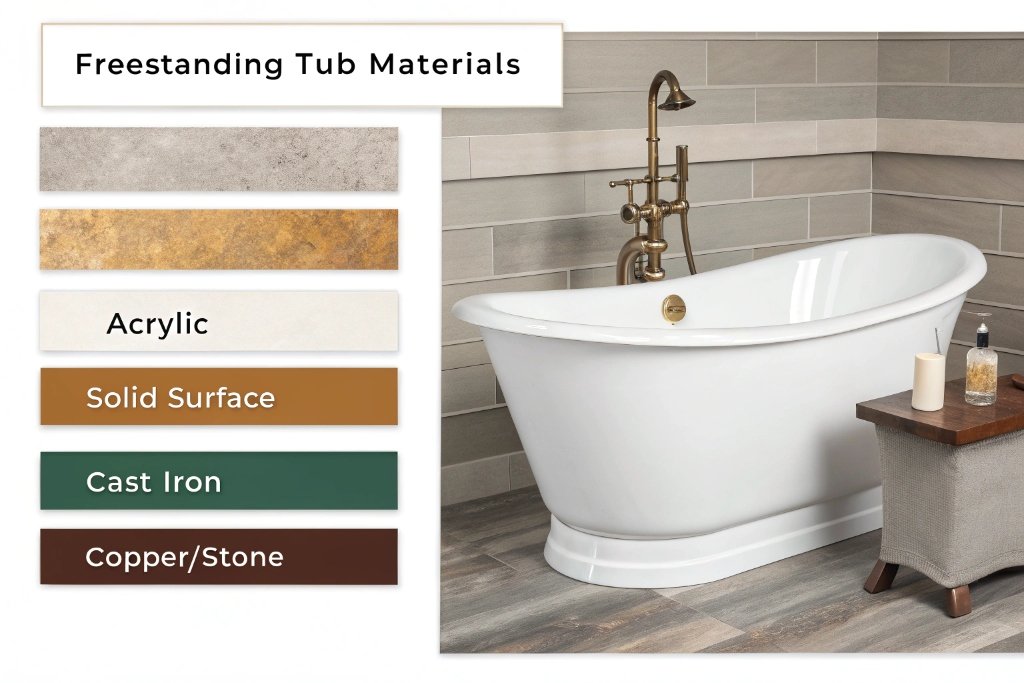
Let's dive into the options. This will help you make the best choice for your project.
What is the best material for a freestanding bathtub?
There is no one-size-fits-all answer.
The best material for a freestanding bathtub varies depending on your design goals, budget, and maintenance preferences. Acrylic is great for affordability and design flexibility. Solid surface offers a premium, seamless look and strong thermal performance. Cast iron is the go-to for classic elegance and long-term durability.
Here's a breakdown:
| Material | Best For | Key Characteristics |
|---|---|---|
| Acrylic | Budget-conscious projects and modern designs. | Moldable, lightweight, warm to touch, smooth non-porous surface. Wide shape range. |
| Solid Surface | High-end feel, seamless look, and thermal insulation. | Dense, matte or polished, excellent heat retention, uniform finish, repairable. Heavy. |
| Cast Iron | Traditional appeal and exceptional durability. | Enamel-coated, very heavy, retains heat well, limited shapes, cold to touch initially. |
| Copper/Stone | Unique aesthetics and natural luxury. | Very heavy, high-maintenance, visually striking, costly. |
Which is better: solid surface or acrylic freestanding tub?
They each have their strengths.
Solid surface tubs offer a luxury appearance, great heat retention, and are very durable. Acrylic tubs are easier to handle, more affordable, and allow greater shape variety — which can be more practical depending on the project scope.
| Feature | Acrylic Freestanding Tub | Solid Surface Freestanding Tub |
|---|---|---|
| Feel/Aesthetic | Glossy, warm to touch. May feel lighter. | Matte or stone-like, feels more substantial. |
| Durability | Good resistance. Surface scratches can be buffed. | Very durable, easily repairable. |
| Heat Retention | Moderate. Sufficient for most users. | Excellent. Stays warm longer. |
| Weight | Lightweight, easier to install. | Heavy, may need floor support. |
| Maintenance | Simple to clean, avoid abrasives. | Non-porous, stain-resistant. |
| Cost | Generally more budget-friendly. | Premium price reflects material quality. |
| Design Flexibility | High — wide shape and style range. | Somewhat more limited due to material density. |
Is acrylic better than solid surface freestanding tubs?
It depends on what matters most for your project.
Acrylic is a solid choice for practical applications — it’s easier to install, cost-efficient, and works well for modern designs. Solid surface might be a better fit when design consistency and tactile luxury are the priority.
Where acrylic excels:
- Ease of installation: Lighter weight means easier setup and fewer structural concerns.
- Design freedom: Shapes can be more complex and tailored.
- Comfort: Warm to the touch, even before filling.
- Maintenance: Smooth surface cleans easily, though not as forgiving to rough cleaning.
Where solid surface shines:
- Feel: More substantial, high-end impression.
- Longevity: Holds up well over time, repairable finish.
What bathtub material lasts the longest?
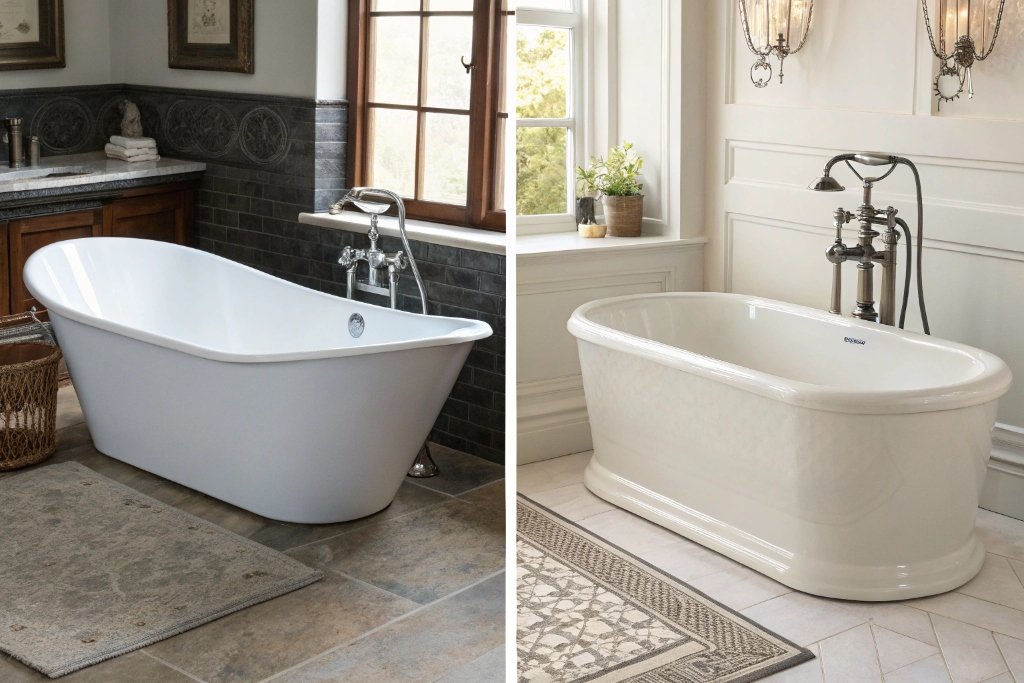
Cast iron leads in longevity, often lasting over 50 years. Solid surface tubs also last decades with proper care. Acrylic tubs, when made with thick, reinforced sheets, can last 15–30 years.
| Material | Typical Lifespan |
|---|---|
| Cast Iron | 50–100+ years |
| Solid Surface | 20–30+ years |
| High-Quality Acrylic | 15–30 years |
| Copper/Stone | Decades, depends on maintenance |
What are the downsides of a freestanding bath?
Freestanding tubs are beautiful, but not always the most practical.
They tend to cost more, need more space, and usually require floor-mounted plumbing. Cleaning around them can be harder, and they offer no built-in storage.
Considerations:
- Higher cost of purchase and installation.
- Floor reinforcement may be needed for heavy tubs.
- More space required for access and visual impact.
- Lack of deck for placing bath essentials.
- Can be difficult to clean around.
Do freestanding tubs increase home value?
In luxury markets, yes. A well-placed, stylish freestanding tub can elevate a master bath and appeal to upscale buyers. But in smaller spaces or poorly executed designs, it might not add value.
Freestanding tubs work best when part of a cohesive, high-end bathroom design. Their value depends on overall execution.
In the end, it’s not about which material is “best,” but which is best for your space, your goals, and your priorities.
👉 Learn more about Salvere Bath OEM/ODM capabilities
and how we manufacture acrylic bathtubs in Vietnam.
FAQ
What is the best material for a freestanding bathtub?
The best material for a freestanding bathtub depends on your priorities. Acrylic is ideal for modern designs, lighter installation, and budget-conscious projects. Solid surface offers a dense, seamless look with excellent heat retention for luxury spaces. Cast iron is best for classic aesthetics and long-term durability, though it requires stronger floor support.
Which is better for freestanding tubs: acrylic or solid surface?
Neither is universally better. Acrylic freestanding tubs are lighter, more affordable, and offer greater design flexibility. Solid surface freestanding tubs feel more substantial, retain heat longer, and provide a premium, stone-like appearance. The better choice depends on whether practicality or tactile luxury is more important for the project.
Is acrylic a good material for freestanding bathtubs?
Yes. Acrylic is a popular and practical material for freestanding bathtubs because it is lightweight, warm to the touch, easy to install, and available in a wide range of shapes. High-quality, reinforced acrylic tubs can last 15–30 years with proper care.
What freestanding bathtub material lasts the longest?
Cast iron freestanding bathtubs typically last the longest, often 50 years or more. Solid surface tubs also offer long lifespans when properly maintained. Acrylic tubs have a shorter lifespan in comparison, but premium acrylic models can still perform reliably for decades.
What are the disadvantages of freestanding bathtubs?
Freestanding bathtubs usually cost more than built-in tubs, require more space, and often need floor-mounted plumbing. Heavy materials like cast iron or solid surface may require floor reinforcement, and cleaning around the tub can be less convenient due to the lack of surrounding surfaces.
Do freestanding tubs add value to a home?
In high-end and luxury markets, freestanding tubs can increase perceived home value when they are well-integrated into the bathroom design. However, in smaller spaces or poorly planned layouts, they may not add significant value and can reduce functionality.


