
Choosing a new bathtub can feel overwhelming with so many options out there. Are you worried about making the wrong decision that you will regret later? I see many people focusing on trends, but the perfect tub for you is about much more than what is popular right now.
To choose your perfect bathtub, you must answer six key questions: what size and layout your bathroom allows, how you intend to use the tub, which style best fits your space, what material aligns with your priorities, what installation constraints exist, and what your true budget is, including long-term costs. Addressing these points ensures a choice that meets your specific needs, comfort, and aesthetic preferences.
Making the right choice is about understanding your unique needs and space. Let me walk you through the essential questions to consider, ensuring you find a tub that truly fits your life.
What size and layout does your bathroom actually allow?
Have you ever fallen in love with a beautiful tub, only to find it will not fit your bathroom? Many brands focus on trendy styles, but space constraints are a common pitfall. I know exact measurements are the first step to avoid disappointment.
Your bathroom's actual size and layout dictate the feasible bathtub options by limiting dimensions, required clearances, and installation types. You must measure the room's length, width, height, and door access points, considering existing plumbing and structural support. This ensures the chosen tub physically fits and leaves adequate space for comfortable movement and future maintenance.
I have spoken with many clients over the years who tell me they want the "hottest" tub style they see online or in a showroom. My advice is always the same: no matter how popular a tub is, if it does not physically fit your bathroom or leaves no room to move, it is not the perfect tub for you. You need to focus on your actual space before anything else.
- Precise Measurements are Key:
- Length and Width: Measure the available floor space where the tub will go. Do not just eyeball it. Use a tape measure and write down exact numbers.
- Height: Consider the ceiling height, especially if you are looking at tubs with shower combinations or those that require significant vertical clearance for installation.
- Doorways and Hallways: Can the tub actually get into your bathroom? Measure all doorways, hallways, and stairwells the tub will need to pass through. I have seen deliveries get stuck because these access points were not considered.
- Layout and Clearances:
- Existing Fixtures: Note the location of your toilet, vanity, and shower. You need to maintain minimum clearances around these fixtures for comfort and code compliance.
- Walking Space: After the tub is in place, will there be enough room to comfortably walk around it, open drawers, or dry yourself? A crowded bathroom feels cramped and can be unsafe.
- Windows and Outlets: Are there windows, electrical outlets, or ventilation grates that might be obstructed by a new tub?
- Structural Considerations:
- Floor Support: Especially for heavier tubs like cast iron or those holding a lot of water, confirm your floor can support the weight. Consult a professional if you are unsure. This is often overlooked, but it is a critical safety point.
- My experience often involves talking with clients who initially focus on what competitors are offering. I always advise them: "A competitor's hot-selling tub might be obsolete by the time you're ready to launch, or they might already dominate that niche. Instead of chasing trends, focus on what your customer needs in their actual bathroom. That's where true innovation and lasting value come from." This means prioritizing how well a tub fits their space and lifestyle, not just its current market popularity.
Taking the time for these careful measurements and considerations will save you headaches and ensure your new tub is a perfect, functional fit.
How do you want to use the tub—quick showers, deep soaks, or both?
Are you dreaming of long, luxurious soaks, but only have time for quick showers? Your daily routine should guide your bathtub choice, not just its looks. I know that the most beautiful tub is useless if it does not fit your lifestyle.
How you intend to use the tub—for quick showers, deep soaks, or both—fundamentally impacts your ideal choice. A quick shower setup requires a tub with a flat bottom and possibly an integrated shower wall. Deep soakers benefit from ergonomic designs and adequate water depth. Combination needs demand versatility, such as a comfortable bathing well with a slip-resistant floor and an easy-access height.
The purpose of your bathtub is a core decision. Many people buy a tub based on aesthetics, only to find it does not serve their daily needs. My advice is to think about how you genuinely use your bathroom space.
- For Quick Showers Only (or primarily):
- Flat Bottom: If you will mostly be showering, look for a tub with a flat, slip-resistant bottom. This provides a stable standing surface.
- Lower Sides: Tubs with lower side walls are easier to step in and out of, which is a practical consideration for daily showering.
- Shower Surround/Curtain: Consider how easily a shower curtain rod or glass shower enclosure can be installed.
- Durability: The tub's surface should be durable enough to withstand daily scrubbing from shower use.
- For Deep Soaks and Relaxation:
- Water Depth: This is crucial. Check the measurement from the bottom of the tub to the overflow drain. This indicates how deep the water can actually get. For a true soak, aim for at least 14-15 inches of water depth.
- Ergonomic Design: Look for a tub with a comfortable backrest angle. Some tubs are designed with lumbar support or sloped ends for a more relaxed reclining position.
- Internal Dimensions: Ensure there is enough length and width inside the tub for you to stretch out comfortably.
- Heat Retention: Materials like cast iron or thick acrylic with insulation are excellent for keeping bathwater warm for longer soaks.
- For Both (Combination Use):
- Versatility: You will need a tub that balances the features for both showering and soaking. A moderately deep tub with a relatively flat bottom and a comfortable backrest is a good compromise.
- Access: Consider ease of entry and exit for showering, but also comfort for soaking.
- I once had a client who was adamant about getting a specific freestanding tub, purely because it was a current bestseller. When I asked about their family's needs, they admitted it would primarily be used for quick daily showers by busy parents and small children. I gently steered them toward a more practical, slip-resistant alcove tub with good water depth, explaining that a freestanding tub, while beautiful, might be difficult to access for young kids and less ideal for frequent showering. My focus was on their real comfort and daily function, not just the trend. Ultimately, they loved the functional choice and thanked me for guiding them away from a popular but impractical option.
Understanding your daily habits ensures you choose a tub that truly enhances your bathroom experience, rather than just looking good.
Which tub style fits your space and design—freestanding, alcove, or drop-in?
Are you unsure which tub style truly complements your bathroom's design? The style sets the tone for the entire space. I know choosing the right aesthetic can transform a bathroom from ordinary to extraordinary.
The tub style must fit your space and design aesthetic, with each type offering distinct visual and functional advantages. Freestanding tubs provide a luxurious focal point in larger bathrooms, demanding significant floor space. Alcove tubs are space-efficient, nestled between three walls, ideal for shower-tub combos. Drop-in tubs offer customization with a deck or surround, blending seamlessly into integrated designs. Choosing correctly ensures both beauty and practicality.
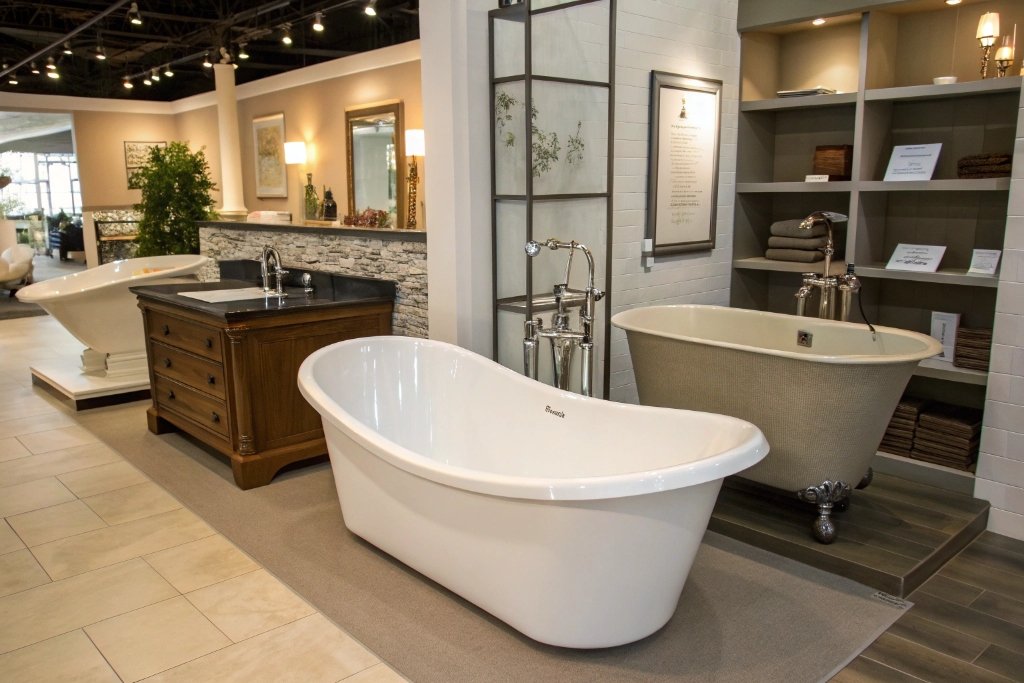
Once you understand your space and how you will use the tub, you can start looking at styles. Each style has its own unique look and installation requirements.
- Freestanding Tubs:
- Look: These are typically the most luxurious and visually striking. They stand alone, not attached to any walls, and often become the focal point of the bathroom. They come in many shapes—oval, slipper, clawfoot, modern minimalist.
- Space: Require significant floor space around them for both aesthetic impact and cleaning. Not ideal for smaller bathrooms where every inch counts.
- Installation: Plumbing usually comes up from the floor, which can require more complex installation.
- Maintenance: Can be harder to clean around if they are too close to walls.
- Insight: From my perspective in manufacturing, while freestanding tubs are visually stunning, they need the right stage. My advice to clients is to consider if the tub will genuinely enhance the space or if it will simply overcrowd it.
- Alcove Tubs:
- Look: The most common type, installed within a three-wall enclosure. They are practical and versatile.
- Space: Excellent for smaller bathrooms as they maximize space and are often combined with a shower.
- Installation: Easiest to install, connecting to existing plumbing in the wall. They are designed to fit standard alcove dimensions.
- Versatility: Perfect for families or those who need both a shower and a tub.
- Drop-in Tubs:
- Look: These tubs drop into a framed enclosure or deck, allowing for customization with tile, stone, or wood surrounds. They offer a built-in, integrated look.
- Space: Can be good for medium to large bathrooms where you want a custom, spa-like feel without a full freestanding tub. The deck space can also be practical for placing bath items.
- Installation: Requires building a custom deck or surround, which can add to installation costs and complexity. Access for plumbing might be hidden.
- Maintenance: Cleaning the tub itself is easy, but the deck material will also need maintenance.
- Under-mount Tubs:
- Look: Similar to drop-in but installed under the rim of the surrounding deck material, creating a seamless, sleek appearance.
- Space: Best for larger, modern bathrooms.
- Installation: More complex installation due to precise cuts required for the deck.
| Bathtub Style | Best For | Key Features | Considerations |
|---|---|---|---|
| Freestanding | Large bathrooms, luxurious feel | Visual focal point, bold statement, various shapes | Requires ample space, complex plumbing, harder to clean around |
| Alcove | Small to medium bathrooms, practical use | Space-efficient, often combined with shower, standard sizing | Less decorative, limited design options |
| Drop-in | Medium to large bathrooms, custom design | Integrated look, custom deck/surround, spa-like feel | Requires custom carpentry, higher installation cost |
| Under-mount | Large, modern bathrooms, seamless aesthetic | Sleek, integrated, clean lines | Complex installation, higher cost |
Choosing a style is about balancing aesthetics with the practicalities of your bathroom's size and your overall design vision.
What material makes the most sense for your priorities—acrylic, cast iron, or solid surface?
Are you confused by all the bathtub materials, unsure which one is best? Each material has its own pros and cons, affecting durability, heat retention, and price. I know picking the right one means understanding what truly matters to you.
The bathtub material choice—acrylic, cast iron, or solid surface—should align with your priorities for durability, heat retention, weight, maintenance, and budget. Acrylic offers versatility, light weight, and good heat retention. Cast iron provides superior durability and heat retention but is very heavy. Solid surface offers a luxurious, seamless look and excellent durability, often at a higher price point. Each material impacts the tub's feel, longevity, and overall cost.
The material of your bathtub affects almost everything about it: its look, feel, durability, heat retention, weight, and price. As an OEM/ODM manufacturer focused on acrylic, I have a deep understanding of material science in bathtubs and can offer insights into the different options.
-
Acrylic (My Expertise):
- Pros: This is a very popular choice for good reason. It is lightweight, making it easier to install and suitable for most floors. High-quality acrylic (like the virgin PMMA we use at Salvere) is warm to the touch, offers good heat retention, is non-porous (making it easy to clean and stain-resistant), and comes in a vast array of shapes, sizes, and colors. It is also generally more affordable than cast iron or solid surface.
- Cons: Cheaper acrylic can scratch more easily and may not retain its gloss over time. However, high-quality, reinforced acrylic is very durable.
-
Cast Iron:
- Pros: Incredibly durable, virtually indestructible, and excellent at retaining heat for long soaks. It has a classic, timeless look and feel.
- Cons: Extremely heavy, requiring significant floor reinforcement and difficult installation. It is also cold to the touch initially and can be very expensive. Limited in shapes and sizes.
-
Solid Surface:
- Pros: Offers a luxurious, seamless, and velvety smooth finish. It is highly durable, non-porous, and can be repaired if scratched. It has excellent heat retention and allows for unique, contemporary designs.
- Cons: Very heavy (though lighter than cast iron), and typically the most expensive option. Installation can also be complex due to its weight.
-
Other Materials (briefly):
- Fiberglass: Cheaper than acrylic, but less durable, prone to cracking and staining, and feels less substantial.
- Porcelain-on-steel: Lighter than cast iron, but can chip if a heavy object is dropped, revealing the steel beneath.
| Material | Weight | Heat Retention | Durability | Maintenance | Cost Range |
|---|---|---|---|---|---|
| Acrylic | Light | Good | Good (high-qual) | Easy | Mid |
| Cast Iron | Very Heavy | Excellent | Excellent | Moderate | High |
| Solid Surface | Heavy | Excellent | Excellent | Easy/Repairable | High/Premium |
| Fiberglass | Very Light | Fair | Poor | Moderate | Low |
Your choice of material will significantly impact your tub's longevity and your bathing experience, so weigh these factors carefully against your priorities.
What installation and plumbing constraints could limit your options?
Are you discovering hidden costs or hurdles after buying your dream tub? Installation and plumbing are often overlooked, but critical. I know understanding these details upfront can save you significant time and money.
Installation and plumbing constraints can significantly limit your bathtub options by dictating available space, requiring structural modifications, or demanding extensive re-piping. Factors include existing drain and water supply locations, floor joist direction, and wall structures. These elements determine the feasible tub type, such as alcove, drop-in, or freestanding, and impact overall project costs and complexity.
Many people focus on the tub itself but forget about what goes on behind the walls and under the floor. My advice is always to consult with a plumber or contractor before making your final decision, especially if you are changing your tub's style or location.
- Existing Plumbing Location:
- Drain and Overflow: Where is your current drain located? Moving it can be a major expense, especially if it requires cutting into your concrete slab or rerouting pipes across joists. Alcove tubs often reuse existing drain locations easily. Freestanding tubs, however, usually require the drain to be moved to the center of the tub's footprint, often coming up through the floor.
- Water Supply Lines: Similar to the drain, the hot and cold water supply lines need to reach the tub filler. For wall-mounted fillers, this is usually straightforward. For freestanding tubs with floor-mounted fillers, new supply lines will need to be run up through the floor.
- Floor and Wall Structure:
- Joist Direction: The direction of your floor joists can impact how easily drains or supply lines can be moved. Running pipes against joists requires drilling through them, which can be difficult or may require structural reinforcement.
- Wall Support: If you are installing an alcove or drop-in tub, the walls around it need to be structurally sound and waterproofed, especially if you plan a shower enclosure.
- Subfloor: Ensure your subfloor is solid and level. For heavier tubs (cast iron, solid surface, or larger tubs filled with water), your floor structure might need reinforcement. This is a critical safety and longevity issue.
- Access for Maintenance:
- Hidden Plumbing: For drop-in and under-mount tubs, the plumbing is often hidden behind the deck or wall. Plan for an access panel somewhere to allow for future maintenance or repairs without having to demolish the surround.
- Freestanding Tub Access: While the plumbing is visible for freestanding tubs, ensuring there is enough space to work around them is important.
- Ventilation:
- Proper ventilation is crucial in any bathroom to prevent mold and mildew. Consider how your new tub will interact with existing ventilation or if an upgrade is needed.
These practical considerations can significantly impact your project's timeline and budget. Ignoring them can lead to costly surprises later.
What’s your real budget—including long-term cleaning and maintenance?
Are you only thinking about the purchase price of your new tub? The real cost goes far beyond that. I know that smart budgeting includes all the hidden expenses, from installation to long-term upkeep.
Your real budget must encompass more than just the bathtub's purchase price, including crucial long-term cleaning and maintenance costs. You need to factor in installation expenses, plumbing modifications, and potential floor reinforcement. Material choice significantly impacts upkeep: acrylic is generally low maintenance, while cast iron may require specific cleaning or re-glazing. Considering these ongoing costs ensures a truly affordable and satisfying ownership experience.
The sticker price of a bathtub is just the beginning. I always tell my clients to consider the "total cost of ownership," which includes much more than just the tub itself. This comprehensive approach helps avoid unpleasant financial surprises.
- Initial Purchase Price:
- This is the obvious part. Tub prices vary wildly based on material, size, style, and brand. Acrylic is generally the most budget-friendly, while solid surface and cast iron are typically at the higher end.
- Installation Costs:
- Plumbing: As discussed, moving drains or water lines can be expensive. Simple swap-outs (like replacing an old alcove tub with a new one in the same spot) are the least costly. Freestanding or drop-in tubs often require more extensive plumbing work.
- Labor: Hiring a qualified plumber and possibly a contractor or tiler will be a significant part of your budget. Do not cut corners here; poor installation can lead to leaks and costly damage.
- Demolition and Disposal: Removing your old tub and disposing of it adds to the cost.
- Finishing Materials: If you are installing a drop-in tub, you will need to budget for the materials (tile, stone, wood) for the surround and the labor to install them.
- Floor Reinforcement: If your chosen tub is heavy, you might need to pay for structural reinforcement, especially for second-floor installations.
- Long-term Cleaning and Maintenance:
- Cleaning Products: Some materials require specific, gentler cleaners to avoid damage. For example, abrasive cleaners can scratch acrylic or dull solid surface.
- Resurfacing/Re-glazing: Over decades, some materials (like cast iron) might need professional re-glazing if the finish wears down. Acrylic rarely needs this if properly maintained.
- Water Usage: Larger tubs, especially deep soakers, will use more water, which impacts your water and heating bills.
- I constantly advise brands to focus on delivering tubs that are not just beautiful but also durable and easy to maintain. A well-designed acrylic tub, like ours, might have a slightly higher upfront cost than the cheapest fiberglass, but its superior durability, ease of cleaning, and heat retention translate into significant savings and satisfaction over its lifespan. This is what 'real budget' means – considering the full lifecycle, not just the initial tag.
Considering all these financial aspects upfront ensures your perfect tub remains a joy, not a financial burden, for years to come.
Conclusion
Choosing your perfect bathtub means answering key questions: checking bathroom size, planning for tub use, picking the right style, selecting the best material, understanding installation needs, and factoring in your full budget. This thoughtful approach ensures lasting comfort and satisfaction.
👉 Learn more about Salvere Acrylic Bathtub Products
and how we manufacture acrylic bathtubs in Vietnam.

